
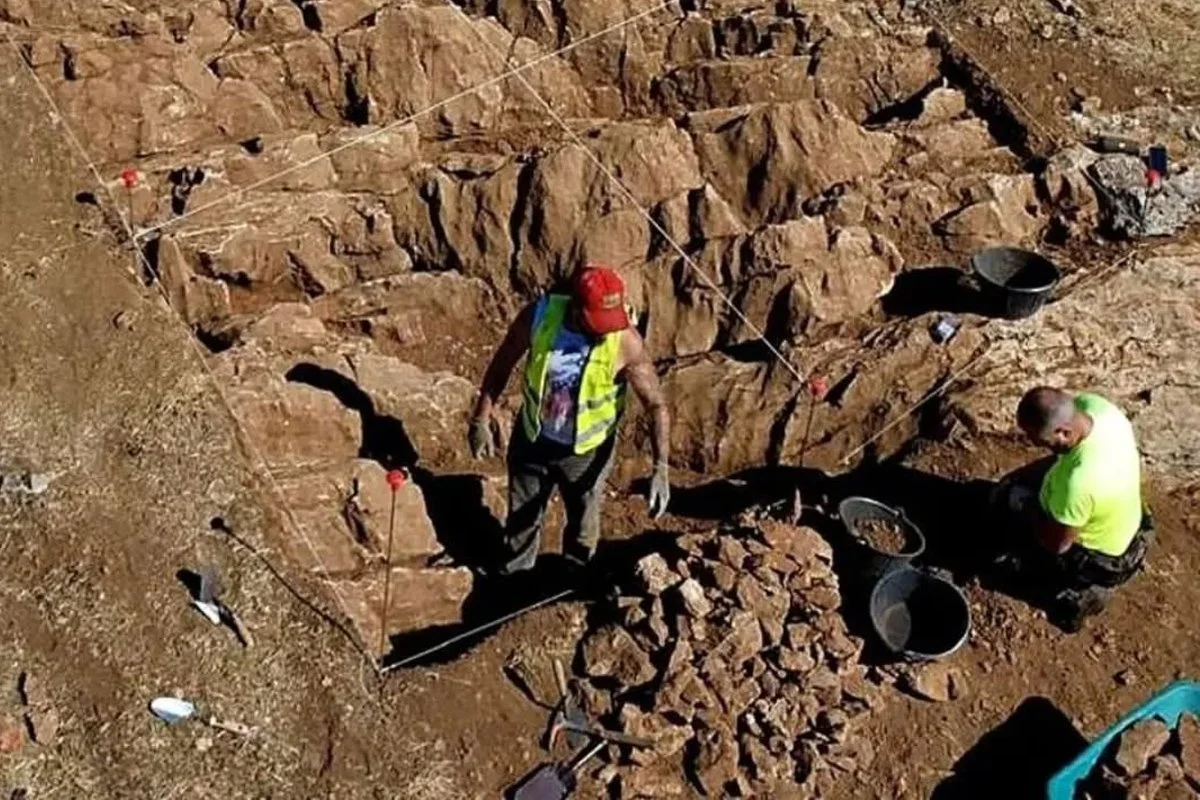
Archaeologists have identified another Roman military camp around the Iron Age stronghold of La Loma in northern Spain, expanding a siege network that now includes seven known Roman positions.
The newly documented installation, designated Site F, suggests that the Roman army deployed between 12,000 and 18,000 soldiers during the assault. The revised estimate places La Loma among the largest known military operations associated with Rome’s conquest of northern Hispania.
The hillfort stands near Santibáñez de la Peña in the province of Palencia. During the late first century BC, it became the target of a major Roman campaign linked to the Cantabrian Wars, fought under Emperor Augustus between 29 and 19 BC.
Seven Roman positions around one stronghold
Until recently, archaeologists had identified only three Roman military installations around La Loma: a main camp and two smaller forts. Fieldwork conducted during later excavation seasons revealed additional camps, defensive positions and sections of the road network connecting them.
Site F brings the total number of known Roman positions to seven.
According to excavation director Santiago Domínguez, the discovery substantially changes estimates of the force assembled around the hillfort. Rather than operating from a single camp, Roman troops appear to have occupied several positions distributed around the settlement.
The arrangement points to a coordinated siege rather than a rapid assault. Camps placed around the stronghold would have allowed Roman units to control routes into the site, restrict movement across the surrounding terrain and maintain pressure on the defenders from several directions.
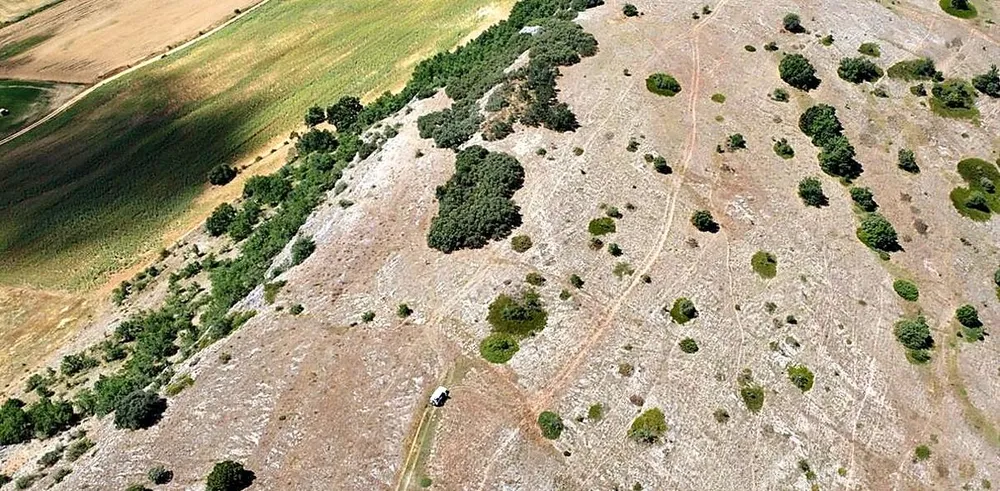
A siege measured in kilometres
The military positions around La Loma extend across a wide area. Archaeologists have also traced roads linking some of the camps, indicating that troops, equipment and supplies moved through an organised network.
This broader layout helps explain the new estimate of 12,000 to 18,000 soldiers. Such a force would have been large enough to maintain several camps simultaneously while surrounding the hillfort and preparing attacks against its fortifications.
La Loma itself was not a minor refuge. Excavations have uncovered substantial defensive works, including walls, towers, a fortified entrance and an approach road. These features suggest that the settlement was an important Cantabrian centre capable of resisting a prolonged Roman operation.
Coins and other finds date the siege to between 26 and 24 BC, with around 25 BC considered the most likely date. This places the attack during the most intensive phase of Augustus’ campaigns against the Cantabri and Astures, the last major independent peoples of northern Iberia to resist Roman rule.
The siege may have been even larger
The newly identified camp may not be the final Roman position around La Loma. Parts of the surrounding landscape have been altered by modern construction, while other military remains may still lie beneath fields or later buildings.
Further investigation could therefore increase both the number of camps and the estimated size of the Roman force.
For now, Site F changes the image of what happened at La Loma. The hillfort was not attacked by a small detachment moving through the region. It was surrounded by a large army that built an extensive military network around the settlement before the final assault.
Cover Image Credit: Anne Pernía ve Santiago Domínguez/Imbeac