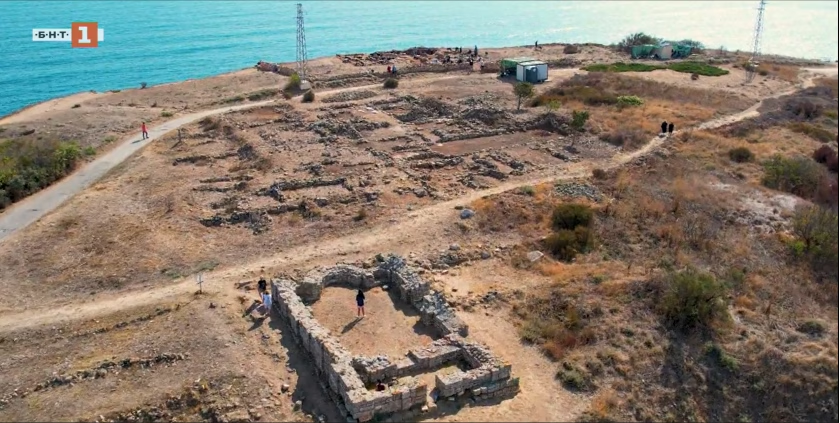
On a windswept rocky headland that once served as the capital of the Dobruja Despotate, archaeologists have unearthed new evidence of medieval life and death. This year’s excavations at Kaliakra revealed child burials, gilded jewellery, rare coins, and even possible traces of the 14th-century plague.
A Child’s Grave with Unusual Treasures
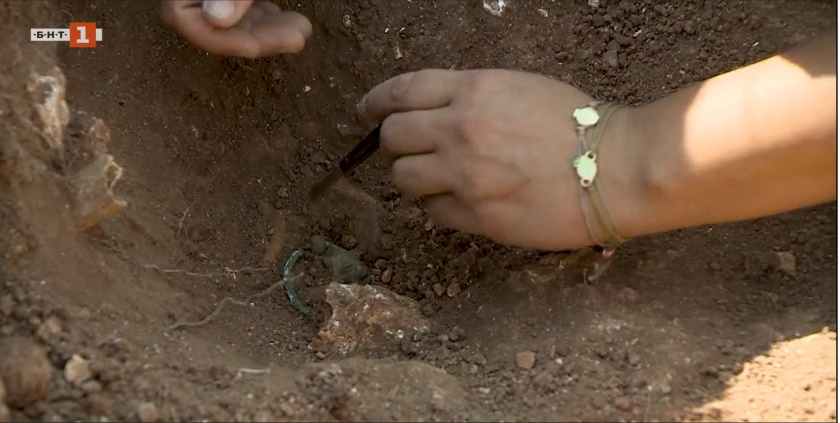
The season’s most striking discovery came after a metal detector indicated buried precious metal. Excavators uncovered a child’s grave containing jewellery and a rare earring linked to a finger bone.
“It’s the remains of a small child,” confirmed Elena Endarova, deputy head of excavations.
Assoc. Prof. Dr. Boni Petrunova, head of the archaeological team, suggested two possible interpretations:
“The child may have died before marriage age, with gifts prepared for her, or it could reflect a custom where an earring replaced a ring as a burial offering.”
Shadows of the Black Death
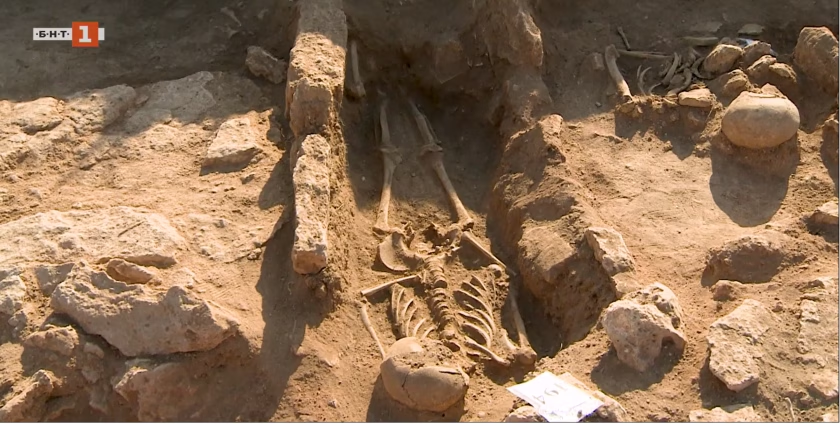
The necropolis holds multiple child graves and that of a teenage girl, raising the possibility of deaths occurring in rapid succession.
“It is entirely plausible that the plague reached here,” noted Petrunova, recalling the Genoese ships that carried the disease from Crimea to Europe.
To confirm this theory, DNA analysis will be conducted on dental pulp from the skeletal remains.
Coins with a Story
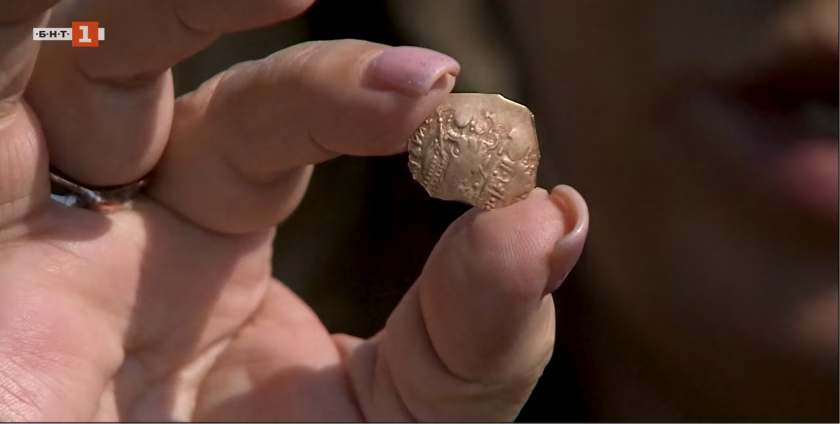
Elite burials also yielded rare coins, including a gold issue of Anna of Savoy and her son John V Palaiologos.
“This coin was heavily used, likely also worn as an amulet,” explained Petrunova.
Other finds included Byzantine solidi from the reigns of Justinian I and Anastasius I, interpreted as part of a dispersed gold reserve rather than everyday currency.
Wooden Coffins and Forgotten Layers
Wood fragments found in the burials indicate the deceased were placed in coffins. These samples will undergo archaeobotanical study to identify the tree species and date of use. Nearby, excavations also revealed a wealthy quarter of 19 rooms, once home to Kaliakra’s late medieval aristocracy.
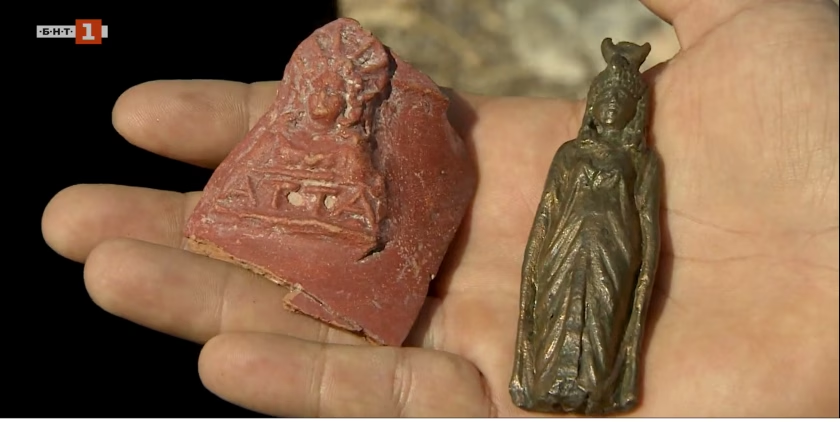
Re-examination of earlier levels brought additional surprises: a bronze statuette of Isis Pelagia, the “lady of the sea,” a rare cult figure in this region. Archaeologists hope a sanctuary dedicated to the goddess may one day be uncovered.
A Fortress of Continuity
From Roman coins to medieval jewellery, the necropolis reflects Kaliakra’s long history as a strategic and cultural hub on the Black Sea. Each grave and artefact adds to the story of a city that once flourished, only to face the same forces—plague, conquest, and change—that reshaped the medieval Balkans.
Cover Photo: Aerial view of the excavation site at Kaliakra. The necropolis and residential remains uncovered here reveal the wealth and life of the 14th-century Dobruja Despotate. (Photo: BNT / Historical Museum – Kavarna)