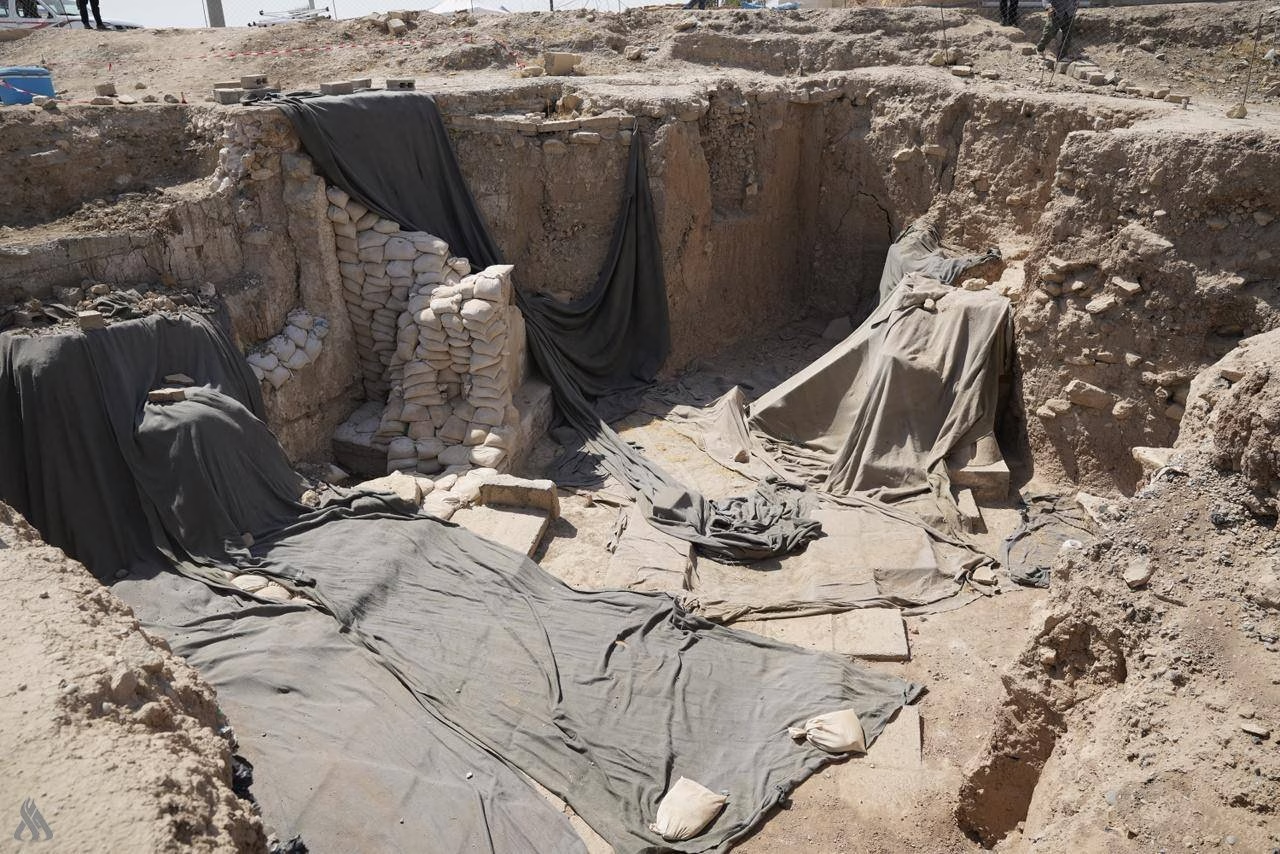
Iraq’s cultural authorities have unveiled a monumental discovery in Mosul: a six-meter-tall Assyrian winged bull, or lamassu, the largest example of its kind ever recorded. The colossal sculpture was uncovered inside the throne hall of King Esarhaddon (681–669 BCE) at the Nabi Yunus site, part of ancient Nineveh, once the heart of the Neo-Assyrian Empire.
The announcement, made by Culture Minister Ahmed Fakkak al-Badrani on Iraqia News, marks a turning point in the study of Mesopotamian heritage, confirming Mosul as a focal point of Assyrian monumental art.
Lamassu: Guardians of Assyrian Power
Lamassu—hybrid beings with the body of a bull or lion, wings of an eagle, and a human head—stood as guardians at palace entrances, protecting kings and proclaiming divine authority. Famous examples in the British Museum and the Louvre measure between 3.5 and 4.2 meters, while even the massive bulls from Nimrud rarely exceed these dimensions.
The Mosul discovery surpasses them all at nearly six meters, redefining the scale of Assyrian art and reinforcing Nineveh’s role as a center of imperial power.
Nineveh and the Reign of Esarhaddon
The throne hall of Esarhaddon, one of Assyria’s most ambitious rulers, was a ceremonial stage where political might was projected. Archaeologists believe the newly found lamassu once formed part of a monumental pair guarding the entrance to the royal chamber.
Esarhaddon is remembered for rebuilding Babylon after its destruction by his father Sennacherib, extending Assyrian rule into Egypt, and consolidating the empire from the Persian Gulf to the Mediterranean.
Archaeological Significance and Ongoing Excavations
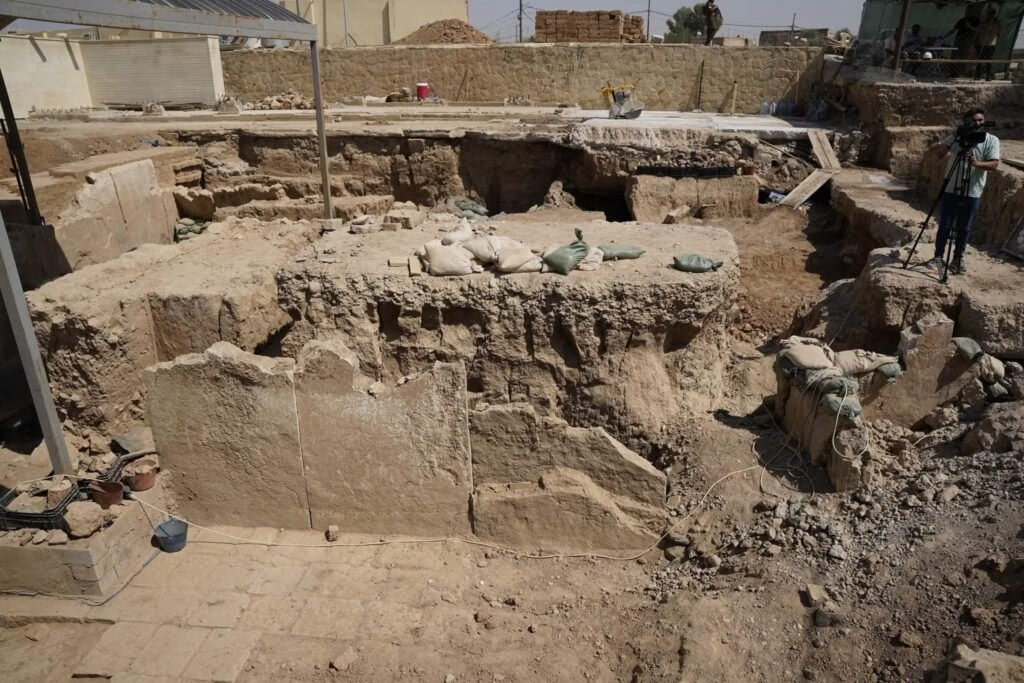
The discovery is part of renewed excavations led by Iraq’s antiquities authority in cooperation with Heidelberg University. According to project archaeologist Peter Nicholas, teams have also recovered cuneiform tablets bearing the names of Sennacherib, Esarhaddon, and Ashurbanipal, along with objects believed to be spoils from Egypt and the Levant.
Ruwaid Muwafaq, Director of the Nineveh Antiquities and Heritage Inspectorate, stressed the broader impact: “This discovery will greatly enhance the archaeological and touristic importance of the site.”
Authorities plan to transform Nabi Yunus into a museum complex that integrates Assyrian remains with the Islamic heritage of the Prophet Jonah Mosque above.
A Landmark in Assyrian Archaeology
While previous finds at Nabi Yunus—including a four-meter bull in the 1990s and another large specimen in 2021—were already significant, the six-meter Mosul lamassu sets a new benchmark in the archaeology of Mesopotamia.
Scholars are now asking key questions: Was the giant lamassu a unique commission for Esarhaddon? How was it carved, transported, and erected? And what does its scale reveal about the king’s vision of authority?
Linking Past and Future
The find comes as Iraq invests in the rehabilitation of Mosul’s cultural landscape, much of it damaged during recent conflicts. If fully verified by scientific study, the six-meter lamassu will not only eclipse all known examples worldwide but also reaffirm Nineveh’s position as the heart of Assyrian monumental sculpture.
More than a protective spirit, the colossal bull stands today as a symbol of endurance, reconnecting Iraq with one of humanity’s most powerful civilizations nearly 2,700 years after its creation.