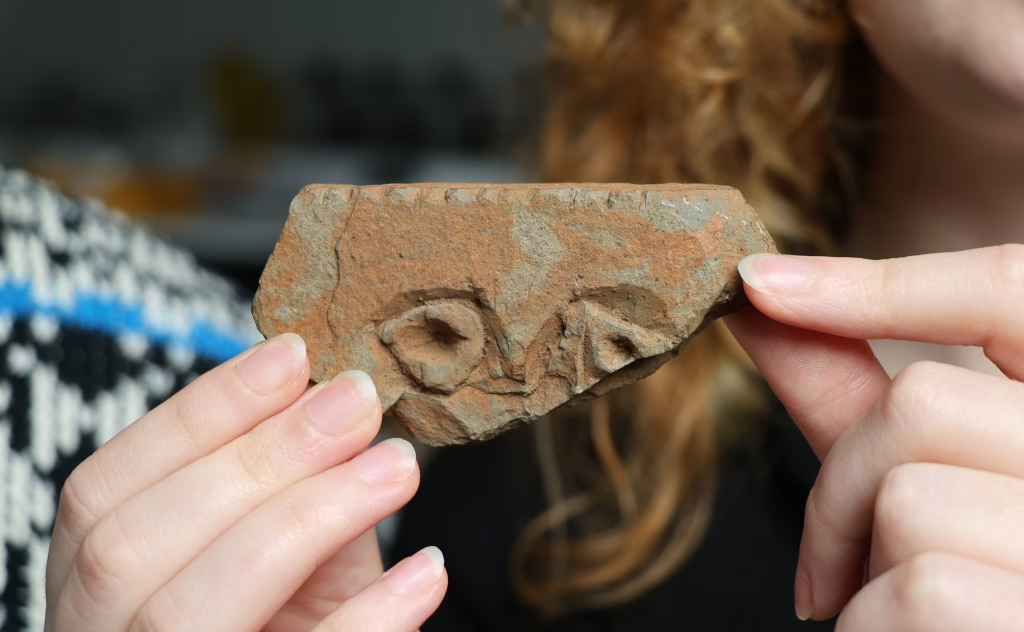
Archaeologists excavating the East Lomond hillfort have uncovered an extraordinary artifact that sheds new light on Scotland’s enigmatic Pictish past. A carved stone, believed to depict a human face dating back 1,500 years, was found by University of Aberdeen archaeology student Jodie Allan during the 2025 summer dig.
The discovery, hailed as one of the rarest Pictish finds in recent decades, reinforces the interpretation of East Lomond as a thriving elite settlement strategically located on the southern edge of Pictland.
Student’s Accidental Breakthrough
Allan, a third-year student, was sieving soil from an early medieval building when she noticed a small object around 10–12 cm in size. Initially mistaking it for slag, the unusual coppery-green hue prompted her to show it to excavation director Professor Gordon Noble.
“Looking closely, you can see two eyes, a nose, and even a hairline,” Allan explained. “Holding something that might represent a person who lived here more than a thousand years ago is just incredible.”
A Settlement of Wealth and Influence
Excavations led by the University of Aberdeen and the Falkland Stewardship Trust have revealed evidence of continuous rebuilding, imported Roman goods such as Oxfordshire Ware and French E-ware, and a series of high-status objects. These finds suggest East Lomond’s Picts were deeply connected to post-Roman trade and cultural networks across Europe.
According to Joe Fitzpatrick of the Falkland Stewardship Trust:
“The sheer number of complete objects we are finding is unusual for the Pictish period. It points to a wealthy, influential community with far-reaching connections.”
An Exceptionally Rare Pictish Portrait
Professor Noble highlighted the uniqueness of the carved stone:
“Depictions of people are almost unheard of in early medieval Scotland. This schematic face resembles the figures seen in illuminated manuscripts. It may represent a rudimentary portrait of a local inhabitant from the fifth to seventh centuries.”
Unlike monumental symbol stones intended for public display, the artifact may reflect more personal or community-based representation, hinting at how the Picts expressed identity in everyday life.
Wider Impact and Next Steps
The stone will now undergo radiocarbon dating and comparative study with European parallels. The same season also produced a complete iron mattock head and weapon fragments, reinforcing the interpretation of East Lomond as a stronghold of strategic significance.
The discovery is featured in History Hit’s documentary Enemies of Rome: In Search of the Picts and will appear on BBC2’s Digging for Britain, bringing the story of East Lomond to an international audience.
Presenter Tristan Hughes remarked:
“For centuries, the Picts have been seen as mysterious painted warriors. Finds like this reveal they were far more complex, reshaping how we understand early Scotland.”
Cover Image Credit: The Pictish stone resembling a human face. University of Aberdeen