-

Massive Acheulean Site in Southern Iran Redraws Early Human Migration Map
Hormozgan’s 400-hectare Paleolithic hub proves region was a long-term homeland, not just a transit route, for Homo erectus-era populations. A sprawling Lower Paleolithic settlement uncovered in Hormozgan province is reshaping scholarly views on the timing and nature of human dispersal across the Iranian Plateau. Spanning an area three times the size of ancient Persepolis, the…
-
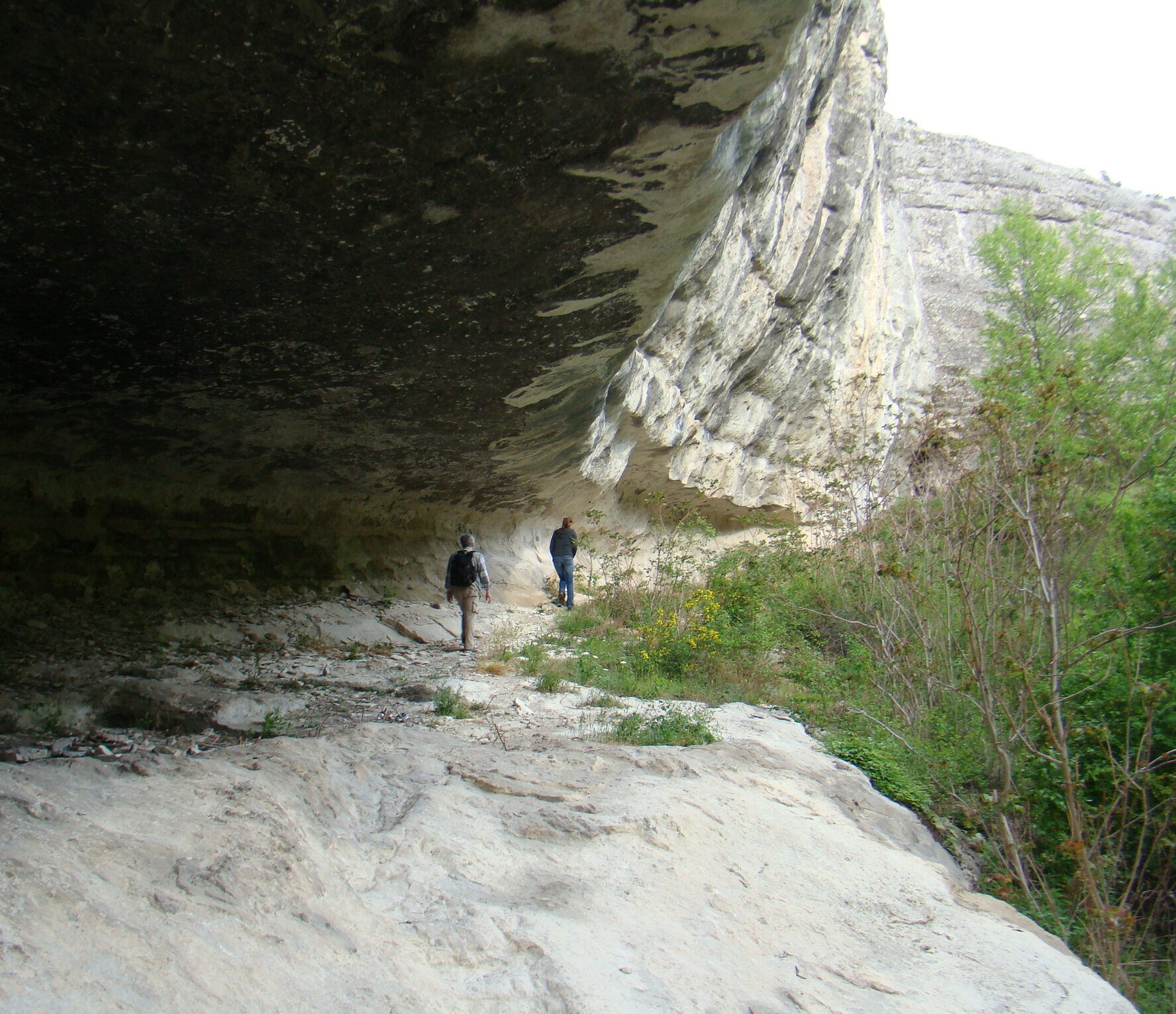
DNA From a 46,000-Year-Old Bone in Crimea Reveals Neanderthal Link Between Europe and Siberia
For decades, scientists have been trying to connect the dots between Europe’s fading Neanderthal populations and their eastern relatives in Asia. Now, a single, nearly invisible bone fragment from Crimea has done what entire excavations could not — providing genetic proof that these ancient humans once formed a continuous bridge across continents. At the Starosele…
-

Ardipithecus ramidus: The Early Ancestor That Redefines the Origins of Human Bipedalism
A new study of Ardipithecus ramidus — the 4.4-million-year-old hominin known as “Ardi” — has reignited the debate over how the first humans began to walk upright. Researchers from Washington University in St. Louis, together with colleagues from Canada and the United States, have analyzed Ardi’s ankle joint in remarkable detail, revealing a rare combination…
-
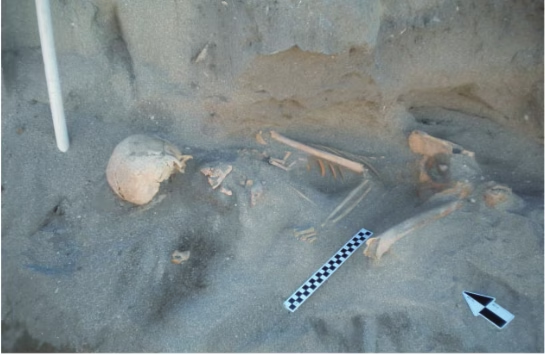
Ancient Human Genome from South Africa Reveals One of the Oldest Maternal Lineages Ever Found
A 2,300-year-old skeleton discovered on South Africa’s west coast has provided one of the earliest genetic links to humanity’s common ancestor — a woman known as “Mitochondrial Eve.” The study, published in Genome Biology and Evolution, offers a rare glimpse into a population that diverged at the dawn of modern human evolution. Unearthing a Genetic…
-
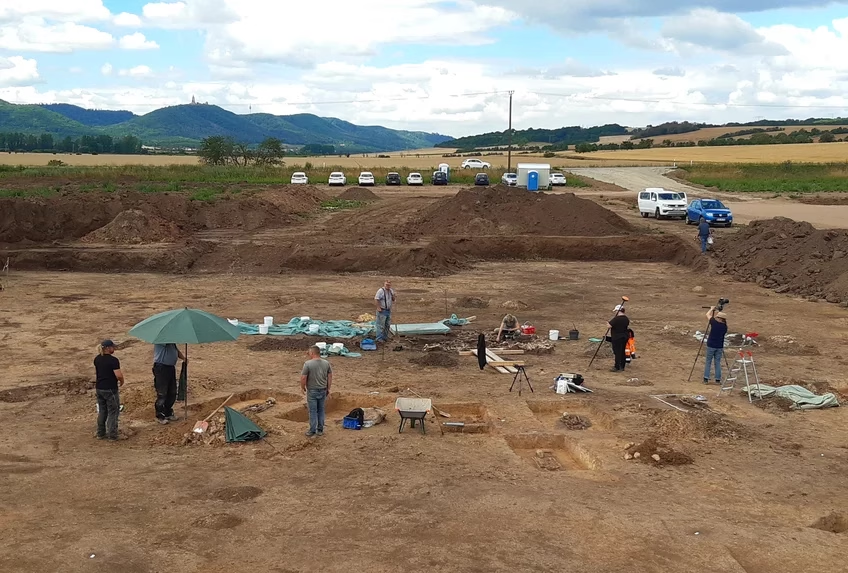
Slavic Migrations Reshaped Europe: Genetic Study Reveals Hidden History of Central and Eastern Europe
One of the most influential yet long-misunderstood events in European history—the spread of the Slavs from the 6th century CE—is finally being clarified. New genetic analyses reveal the scale of Slavic migrations, regional diversity, and the social organization of early medieval communities. Migration and Social Transformation An international team from Germany, Austria, Poland, Czechia, and…
-
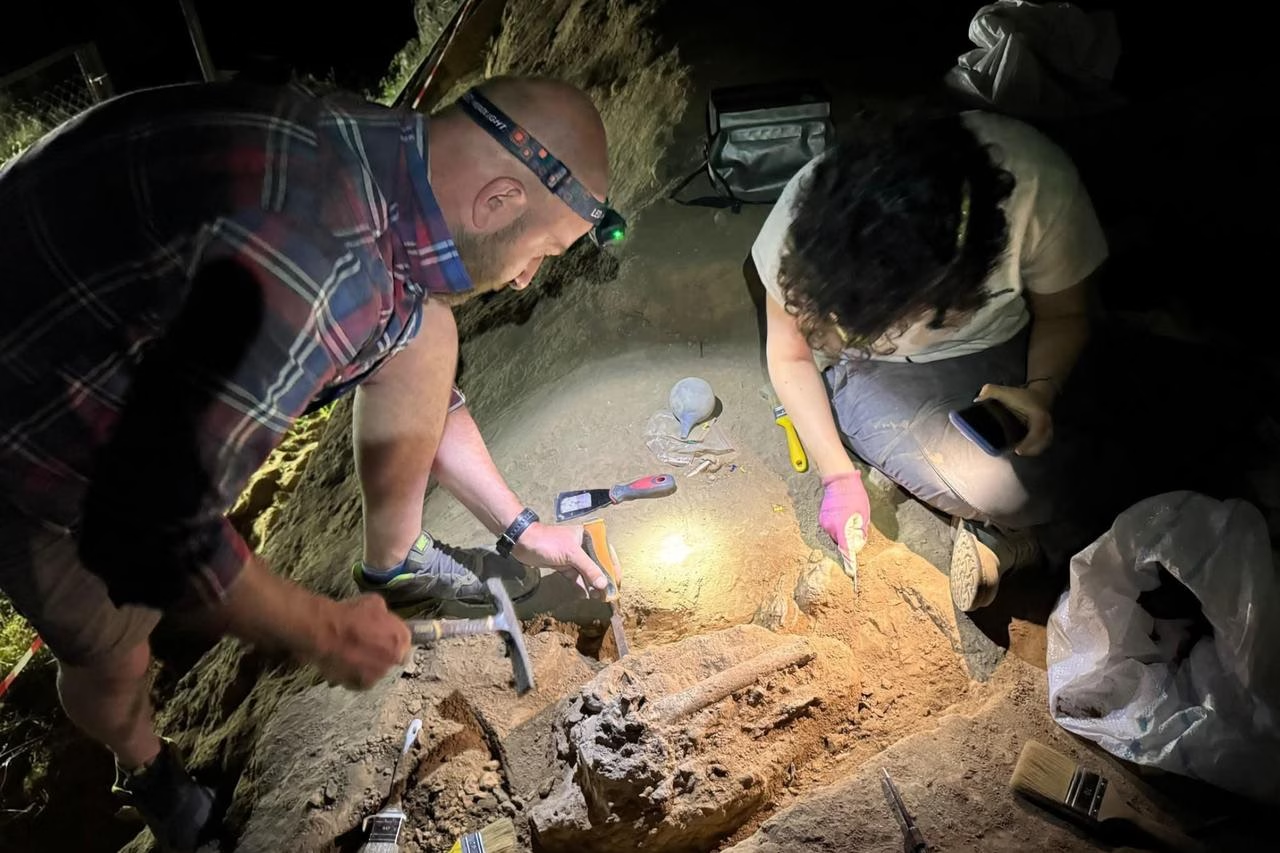
1.8-Million-Year-Old Human Jawbone Unearthed in Georgia
Archaeologists in Georgia have uncovered a fossilized lower jaw estimated to be 1.8 million years old, a discovery that could reshape our understanding of the earliest human migrations. The find was made during July excavations in the village of Orozmani, located in the Kvemo Kartli region, south of the capital Tbilisi. Experts believe the jawbone…
-
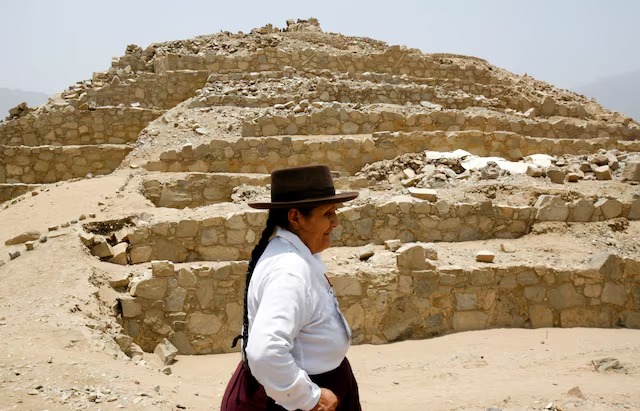
Ancient Peruvian Civilization Linked to Climate Crisis Revealed Through Toad Sculpture
Recent archaeological work near the ancient Peruvian city of Caral has shed new light on how climate change contributed to the decline of early civilizations in the Andes. At the Vichama site, about 160 kilometers north of Lima, researchers uncovered a small 12-centimeter sculpture depicting two toads, alongside anthropomorphic figures etched on mud walls. Dating…
-
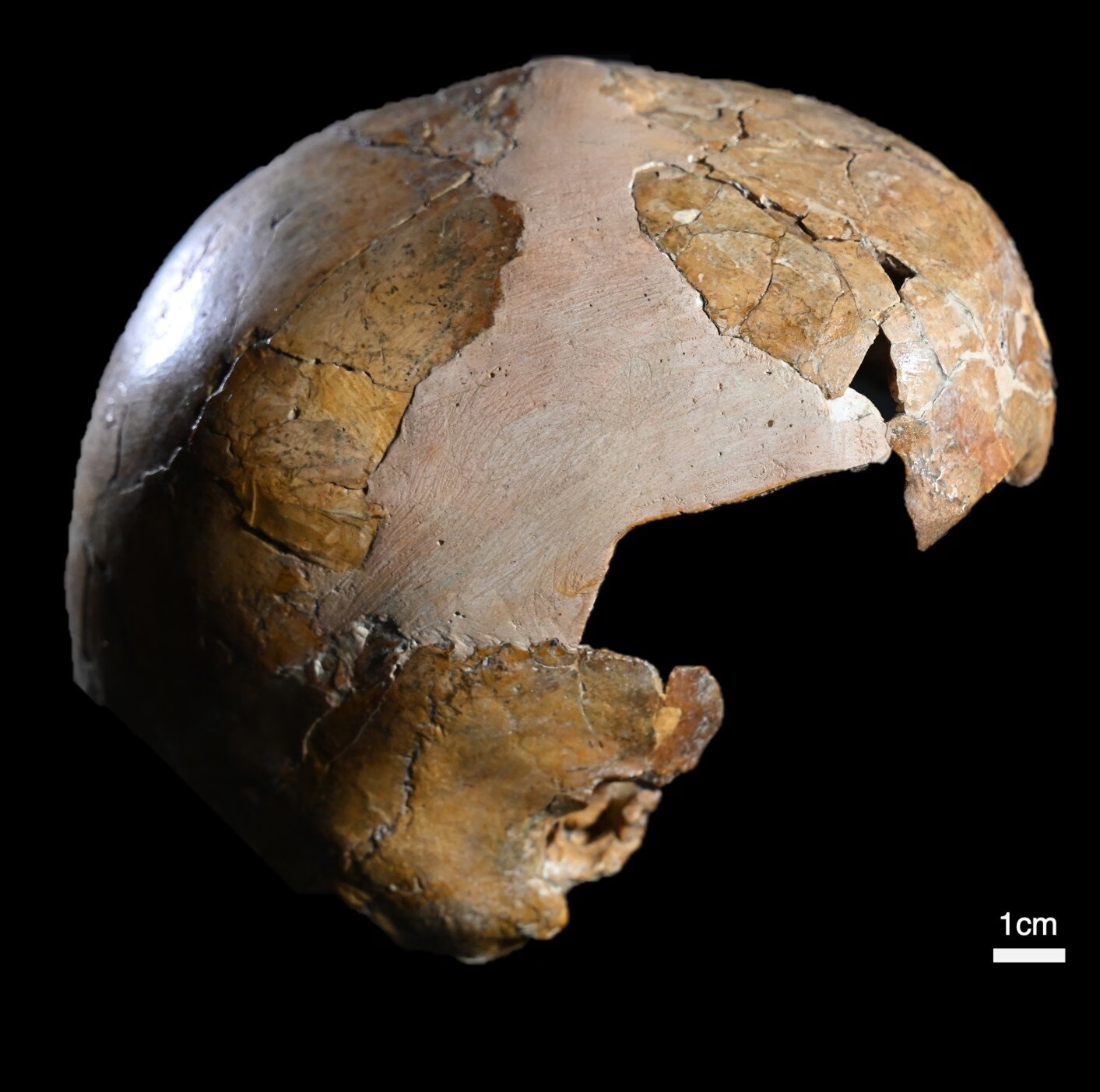
140,000-Year-Old Child Fossil Reveals Early Neanderthal–Homo sapiens Interactions in the Levant
A 5-year-old child skeleton discovered nearly 90 years ago in Skhul Cave on Mount Carmel exhibits both Neanderthal and Homo sapiens traits. According to an international team from Tel Aviv University and the French National Center for Scientific Research (CNRS), this fossil represents the earliest physical evidence of social and biological interactions between the two…
-
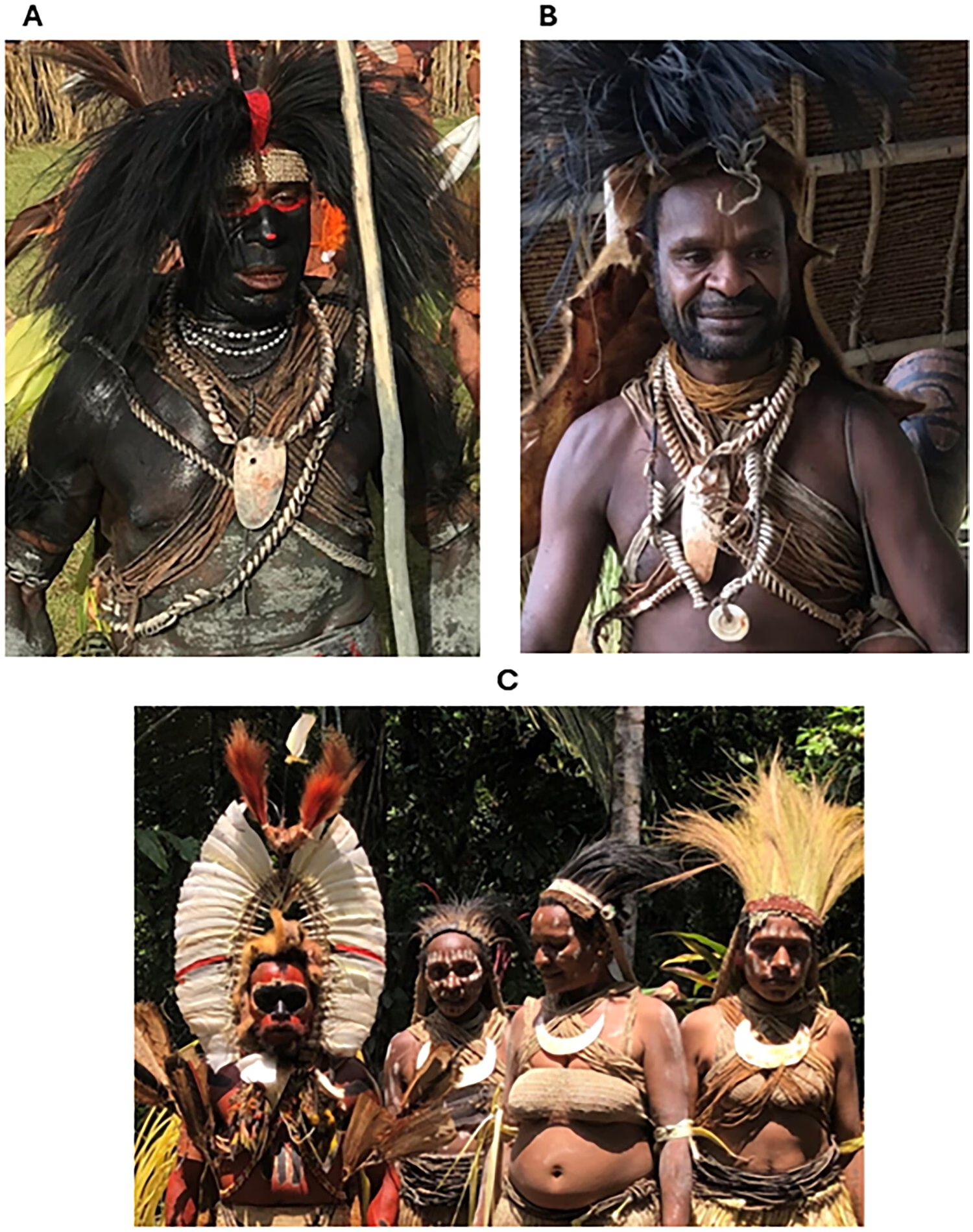
3,200-Year-Old Evidence of Long-Distance Trade Found in Papua New Guinea
Excavations at Walufeni Cave reveal a dynamic network of cultural and economic exchange across Oceania thousands of years ago. New research from Walufeni Cave, located in Papua New Guinea’s southern highlands, has uncovered compelling evidence that Indigenous societies in Oceania were far from isolated. Archaeologists have identified marine shells transported more than 200 kilometers inland,…