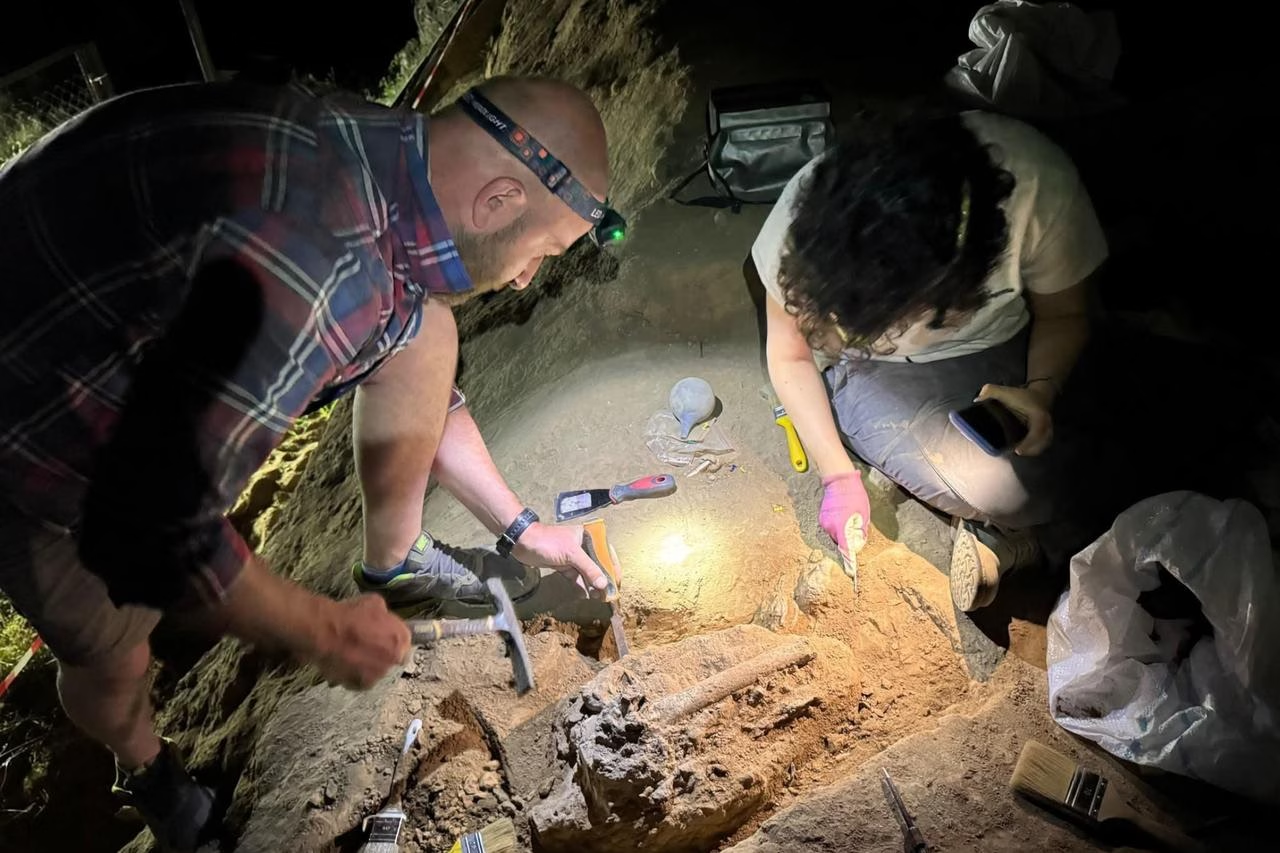
Archaeologists in Georgia have uncovered a fossilized lower jaw estimated to be 1.8 million years old, a discovery that could reshape our understanding of the earliest human migrations. The find was made during July excavations in the village of Orozmani, located in the Kvemo Kartli region, south of the capital Tbilisi.
Experts believe the jawbone points to one of the oldest human settlements outside Africa. According to Prof. Giorgi Bidzinashvili, a prehistoric archaeologist at Ilia State University in Tbilisi, the remains at Orozmani, together with fossilized animals, provide crucial evidence about the lifeways of early Eurasian colonists.
“We believe Orozmani holds the potential to reveal major insights about human history,” said Bidzinashvili.
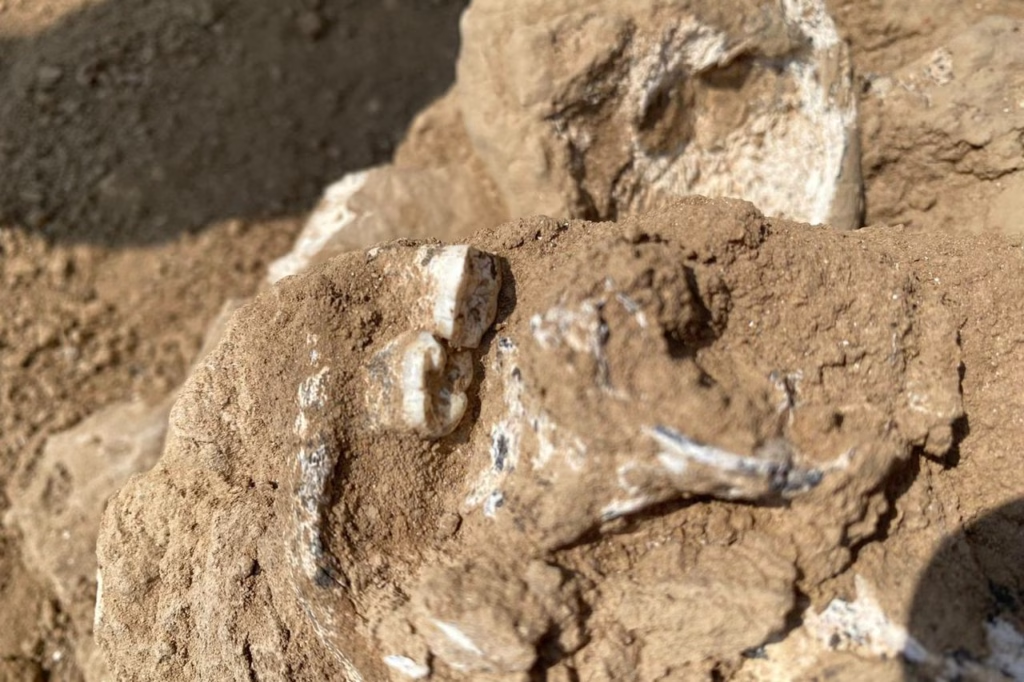
The excavation also yielded fossils of saber-toothed cats, elephants, wolves, deer, and even giraffes, along with a series of stone tools. Researchers emphasize that examining these finds alongside the jawbone could answer key questions about what the first humans ate, how they adapted to their climate, and how they survived after leaving Africa.
This is not the first breakthrough from the site. In 2022, archaeologists uncovered a human tooth of the same age at Orozmani. Just a few kilometers away, in the village of Dmanisi, scientists previously discovered 1.8-million-year-old skulls that remain among the oldest known evidence of human life outside Africa.
Taken together, the discoveries at Orozmani and Dmanisi suggest that the South Caucasus was not merely a transit corridor, but a long-term settlement hub for the earliest human groups expanding beyond Africa.