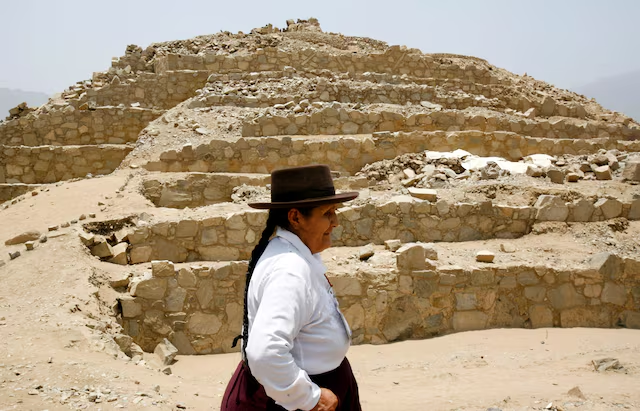
Recent archaeological work near the ancient Peruvian city of Caral has shed new light on how climate change contributed to the decline of early civilizations in the Andes.
At the Vichama site, about 160 kilometers north of Lima, researchers uncovered a small 12-centimeter sculpture depicting two toads, alongside anthropomorphic figures etched on mud walls. Dating back some 3,800 years, the artifacts suggest that the community, which flourished between 1800 and 1500 B.C., relied heavily on water worship and rituals aimed at ensuring fertility following periods of prolonged drought.
“The toad is a powerful symbol of both fertility and survival during times of environmental stress,” said Tatiana Abad, lead archaeologist at Vichama. “The skeletal depictions indicate that climate change affected food availability, leaving populations malnourished.”
Caral, often referred to as the oldest urban center in the Americas, consists of 32 monumental structures and dates back roughly 5,000 years. Unlike contemporaneous civilizations in Egypt or Mesopotamia, Caral developed in remarkable isolation on Peru’s arid coastal plains, showcasing complex urban planning, ceremonial architecture, and advanced agricultural techniques.
The Vichama findings reinforce the understanding that environmental factors played a critical role in the disappearance of early Andean societies, a phenomenon mirrored in other ancient civilizations worldwide.
Peru remains a treasure trove for archaeologists, boasting sites ranging from the Inca citadel of Machu Picchu to the enigmatic Nazca lines etched across the desert floor, highlighting the region’s enduring significance in the study of human history.
Source: Reuters