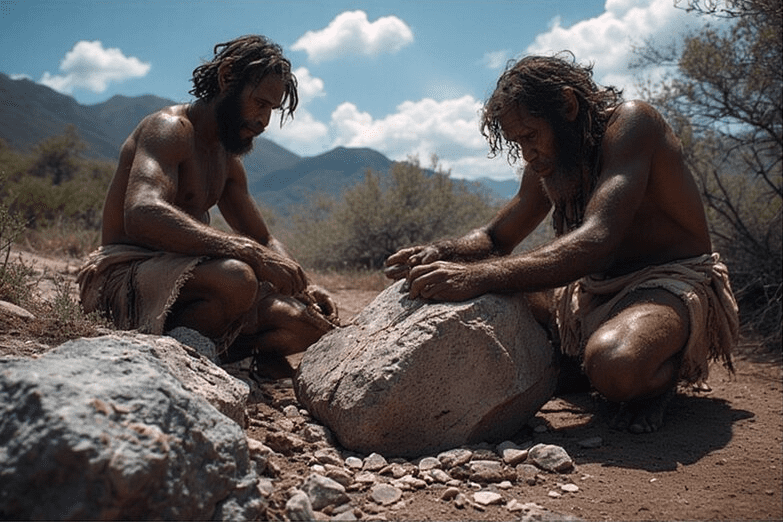
Hormozgan’s 400-hectare Paleolithic hub proves region was a long-term homeland, not just a transit route, for Homo erectus-era populations.
A sprawling Lower Paleolithic settlement uncovered in Hormozgan province is reshaping scholarly views on the timing and nature of human dispersal across the Iranian Plateau. Spanning an area three times the size of ancient Persepolis, the Dehtal site establishes southern Iran as a sustained center of early human activity rather than a fleeting corridor.
Strategic Landscape and Resource Abundance
Positioned on the slopes of Pereh Lavar mountain, roughly 80 kilometers inland from the Persian Gulf’s northern coast, the 400-hectare complex benefited from reliable freshwater springs and extensive local stone deposits. These environmental advantages supported prolonged occupation and continuous tool production by prehistoric groups.
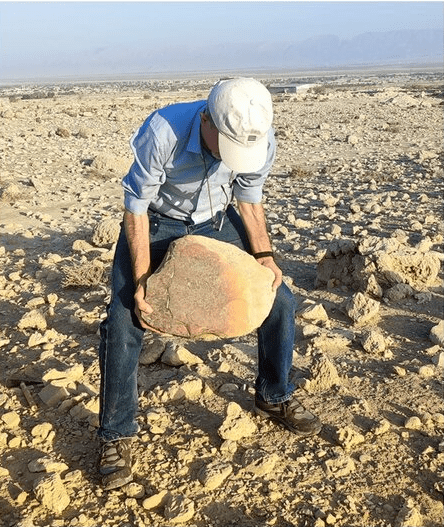
Archaeologists highlight the site’s topography as a key factor in its appeal, enabling communities to maintain stable bases while exploiting nearby raw materials for manufacturing needs.
Key 2025 Surface Collections and Artifact Assemblage
Field campaigns conducted during summer and autumn 2025 recovered hundreds of diagnostic stone implements under the direction of Hormozgan Cultural Heritage Deputy Sepehr Zarei. The inventory features classic Acheulean forms, including handaxes, cleavers, and robust scrapers crafted from large flakes.
Notably, the recovery of giant cores capable of yielding flakes longer than 20 centimeters sets the location apart within Iran’s Paleolithic record. Such oversized blanks served as platforms for producing heavy-duty cutting tools associated with Homo erectus and Homo heidelbergensis.
Sepehr Zarei, Hormozgan Cultural Heritage Deputy – The evidence demonstrates southern Iran functioned as a primary settlement zone, fundamentally altering previous migration frameworks.
Reinterpreting Dispersal Patterns from Africa
Conventional models positioned the region primarily as a conduit linking African origins to inland Asia. Dehtal findings instead reveal patterns of extended residency, technological continuity, and adaptive resource use indicative of established populations.
| Attribute | Dehtal Characteristics | Regional Significance |
|---|---|---|
| Site extent | 400 hectares | Largest known in southern Iran |
| Core dimensions | >20 cm flakes | Rare scale for Acheulean contexts |
| Tool repertoire | Full Acheulean suite | Comprehensive early technology |
| Resource base | Water + lithic abundance | Enabled multi-generational stays |
Ongoing Analysis and Heritage Protection Measures
Although surface indications date to initial surveys in 2010 led by National Museum of Iran researcher Fereidoun Biglari, the 2025 season clarified the site’s exceptional scope. Laboratory examinations and cross-site comparisons remain in progress to refine chronological placements.
Provincial authorities have fast-tracked procedures to inscribe Dehtal on Iran’s National Heritage List, recognizing its pivotal contribution to understanding underrepresented phases of national prehistory.
Elevating Southern Iran’s Role in Global Paleolithic Studies
The discovery positions Hormozgan as a priority zone for investigating early hominin behavior, technological trajectories, and environmental interactions outside Africa. Future seasons are expected to yield deeper insights into social organization and landscape exploitation strategies.