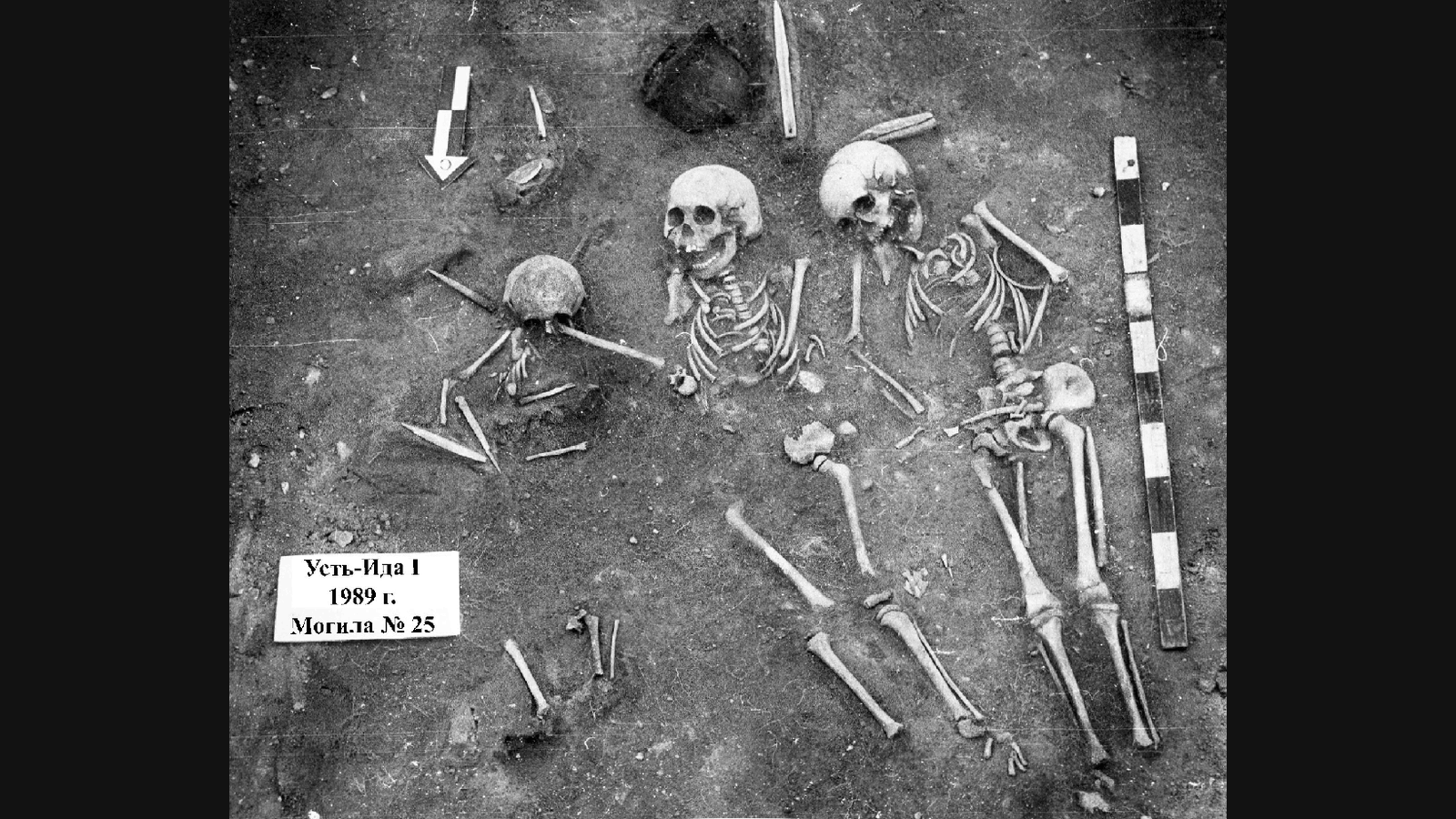
A prehistoric Lake Baikal plague outbreak is no longer just a theory drawn from scattered graves. Ancient DNA from children buried near the Angara River in southeastern Siberia shows that Yersinia pestis was killing hunter-gatherer communities around 5,500 years ago, long before the Black Death or the first cities usually linked to epidemic disease.
Three little girls were buried together near the Angara River in southeastern Siberia. Two were likely sisters. The third was probably their first cousin. All were between 4 and 9 years old.
Their grave at Bratskii Kamen, near Lake Baikal in Russia, is part of a wider discovery that pushes the history of Yersinia pestis far beyond medieval cities, merchant ships, and the Black Death. A new study published in Nature shows that plague was killing hunter-gatherer communities in Siberia around 5,500 years ago, long before the Justinian Plague, the Black Death, or the Third Plague Pandemic.
The finding is not just an older date for a famous disease. It changes the setting in which plague history begins. This was not a crowded town, a trade port, or a farming village. It was a mobile hunter-gatherer world of rivers, wild animals, family groups, and seasonal movement.
A family grave, not just a pathogen
The three girls at Bratskii Kamen were not an isolated case.
Researchers analyzed ancient DNA from children and adolescents buried in four prehistoric cemeteries around Lake Baikal and the Angara River. At least 18 of 46 individuals tested positive for Yersinia pestis, producing an unusually high detection rate of about 39 percent.
That figure matters because pathogen DNA does not always survive in ancient remains. A negative result does not necessarily mean a person was free of infection. In this case, the number of positive samples suggests that plague moved through these communities with real force.
The burials also show that the disease did not strike only scattered individuals. Several graves contained close relatives. In some cases, siblings appear to have died at the same time and were buried together.
Ruairidh Macleod, a postdoctoral research fellow at All Souls College, University of Oxford and lead author of the study, described the evidence as “really, really extraordinary” in comments reported by CIDRAP. What surprised him most was the setting: small prehistoric hunter-gatherer groups with no known contact with farming or pastoral communities.
An old plague theory becomes harder to defend
For years, one common explanation for plague’s rise focused on agriculture.
The logic seemed simple. Farming created stored food. Stored food attracted rodents. Rodents and their fleas helped dangerous pathogens circulate. Larger settlements then gave diseases more human hosts.
The Lake Baikal evidence complicates that picture.
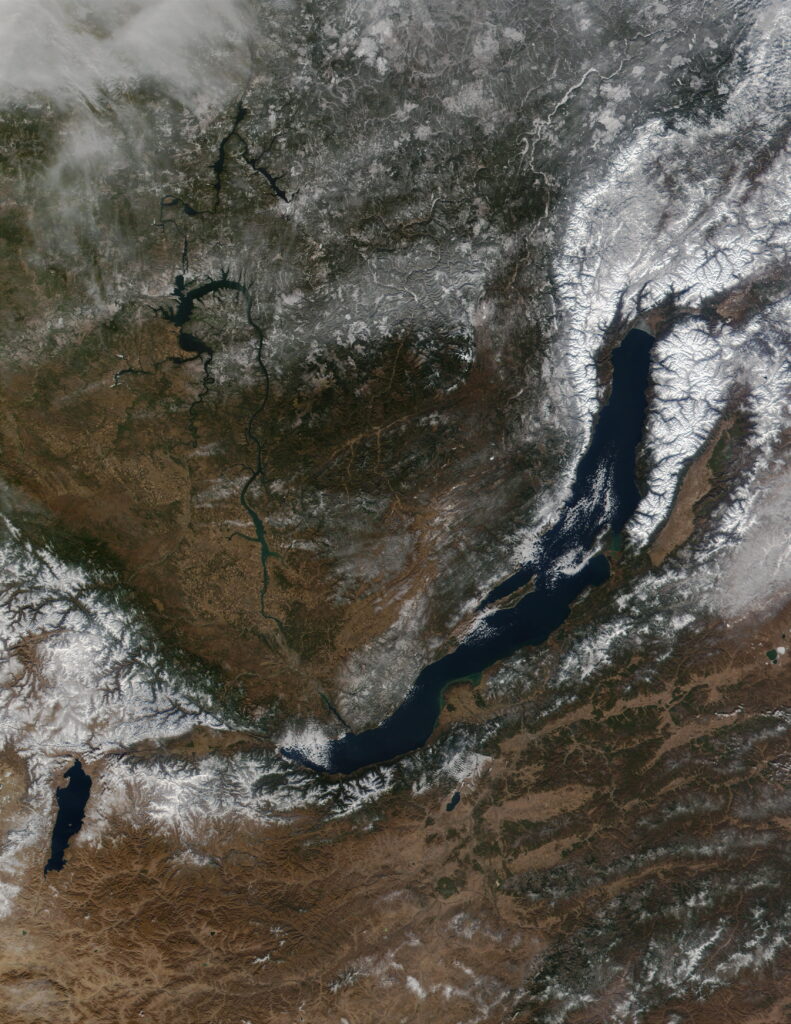
The people buried at Ust’-Ida, Shumilkha, Bratskii Kamen, and Serovo were not urban, agricultural, or densely settled. They lived in a rich Siberian landscape shaped by the lake, rivers, forests, fish, birds, seals, deer, and marmots. They moved through the region in small groups.
Yet plague reached them.
That does not mean agriculture played no role in later plague history. It clearly did. But the new evidence shows that Yersinia pestis was already dangerous in a very different kind of society.
Ust’-Ida’s child burials finally make sense
One of the key sites, Ust’-Ida, had long raised questions.
Archaeologists working there since the 1990s had found an unusually high number of children and adolescents. Their skeletons did not show clear evidence of violent death. Radiocarbon dating suggested that many of them died within a short period.
The pattern looked less like normal cemetery use and more like a sudden mortality event.
Ancient DNA has now given that pattern a plausible explanation. Teeth from Ust’-Ida and nearby cemeteries preserved genetic traces of plague bacteria. Because blood vessels inside teeth can retain evidence of bloodstream infections, molars and premolars became a crucial archive of disease.
Macleod and his colleagues sampled small amounts of material from the tips of teeth, then extracted and analyzed the surviving DNA. The result is one of the clearest prehistoric disease signals yet found in a hunter-gatherer population.
Two outbreaks along the Angara River
The earliest outbreak appears to have occurred between about 5,520 and 5,265 years ago. It affected individuals buried at Ust’-Ida and Shumilkha, two cemeteries on the Angara River roughly 37 kilometers apart.
Genetic evidence suggests these burial grounds were used by different family or band groups. But the timing and bacterial data are close enough to indicate that young people at both sites may have died during the same outbreak.
A later wave appears in evidence from Bratskii Kamen and Serovo, farther along the Angara. The dates there are more variable, but the number of plague-positive individuals suggests that Yersinia pestis returned to the region several centuries after the first outbreak.
This points to repeated exposure, not a single strange accident. Plague was present in the landscape and able to reach different human groups more than once.
Early plague did not need medieval conditions
The plague strains found near Lake Baikal were not the same as the bacterium that caused the medieval Black Death.
They lacked some of the genetic adaptations that later made Yersinia pestis highly efficient at flea-borne transmission. That difference once supported the idea that early plague strains may have been less dangerous.
The new study weakens that assumption.
These prehistoric strains carried a superantigenic toxin absent from later plague lineages. Researchers suggest this toxin may have triggered an extreme immune response, especially in children. Macleod has compared the possible effect to an inflammatory condition similar to Kawasaki syndrome, which is more common in young children.
So the disease may not have spread like classic bubonic plague. It may not have depended on the same flea-driven cycle familiar from later pandemics. But it could still kill, and it could do so in a way that left a visible mark in cemetery populations.
Marmots may have been the first link
The likely source was not a rat in a medieval alley, but a marmot in the Siberian landscape.
Marmots are large ground squirrels and are still known reservoirs of Yersinia pestis. They were also part of the animal world used by prehistoric groups around Lake Baikal. Hunting, butchering, skinning, or eating an infected marmot could have allowed the bacterium to pass into humans.
After that first spillover, the disease may have spread between people. The clustering of related children in shared graves supports that possibility.
The picture is not of a single unlucky hunter. It is of a pathogen moving from animals into small human groups, then spreading through close social and family networks.
A disease older than cities and empires
The Justinian Plague struck the Mediterranean world in the 6th century AD. The Black Death devastated parts of Eurasia and North Africa in the 14th century. The Third Plague Pandemic began in China in the 19th century and spread globally.
The Lake Baikal outbreak came thousands of years earlier.
Its significance lies in what it removes from the story. Plague did not need cities to become deadly. It did not need large farming villages to harm human communities. It did not even need the medieval flea-borne form that later made it infamous.
In southeastern Siberia, 5,500 years ago, small hunter-gatherer groups were already vulnerable to one of humanity’s most feared pathogens.
Macleod put the wider lesson plainly: “There was never a time we were safe from pathogens.”
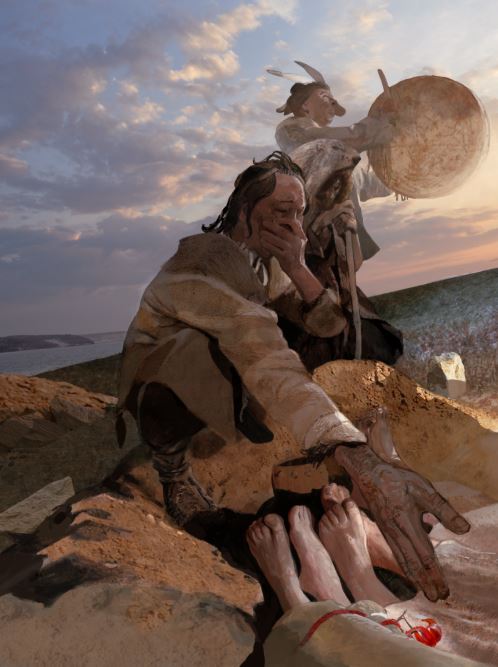
The children buried near Lake Baikal now show that the long relationship between humans and plague began not in the streets of medieval Europe, but beside a Siberian river, in graves where families buried their dead together.
Cover Image: Burial at Ust’-Ida containing two full siblings, a 7–9-year-old boy and a 9–11-year-old girl, both of whom tested positive for plague DNA. The remains of a third individual were too poorly preserved for analysis. Credit: Vladimir Bazaliiskii / Baikal Archaeology Project.