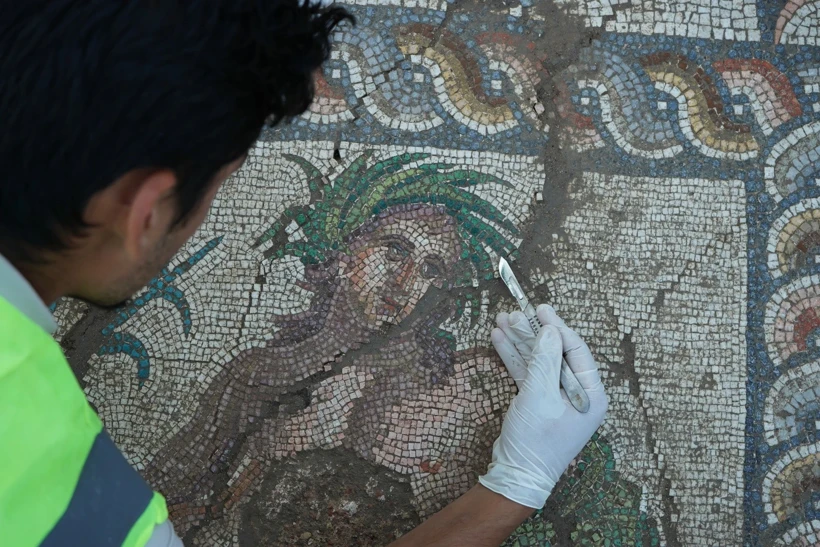
A Roman mosaic uncovered in Aspendos has brought back the image of Eurymedon, the river that once fed the city’s fields, trade, and imagination.
Archaeologists discovered the mosaic in the eastern square of Theater Street, the route linking the acropolis of Aspendos with its famous Roman theater in Antalya, southern Türkiye.
The decorated structure measures about 6 by 25 meters. Initial assessments suggest it was built as a pool in the early 3rd century AD.
So far, excavations have exposed roughly 6 by 7.5 meters of the mosaic floor. The building appears to have changed after the destructive earthquake of AD 262, when internal walls were added and the original space was divided into smaller rooms.
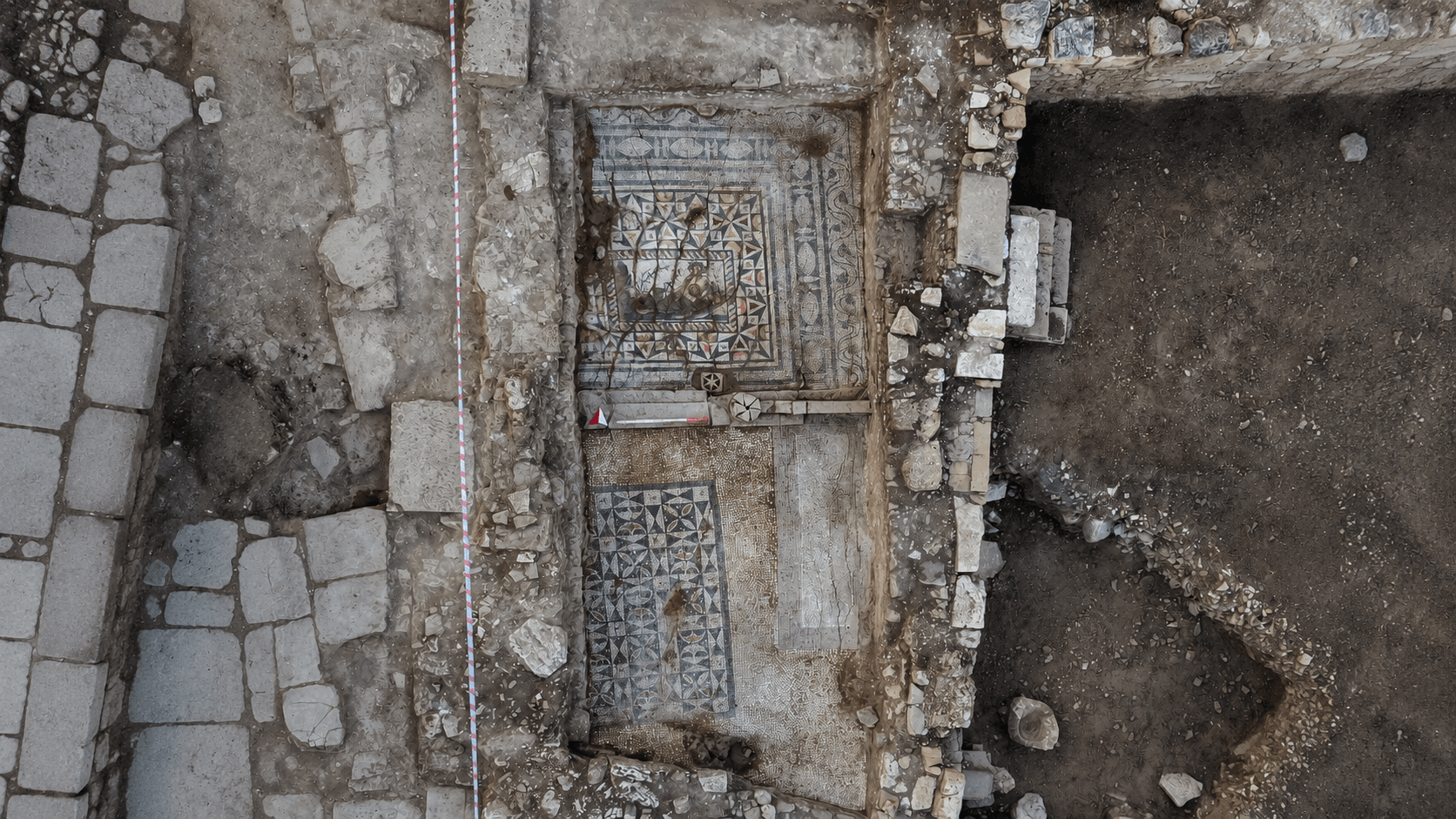
Eurymedon Appears at the Center of the Floor
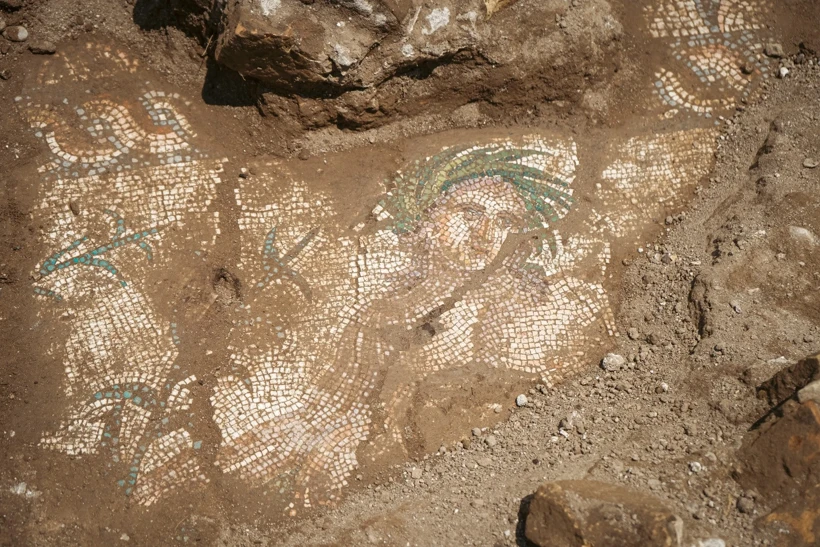
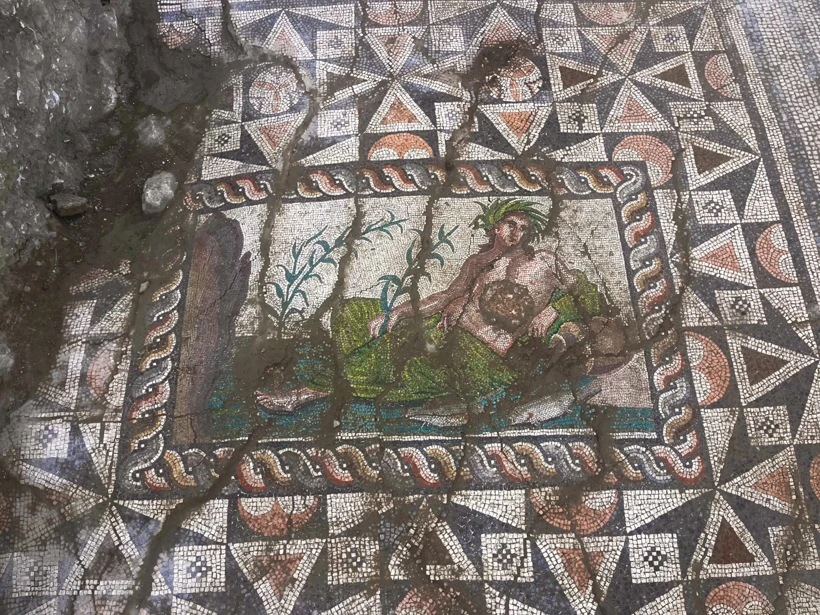
At the center of the mosaic is a youthful figure identified as “Young Eurymedon,” the river god of Aspendos.
He reclines beside an amphora pouring water. Reed leaves appear on his head and in his hand, while fish swim through the surrounding river scene.
The image was not chosen by chance. Eurymedon, known today as Köprüçay, was one of the reasons Aspendos grew into an important city of ancient Pamphylia. The river supported agriculture, opened access toward the Mediterranean coast, and helped shape the city’s wealth.
Aspendos Beyond Its Famous Theater
Aspendos was one of the leading cities of ancient Pamphylia, a coastal region of southern Anatolia. Founded on a strategic river route near the Mediterranean, the city became known in antiquity for its wealth, trade connections, aqueducts, and monumental Roman architecture.
Aspendos is best known today for its Roman theater, built in the 2nd century AD and still one of the best-preserved theaters of the ancient world.
But the new mosaic draws attention to another part of the city. Theater Street, with its public spaces and decorated architecture, shows that Aspendos had a richer urban life than its single most famous monument suggests.
The discovery also underlines the role of water in the city’s identity. In Roman Aspendos, the river was not only a resource. It was part of how the city understood itself.
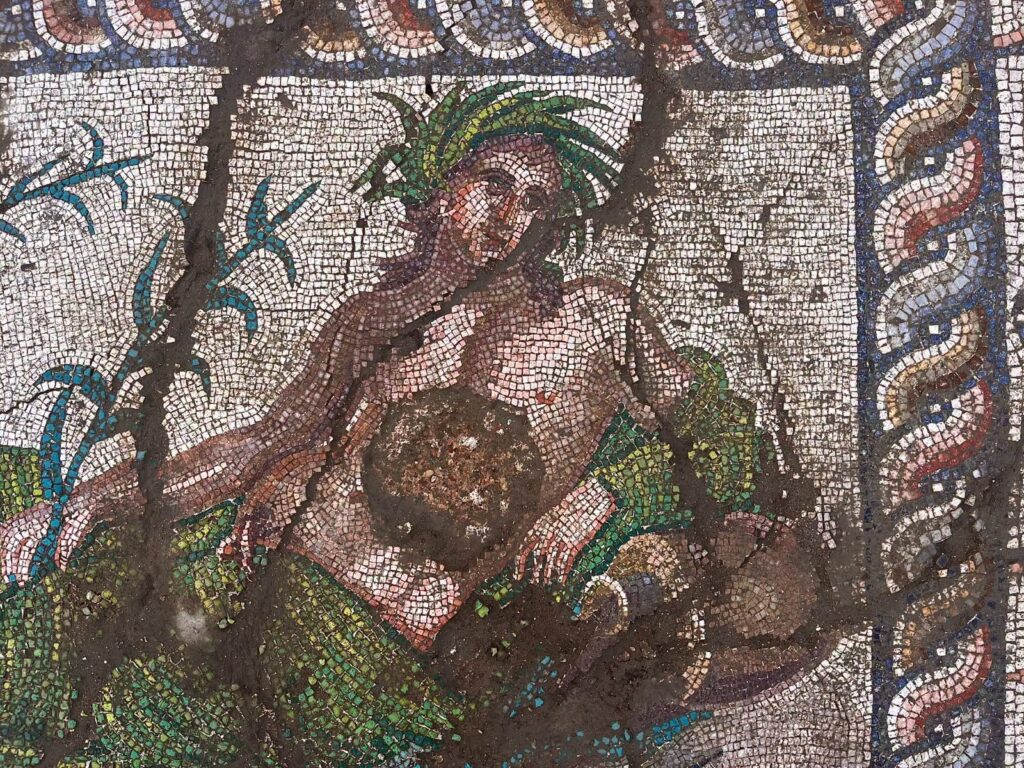
A Rare Image in Anatolian Mosaic Art
The mosaic was made with small stone pieces known as tesserae. Its color transitions, figure proportions, and detailed workmanship point to skilled Roman-period craftsmanship.
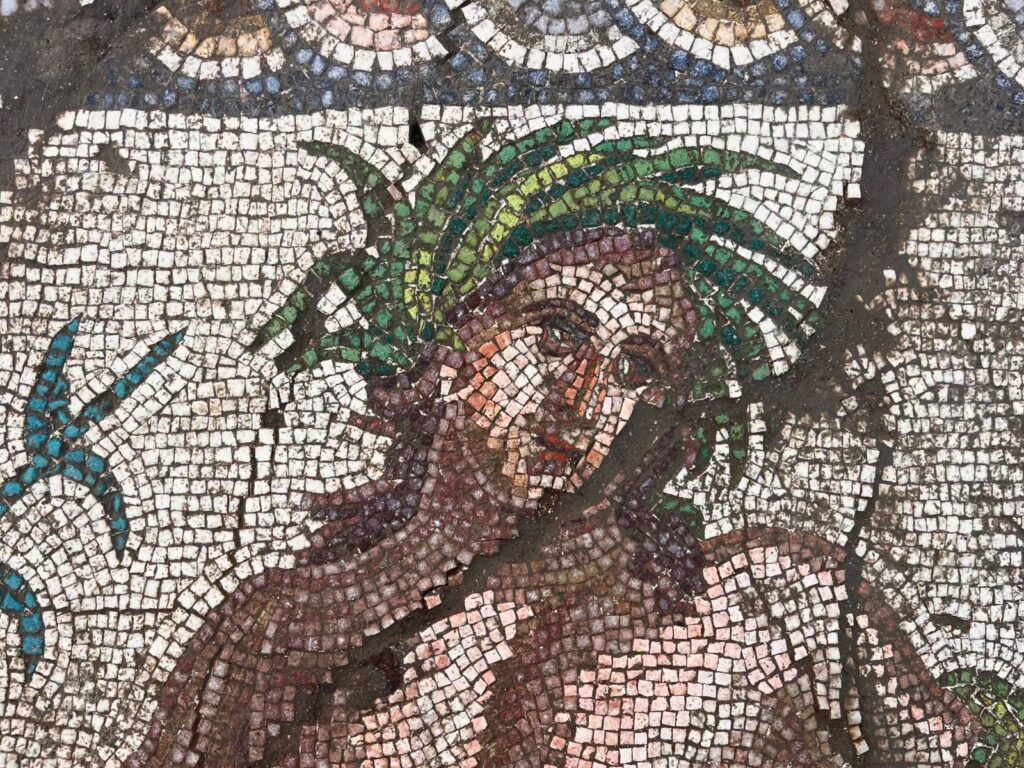
River gods were familiar in Greco-Roman art, but surviving mosaic examples connected with local rivers in Anatolia are limited. That makes the Young Eurymedon mosaic especially valuable for understanding how geography, myth, and civic identity met in Roman art.
For Aspendos, this was not just decoration. It was the city’s river, turned into stone and color.