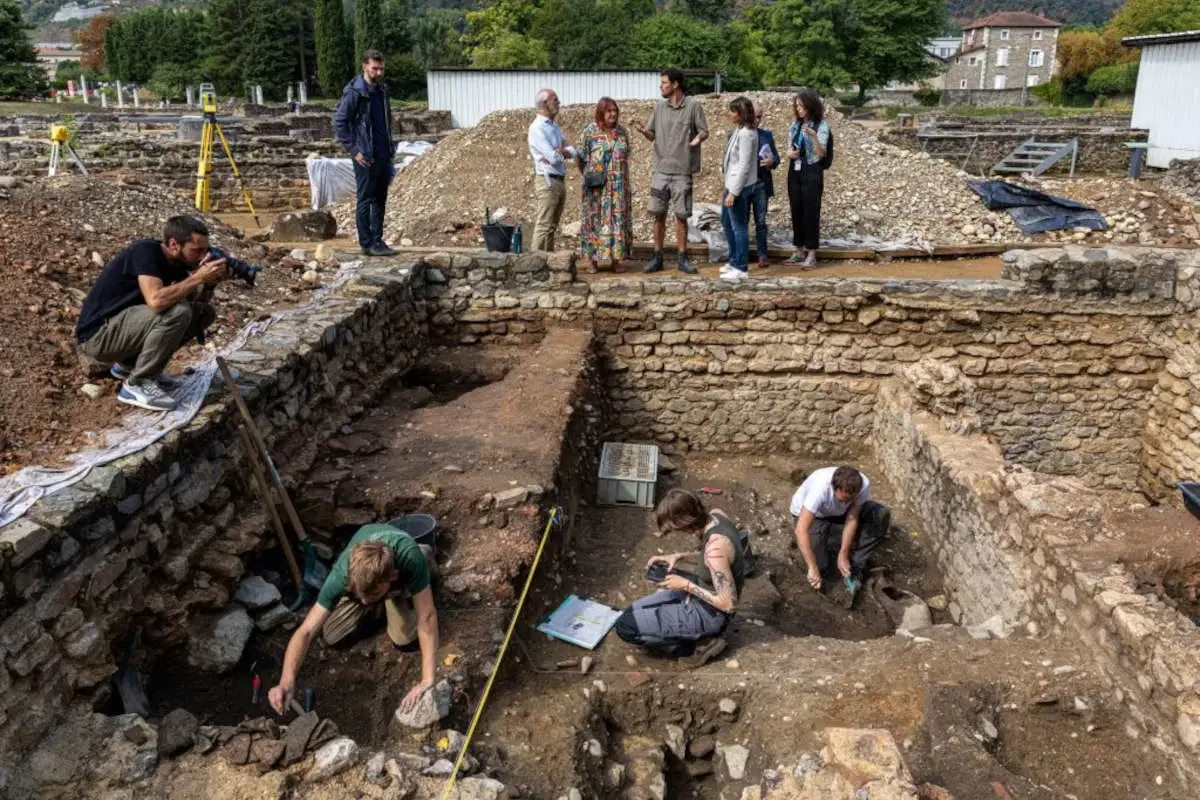
French archaeologists have made an extraordinary discovery in Saint-Romain-en-Gal, a historic site on the outskirts of Vienne near Lyon. Excavations conducted this summer revealed a monumental Roman mausoleum, a rare structure believed to have been built for an elite figure connected to imperial power. Experts describe the find as “exceptional,” noting its size and remarkable state of preservation.
Dating to around A.D. 50, the mausoleum features a circular plan with an internal diameter of 15 meters and is estimated to have originally stood over 6 meters high. Positioned along routes leading to the Roman colony of Vienne and visible from the Rhône River, the structure would have served as an enduring symbol of prestige and influence.
According to Giulia Ciucci, scientific director of the museum’s archaeological sites, “The person buried here was someone who, even in death, needed to remain present among the living—a member of the aristocratic elite, likely with political authority and ties to imperial power.” Archaeologists believe the mausoleum was inspired by the Mausoleum of Augustus in Rome (27 B.C.–A.D. 14), the first emperor of the Roman Empire.
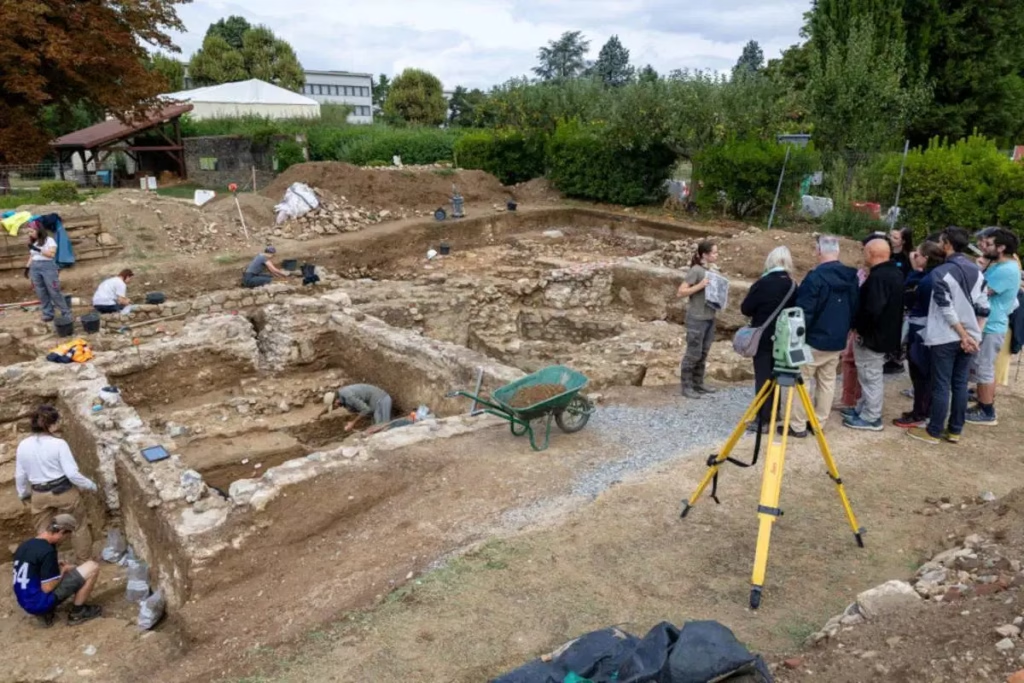
Émilie Alonso, director of the departmental museum, emphasized the significance of the find: “This discovery illustrates the true mission of the Saint-Romain-en-Gal site. And this is only the beginning.” Further research will continue in 2026 and 2027, in collaboration with universities including Aix-Marseille, Marie-et-Louis-Pasteur in Besançon, and the CNRS, to uncover the identity of the individual buried within.
The excavation also revealed new insights into the economic life of ancient Vienne. Near the Northern Baths, archaeologists uncovered three Roman shops dating from the 1st to 2nd centuries A.D., part of a commercial complex first identified in the late 1980s. Among the finds were workshops equipped for fulling woolen fabrics—a technique used to strengthen and waterproof garments like the white toga worn by Roman citizens—as well as a third space featuring a kiln, possibly for glassmaking or baking.
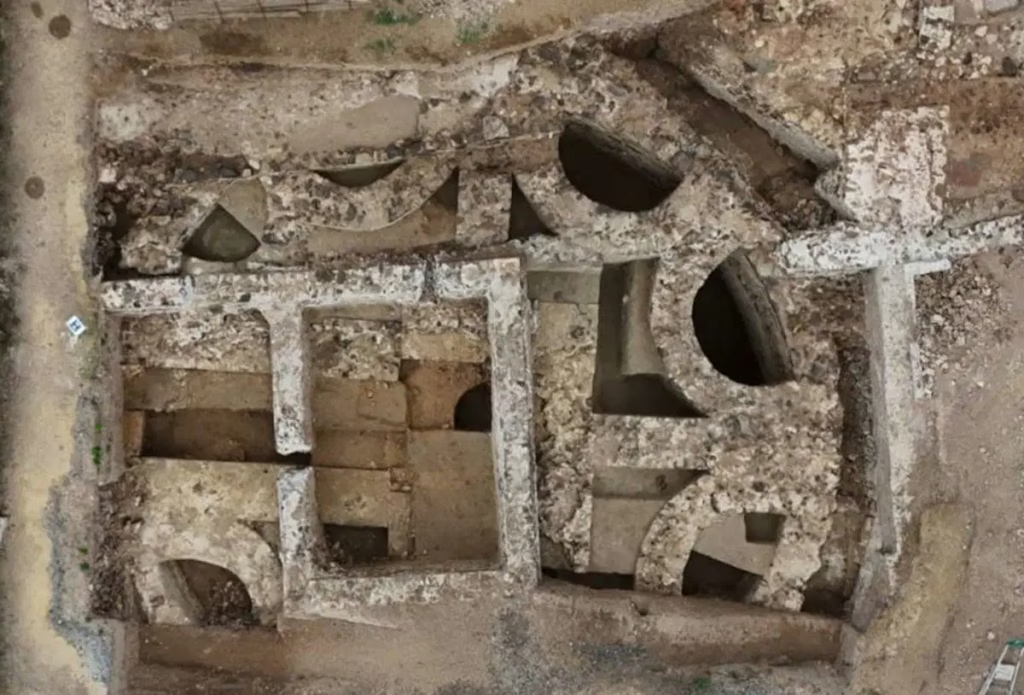
“The quality and diversity of these finds are exceptional,” said Benjamin Clément, professor of Roman archaeology at the University of Besançon. “They allow us to understand not only long-distance trade but also the local economy, something rarely possible with such well-preserved evidence.”
This remarkable discovery sheds new light on both the grandeur of Rome’s provincial elites and the everyday economic activities that sustained life in one of Gaul’s most important Roman cities.