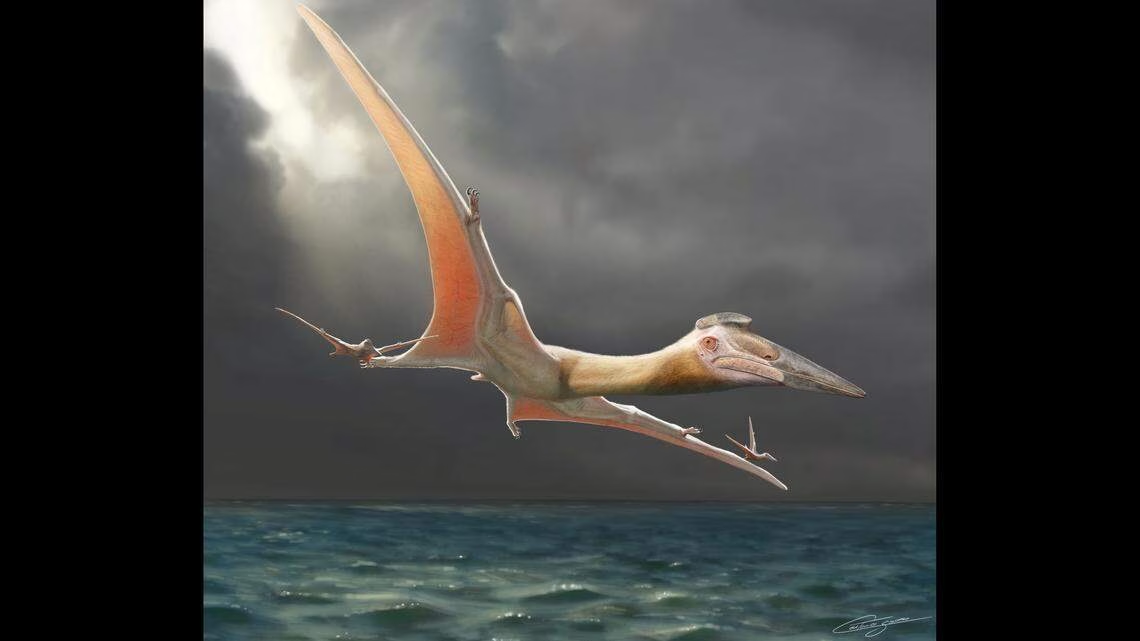
A massive flying reptile that once ruled the Late Cretaceous skies has been identified in Syria — the first pterosaur fossil ever found in the country. The discovery reveals that these enormous airborne predators, some with wingspans rivaling small aircraft, once soared above what is now the Middle East.
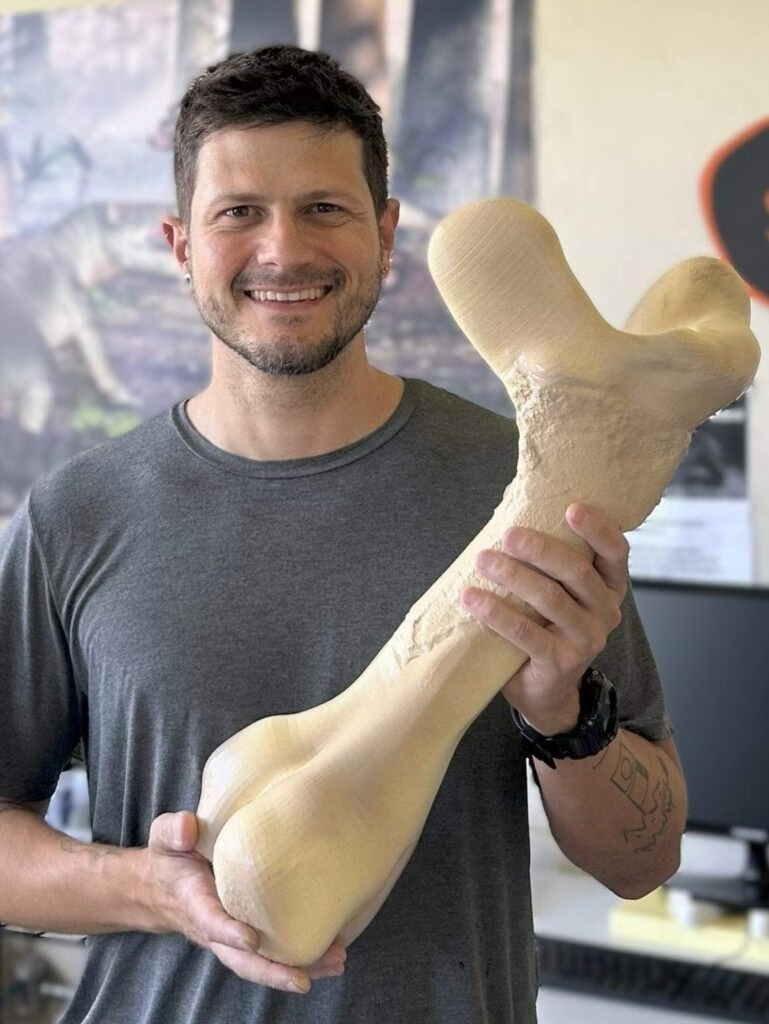
The fossil, a fragment of the left humerus (upper arm bone), was originally unearthed in the early 2000s inside a phosphate mine near Palmyra. For nearly two decades, it sat unrecognized until Syrian paleontologist Wafa Adel Alhalabi rediscovered it and recognized its extraordinary importance. Her findings, recently published in The Science of Nature, confirm the specimen as a member of the Azhdarchidae, a family of giant, toothless pterosaurs known for their long necks and terrestrial hunting habits.
“Even one bone can tell an incredible story,” said Alhalabi. “It reminds us that Syria’s geological past still hides many secrets.”
A Forgotten Fossil Reborn
The bone, measuring 29 centimeters (11.4 inches) in its preserved portion, suggests that the complete wing could have stretched nearly 10 meters (33 feet) across — only slightly smaller than the legendary Quetzalcoatlus northropi, the largest known flying creature in history. Such proportions make it one of the largest pterosaurs ever recorded in the Middle East.
When the fossil was first found by a local geologist, it was briefly noted, then stored away amid years of regional turmoil. Alhalabi, working independently in Latakia and often using her own funds, carefully prepared and analyzed the specimen with basic equipment — a rare act of scientific persistence under difficult conditions.
Expanding the Map of the Cretaceous Sky
The Syrian pterosaur’s remains were found in marine sediments of the Palmyrides mountain range, near the ancient Tethys Sea. Most azhdarchids are discovered in inland environments, which makes this coastal context particularly significant. It suggests these colossal fliers were not limited to continental interiors but also thrived in coastal habitats.
According to co-author Felipe Pinheiro of the Universidade Federal do Pampa, “This discovery demonstrates that giant pterosaurs were far more widespread than previously assumed, reaching regions we never expected.”
A New Chapter in Middle Eastern Paleontology
Around 70 million years ago, during the final era of the dinosaurs, much of Syria lay beneath a shallow tropical sea. The presence of a giant pterosaur in these marine rocks provides a new glimpse into the region’s ancient biodiversity — and highlights the need for renewed paleontological exploration in the Levant.
Despite being based on a single bone, the study reshapes the known distribution of Late Cretaceous flying reptiles and places Syria firmly on the global paleontological map. The Azhdarchids, including Quetzalcoatlus and Hatzegopteryx, were the last survivors of their kind, vanishing 66 million years ago in the same mass extinction that ended the age of dinosaurs.
“Each discovery from Syria adds a new line to Earth’s evolutionary record,” said Alhalabi. “We are only beginning to understand the life that once flourished here.”
Alhalabi, W.A., Pinheiro, F.L., Jaoude, I.B. et al. Recovering lost time in Syria: a gigantic latest Cretaceous azhdarchid pterosaur from the Palmyrides mountain chain. Sci Nat 112, 78 (2025). https://doi.org/10.1007/s00114-025-02032-9
Cover Image Credit: The massive animal had a 33-foot wingspan. Felipe Pinheiro