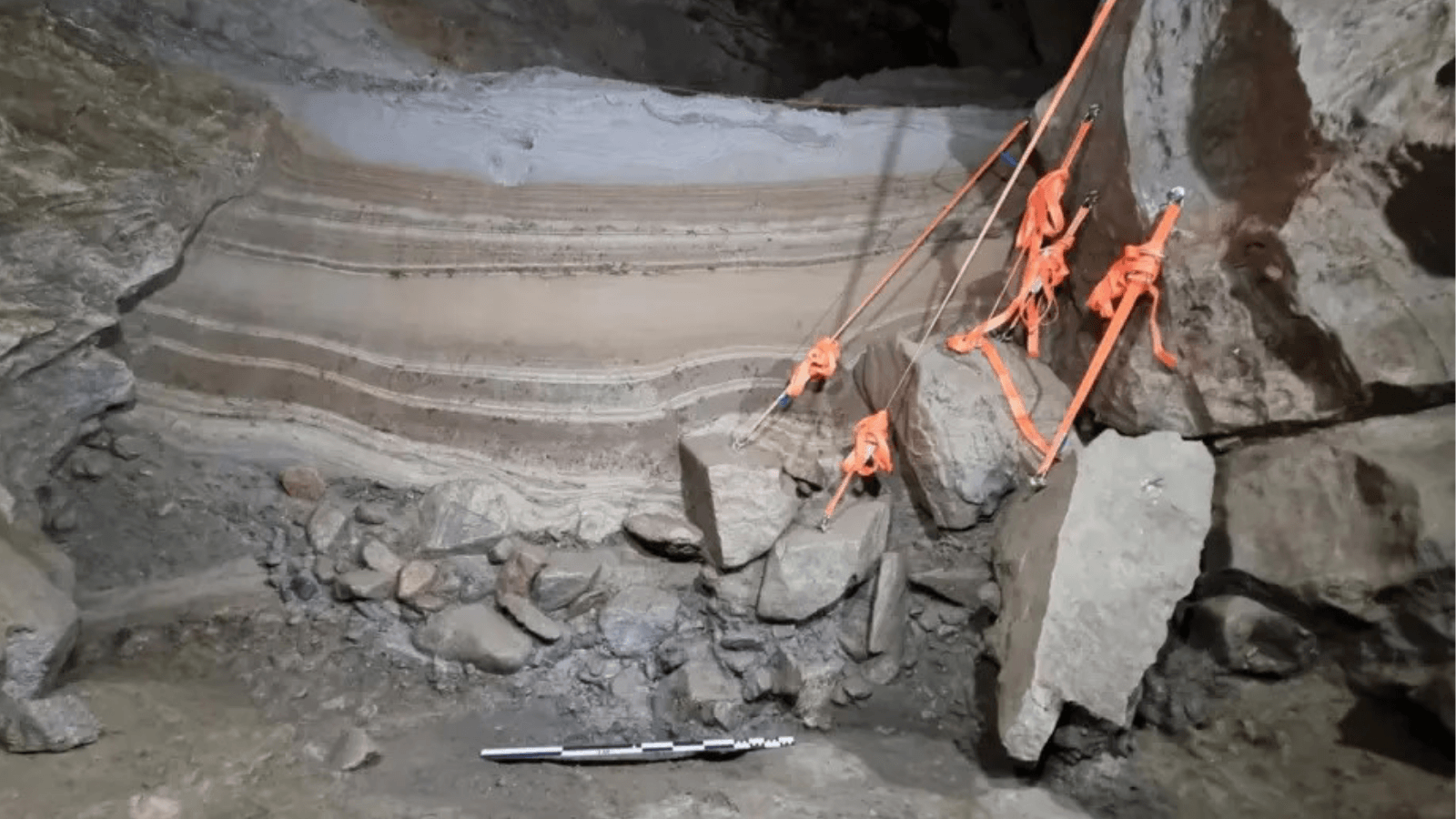
A Norwegian cave has preserved the remains of 46 types of animals that lived in the European Arctic around 75,000 years ago, providing an exceptionally rare glimpse of wildlife during the last glacial period.
The discovery at Arne Qvamgrotta, part of the Storsteinhola cave system, represents the oldest preserved faunal assemblage known from the European Arctic. The remains include mammals, birds and fish from terrestrial, freshwater and marine environments.
But the bones reveal more than which animals once lived so far north. Ancient DNA recovered from several specimens shows that the genetic lineages represented in the cave later disappeared, documenting a major turnover in Arctic wildlife as colder, fully glaciated conditions returned.
The findings were published in the journal Proceedings of the National Academy of Sciences (PNAS) by an international research team led by Samuel J. Walker and colleagues.
A surprisingly diverse Arctic community
Researchers identified 46 taxa using a combination of comparative osteology, bulk-bone metabarcoding and genetic analysis.
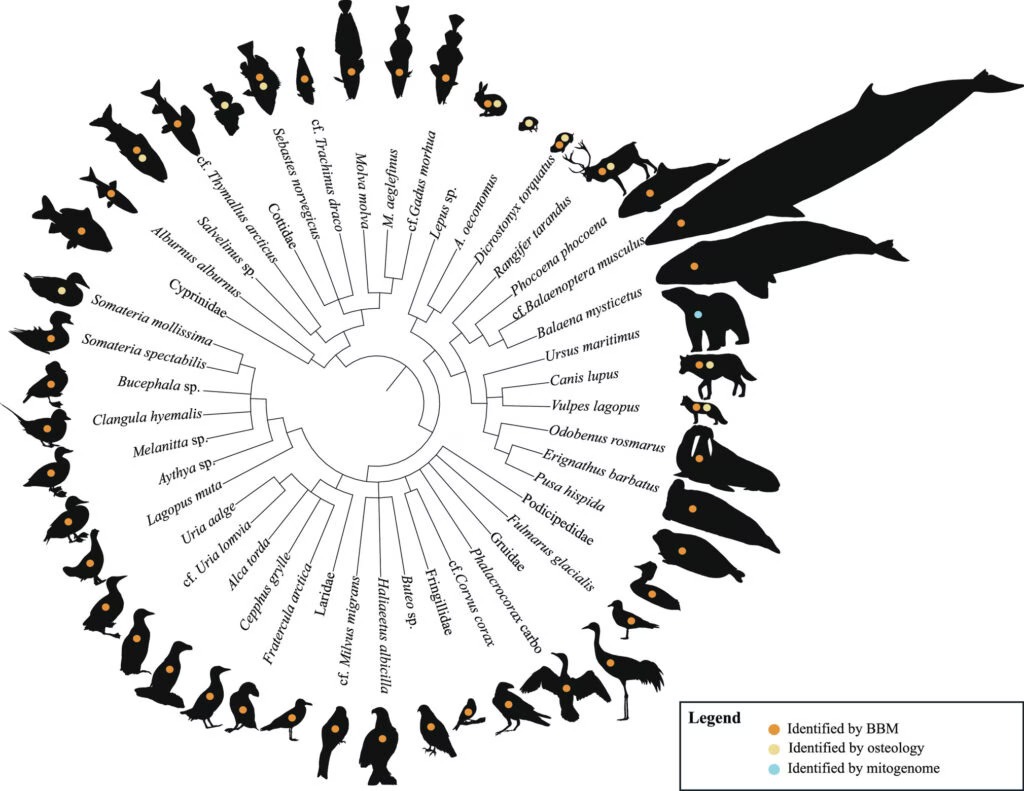
Among the animals were polar bear, reindeer, Arctic fox, walrus, bowhead whale, harbour porpoise and collared lemming, alongside birds including Atlantic puffin and common eider and fish such as Atlantic cod.
Together, they point to a cold-adapted coastal ecosystem combining animals from land and sea.
Freshwater fish indicate that lakes or rivers existed nearby, while species associated with sea ice suggest that ice occurred close to the coast. Harbour porpoises, which generally avoid sea ice, indicate that the ice was probably seasonal rather than permanent.
The terrestrial animals indicate Arctic or subarctic tundra. Researchers also recovered two wood fibers belonging to the pine family, suggesting that some pine trees were present in the wider region.
A rare record from 75,000 years ago
Dating evidence places the animal-bearing layers within Marine Isotope Stage 5a, or the Odderade interstadial, approximately 85,000 to 71,000 years ago.
Preserved biological material from this period is exceptionally rare in northern Europe because repeated glaciations removed or disturbed much of the older sedimentary record.
That makes Arne Qvamgrotta particularly important. Researchers describe it as the first known European Arctic sediment sequence containing such a diverse animal assemblage from before the Last Glacial Maximum.
The assemblage also differs from the better-known Ice Age environments of Europe, where mammoths and other large terrestrial animals frequently dominate the archaeological record. Instead of being dominated by large terrestrial mammals, it preserves a coastal Arctic community that includes marine mammals, small mammals, birds and fish.
Ancient DNA reveals lineages that vanished
The genetic evidence adds another dimension to the discovery.
Researchers reconstructed mitochondrial genomes from several animals, including Arctic fox, collared lemming and polar bear. The mitochondrial lineages they sequenced are no longer represented among living populations.
This means the species themselves could survive elsewhere while particular regional populations — and their genetic histories — disappeared.
The collared lemming provides a striking example. The species is no longer found in the region, while the genetic lineage recovered from Arne Qvamgrotta belongs to a population that subsequently vanished.
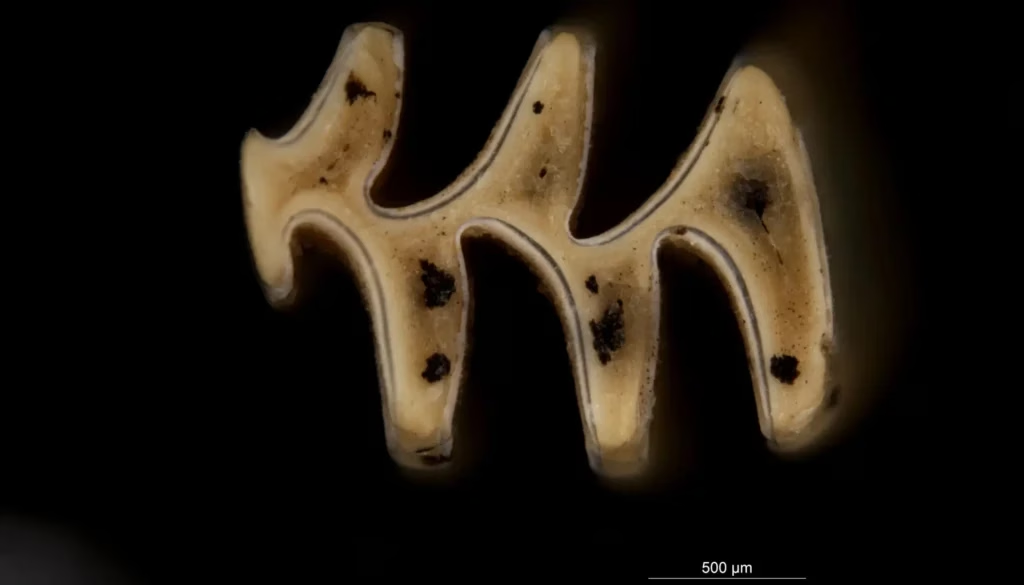
The ancient Arctic fox and polar bear remains also fall outside modern genetic lineages, providing further evidence of substantial population turnover.
When the ice returned
After the animals occupied the region, climatic conditions shifted and Scandinavia entered more extensively glaciated phases.
The genetic results indicate that northern Norway did not provide a refuge for these populations during periods of extreme cold. Rather than simply tracking suitable habitat as the environment changed, several of the populations represented at Arne Qvamgrotta disappeared.
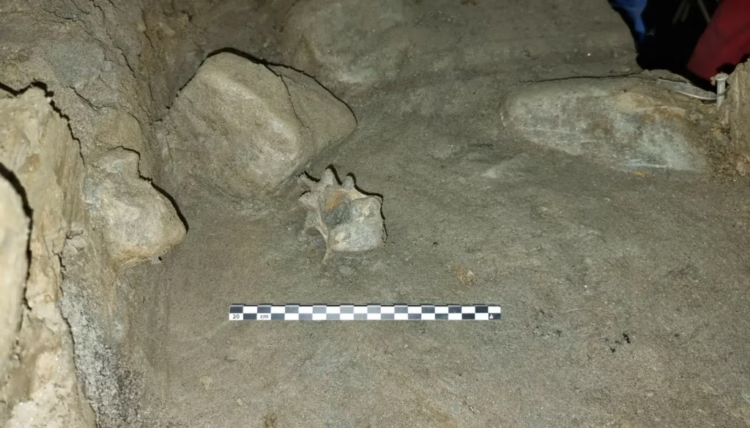
Animals later returned to the Arctic after the glaciers retreated, but they were not necessarily members of the same genetic populations that had lived there before.
This distinction is one of the study’s most important findings: identifying the same species before and after a major climatic transition does not necessarily mean that the original population survived.
An Arctic ecosystem largely erased by glaciers
The discovery also illustrates why caves are so important for reconstructing the distant history of northern Europe.
Glaciers repeatedly reshaped Scandinavia, eroding sediments and destroying much of the biological record. Arne Qvamgrotta preserved material that escaped much of that destruction, leaving a rare biological archive from an otherwise poorly documented period.
The researchers found no evidence of human or hominin presence in the deposit. The significance of the cave instead lies in the unusually detailed picture it provides of Arctic biodiversity before later glaciations transformed the region.
The ancient population losses are not a direct analogue for today’s warming Arctic: the major turnover documented at Arne Qvamgrotta occurred as the region moved toward colder, more heavily glaciated conditions.
However, the study shows that even cold-adapted species can lose entire populations and genetic lineages when environmental change prevents them from following suitable habitats.
Seventy-five thousand years later, the bones preserved at Arne Qvamgrotta provide a rare record not only of which animals inhabited the ancient Arctic, but also of populations that disappeared as that Arctic world changed.
Walker, S. J., Boilard, A., Henriksen, M., Lord, E., Robu, M., Buylaert, J. P., … & Boessenkool, S. (2025). A 75,000-year-old Scandinavian Arctic cave deposit reveals past faunal diversity and paleoenvironment. Proceedings of the National Academy of Sciences (PNAS), 122(32), e2415008122. https://doi.org/10.1073/pnas.2415008122
Cover Image Credit: The sediment profile in Arne Qvamgrotta after excavation. Credit: Trond Klungseth Lodoen/Bournemouth University/PA Wire