
A vast Roman-era hoard hidden for eight years has come to light in Lower Saxony, Germany — after the man who secretly unearthed it finally confessed to authorities.
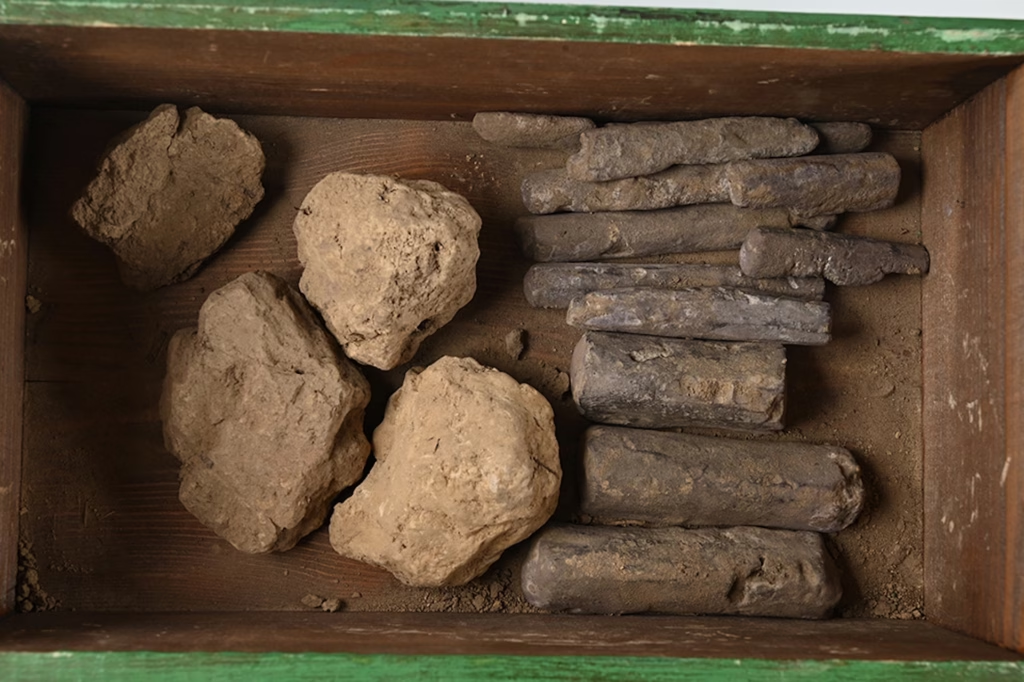
In 2017, metal detectorist Jannik Pauli illegally discovered a remarkable Roman coin and silver hoard near Borsum, in the Hildesheim district. The cache included around 450 silver denarii, several silver bars, a gold ring, and a gold coin — dating back to the 1st century A.D. Experts describe it as one of the largest Roman Imperial hoards ever found in Lower Saxony, with immense archaeological significance far beyond its monetary value.
Pauli, who had been using a metal detector since childhood, never obtained an official permit. After years of disputes with local authorities, he chose to conceal the discovery to avoid legal penalties — storing the treasure in a wooden box in his home in Hildesheim’s Achtum neighborhood.
Earlier this year, now 31 years old, Pauli voluntarily came forward and handed over the hoard to the police. Prosecutors were unable to charge him, as the statute of limitations had expired, but his confession led archaeologists to the original findspot.
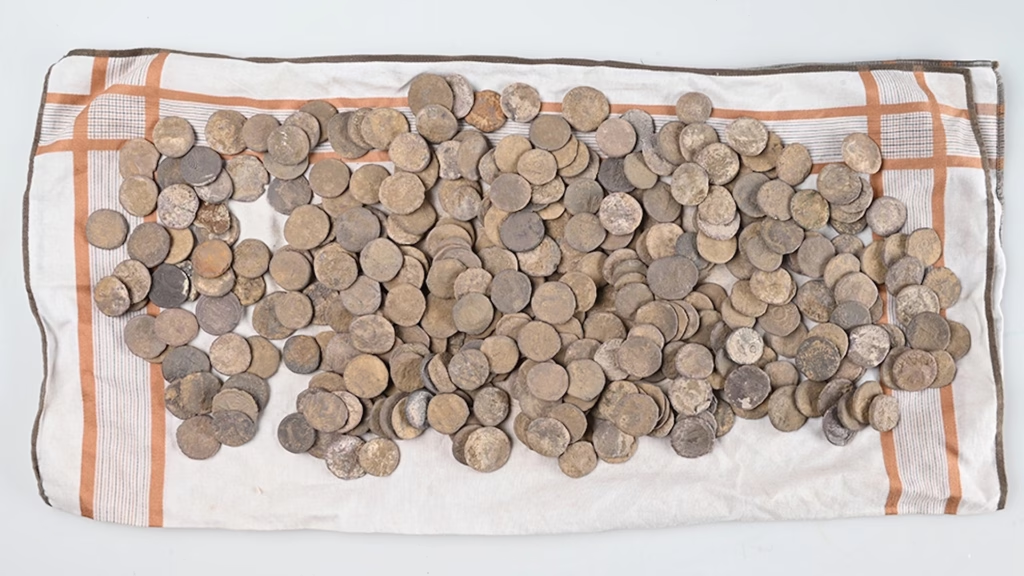
In October 2025, a team from the Lower Saxony State Office for Monument Preservation, in collaboration with the Lower Monument Protection Authority of the Hildesheim District and the City Archaeology Department, conducted a detailed survey of the site. Despite the destruction of the original archaeological context, researchers succeeded in recovering additional coins and crucial contextual data about how the hoard was deposited 2,000 years ago.
The so-called Borsum Hoard is now under conservation and scientific study. Researchers aim to refine the chronology of its burial, determine the geological and metallurgical origins of the silver, and possibly uncover who buried it — whether it was Roman soldiers or local Germanic tribes safeguarding wealth during a period of conflict.
Meanwhile, Pauli has completed the official training course for metal detectorists organized by the heritage authority, signaling a turn toward legal and ethical cooperation with archaeologists.
“Even though the archaeological context has been disturbed, this find remains of great cultural and scientific value,” the Lower Saxony State Office stated. “It tells a story not only of ancient wealth but also of modern responsibility toward our shared past.”