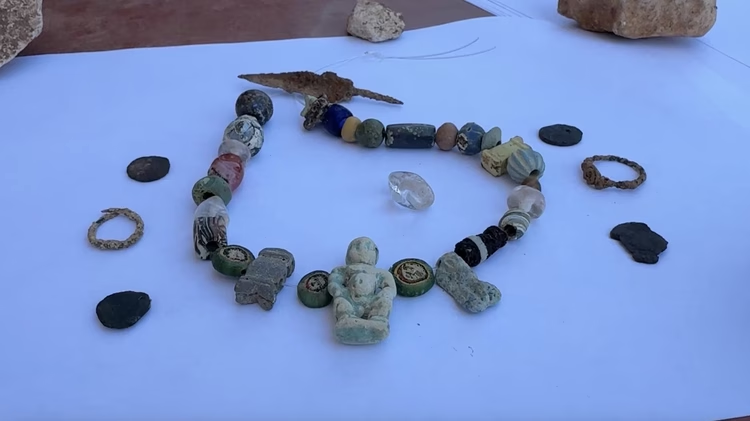
Archaeologists working in Perre Ancient City in Adıyaman, Turkey, have made a discovery that bridges Anatolia and Egypt in an unexpected way. A 2,100-year-old chamber tomb has yielded a faience amulet depicting the Egyptian protective god Pataikos—the first such find ever reported in Anatolia.
Discovery on the “Stairway to Eternity”
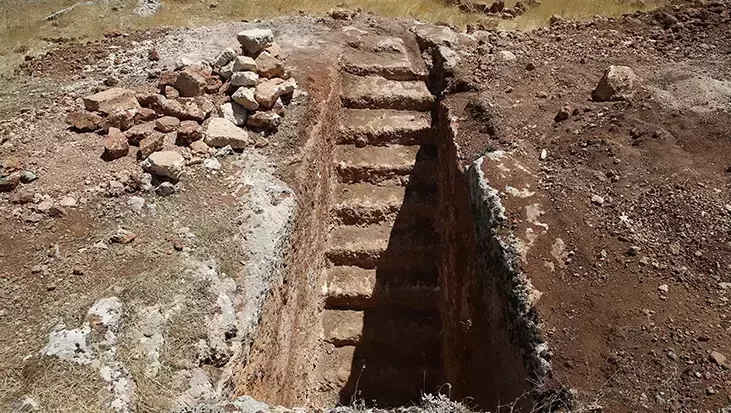
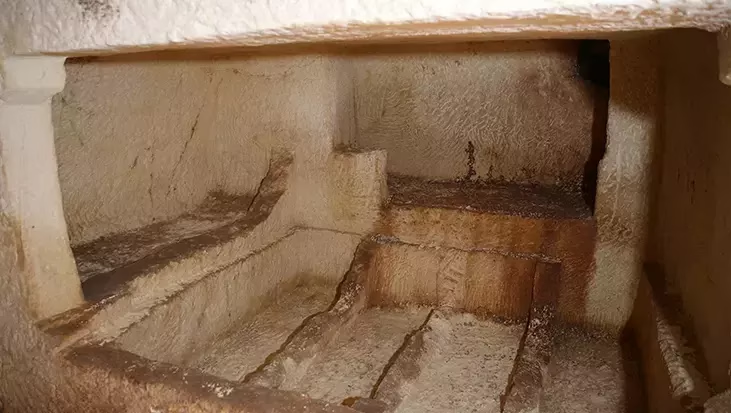
Excavations are taking place in the monumental necropolis of Perre, locally called the “Stairway to Eternity.” Inside a hypogeum-style rock-cut tomb, archaeologists identified the remains of 14 individuals along with a collection of beads, charms, and the Pataikos amulet.
“This chamber tomb dates to the Hellenistic period, and the Pataikos figure is being unearthed for the first time in Anatolian excavations,” said Mehmet Alkan, Director of the Adıyaman Museum. “It is powerful evidence of Commagene’s multicultural identity and its connections between East and West.”
Perre: The Gateway of Commagene
Perre, situated just outside modern Adıyaman, was one of the five great cities of the Kingdom of Commagene (2nd century BCE – 3rd century CE). Its location made it a strategic gateway to Mount Nemrut, home of the kingdom’s famous royal sanctuary. Even during the Roman period, Perre remained significant, with its extensive rock-cut tombs, water systems, and necropolis drawing attention from archaeologists to this day.
Who Was Pataikos?
In ancient Egyptian belief, Pataikos was a dwarf deity revered as a protector against evil. He was often depicted in miniature faience amulets that were carried for safeguarding children, households, and travelers. The presence of such an artifact in Perre points to long-distance cultural and religious exchange during the Hellenistic period.
A Boost for Tourism and Research
Adıyaman Provincial Director of Culture and Tourism Mehmet Yelken emphasized that the discovery has meaning beyond archaeology:
“Findings like this will significantly enhance cultural tourism in the region. Perre will now be recognized not only as a Commagene stronghold but also as a place where Egyptian influences reached Anatolia.”