In the crowded world of Roman gods, Mater Matuta stood apart. She was not the thunderous protector of the skies like Jupiter, nor the fierce warrior of battlefields like Mars. Instead, she ruled over quieter, yet deeply vital moments: the break of dawn, the cries of childbirth, and the hope that comes with every new beginning.
Her very name reveals her essence: Mater—mother, and Matuta—morning. For Romans, dawn was more than a change in the sky; it symbolized renewal, fertility, and the promise of life. Mater Matuta embodied all of this, becoming the protector of mothers and children.
The Temples of a Quiet Goddess
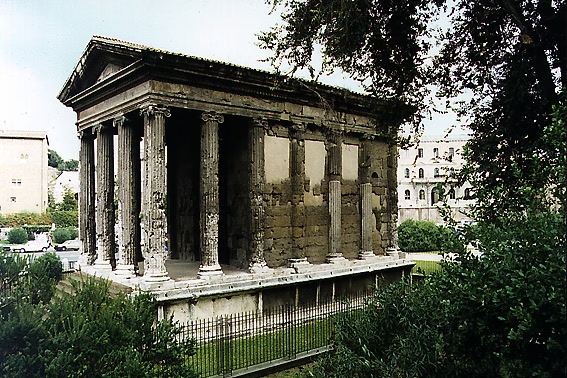
The best-known sanctuary dedicated to Mater Matuta stood near the Tiber River, in the Forum Boarium—the bustling cattle and trading district of ancient Rome. Tradition held that the first temple was built during the reign of King Servius Tullius, and later rebuilt in 396 BC by Marcus Furius Camillus.
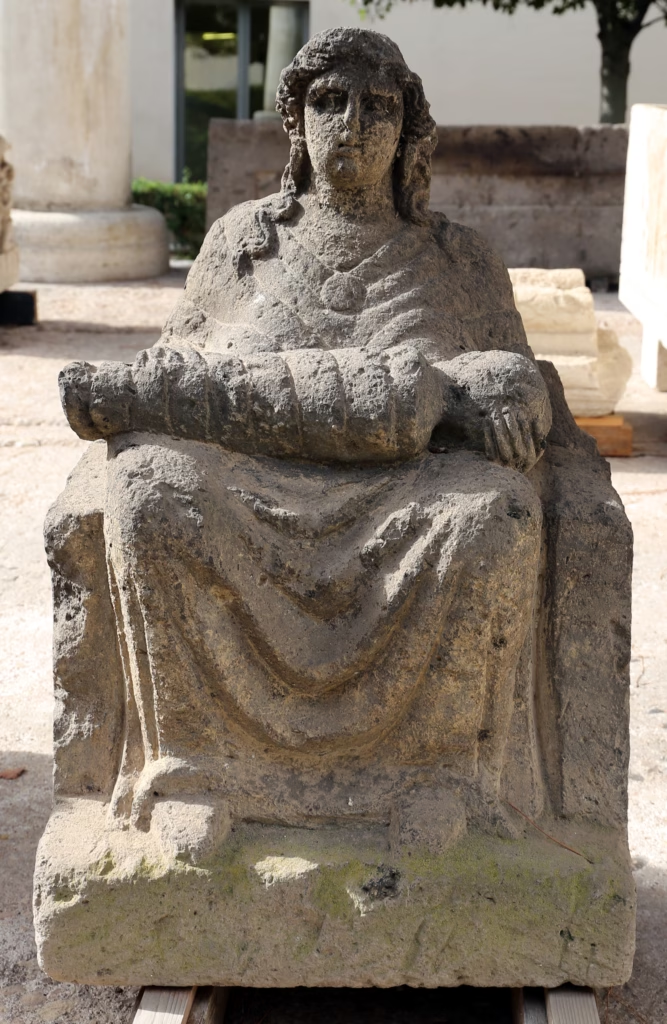
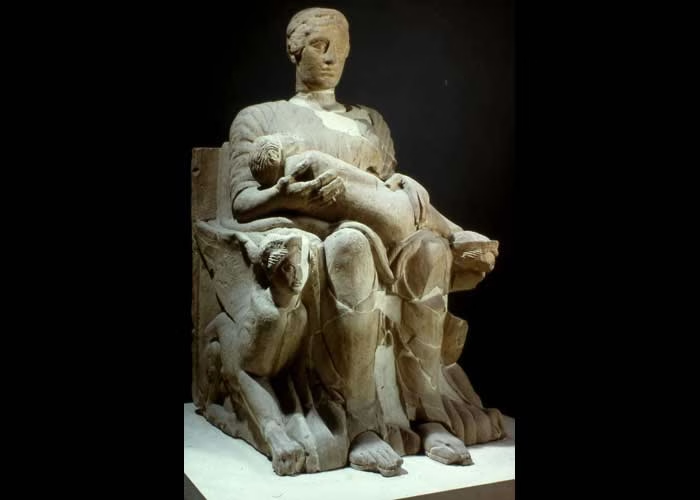
But her influence extended far beyond Rome. In Campania, especially in Capua, archaeologists have uncovered dozens of small statues known as matres matutae. These female figures, now on display at the Campano Museum in Capua, show how deeply her cult resonated with women, especially in connection with motherhood and fertility.
Matralia: A Festival for Women
Mater Matuta’s sacred day was June 11, marked by the festival of Matralia. But this was not an event open to all. Only women who had married once—and were still with their husbands—could participate.
Interestingly, the prayers were not for their own children, but for the children of their sisters. Flat breads baked in clay pots were offered on the altars, while women gathered in rituals that reinforced Rome’s ideals of motherhood and family.
The role of enslaved women was strikingly different. They were excluded from the celebration, with only one slave woman allowed in—only to be symbolically slapped and driven out. To modern eyes it seems cruel, but to Romans it was a reminder of social hierarchy and the privileges of freeborn women.
A Subtle but Enduring Power
Mater Matuta never shook the heavens, nor did she march with armies. Her strength was in the ordinary, the everyday. She was present at the first light of day, in the labor pains of women, and in the whispered prayers of sailors setting out to sea.
It is this quiet, enduring presence that made her one of Rome’s indispensable goddesses—an unseen but constant guardian of life’s most fragile beginnings.