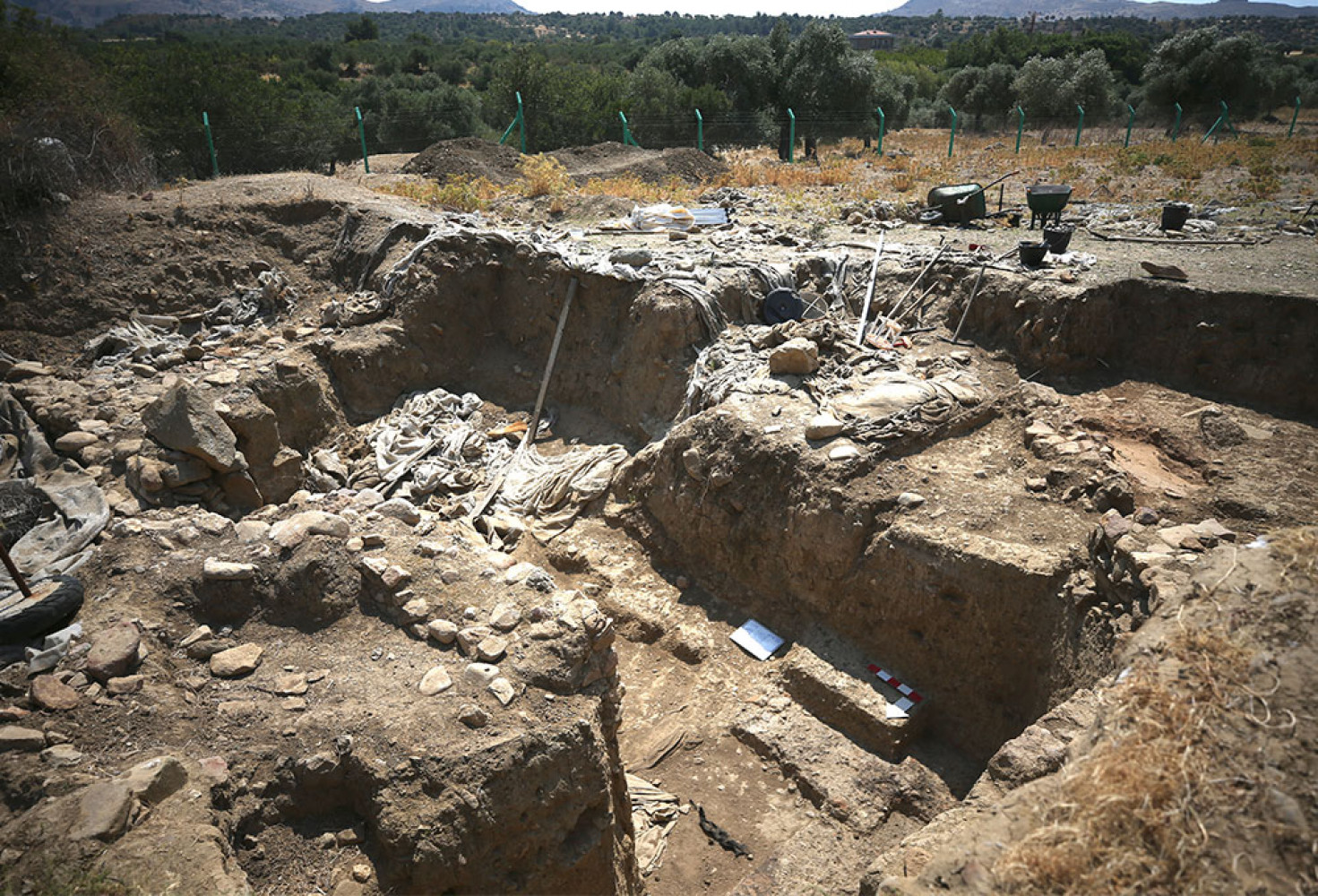
Five 8,800-year-old Neolithic houses uncovered at Uğurlu-Zeytinlik Höyük on Gökçeada are offering a rare view into how some of the earliest farming communities of the Aegean islands built, lived, and adapted to an island environment.
The structures, dated to around 6800 BC, came to light during a recent excavation season at the prehistoric mound, where research has been carried out under the direction of Prof. Dr. Burçin Erdoğu of Akdeniz University. Their discovery strengthens Gökçeada’s place in one of archaeology’s most important debates: how farming, animal husbandry, and settled village life spread from Anatolia into the Aegean island world.
Sunken houses built for an island landscape
The five houses were round in plan and had sunken floors, with estimated diameters of roughly four to six meters. Their walls were built with a reed-and-mud technique, in which reeds or branches were woven together and then coated with clay.
This was not random shelter-making. The method created light, practical structures that could hold warmth and offer protection against the exposed conditions of the northern Aegean. The sunken floors may also have helped stabilize the houses and improve insulation.
For researchers, the significance of the discovery lies in both its age and its architecture. These were homes built by people who had already adopted a settled farming lifestyle. They were shaping the island, not merely passing through it.
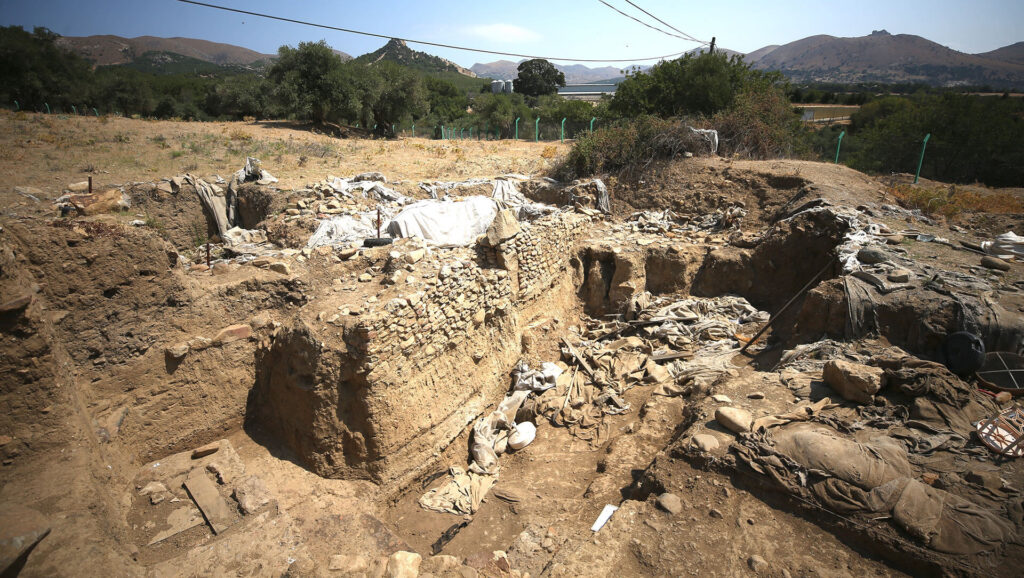
One of the earliest farming villages in the Aegean islands
Uğurlu-Zeytinlik Höyük has become one of the key sites for understanding the Neolithic transformation of the Aegean. For many years, Crete, especially Knossos, dominated discussions about the earliest farming communities in the island world. The evidence from Gökçeada shows that the northern Aegean was also part of this early transformation.
The settlement preserves traces of a community that cultivated crops, raised animals, produced pottery, and developed long-term village life. Plant remains from the site include wheat, barley, and peas. Animal bones point to sheep, goats, cattle, and pigs.
Together, these finds suggest a mixed farming and herding economy. Uğurlu-Zeytinlik was not an isolated island camp. It was a settled community with food production, domestic architecture, and a clear connection to wider prehistoric networks.
A route from Anatolia into the island world
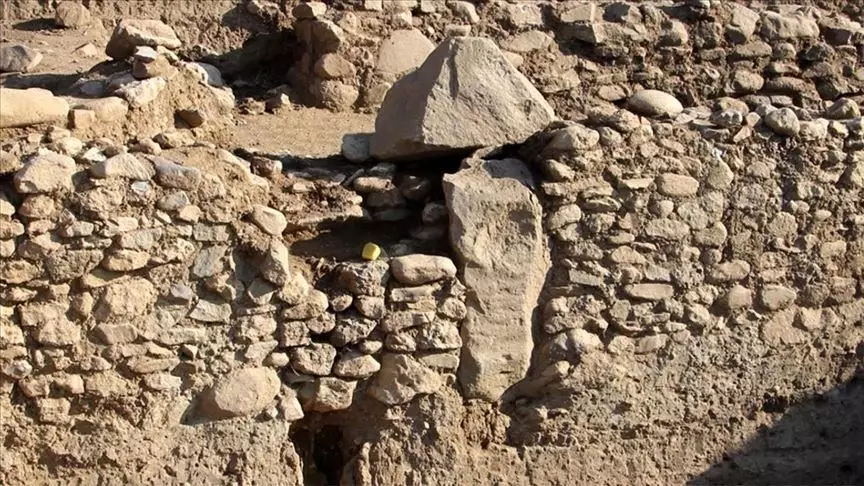
Gökçeada’s location gives the discovery wider importance. The island lies close to northwestern Anatolia and would have formed part of a broader prehistoric route linking Anatolia, the Marmara region, Thrace, the Balkans, and the Aegean islands.
The early inhabitants of Uğurlu-Zeytinlik likely brought crops, domestic animals, building techniques, and maritime knowledge with them. Their presence shows that the spread of farming was not a simple movement across land. It also depended on coastal travel, island settlement, and communities able to adapt familiar practices to new landscapes.
The five houses make that process visible in human terms. They show where early island farmers slept, cooked, stored food, and organized daily life nearly nine millennia ago.
A settlement that grew and changed
The newly identified houses belong to the early phases of occupation at Uğurlu-Zeytinlik, but the settlement did not remain unchanged. Research at the mound has shown that the community expanded over time, moving from a small group of households into a more complex settlement.
By later periods, its architecture and layout changed significantly. This long sequence makes Uğurlu-Zeytinlik especially valuable. It allows archaeologists to follow not only the arrival of early farmers on Gökçeada, but also the way their society developed over centuries.
The site therefore offers more than a single discovery. It preserves a long record of adaptation, growth, and changing social organization in the prehistoric Aegean.
A new anchor point for Neolithic Aegean archaeology
The discovery of the five 8,800-year-old houses strengthens Uğurlu-Zeytinlik Höyük as one of the clearest pieces of evidence for early farming life in the northern Aegean islands.
Nearly nine millennia later, these modest round houses are helping researchers trace the spread of settled farming life from Anatolia into the Aegean islands and, eventually, toward Europe. Their importance lies in their simplicity: they show how early island farmers built their homes, organized their lives, and made a new landscape part of the Neolithic world.
Cover image: 8,800-year-old Neolithic houses uncovered at Uğurlu-Zeytinlik Höyük on Gökçeada, Türkiye. Credit: Burak Akay/AA