A few worn whale bones, stored for decades in a university museum, have revealed an unexpected link between Iron Age communities in southern Sweden and the wider maritime world of northern Europe.
A new study published in Journal of Archaeological Science: Reports has identified the first confirmed baleen whale remains from Iron Age Scania. The bones were originally excavated in the 1960s and 1970s at Västra Karaby and Stockholmsgården, two archaeological sites in southern Sweden, but their significance only became clear after researchers re-examined them during recent inventory work at the Historical Museum at Lund University.
The discovery is not simply a note on ancient animal remains. It suggests that whale bone, a valuable and workable raw material, moved through exchange networks during the Iron Age and Viking Age. In other words, even relatively modest settlements in Scania may have been connected to a larger world of trade, craft production and maritime resources.
Museum Archives Open a New Chapter in Iron Age Scania
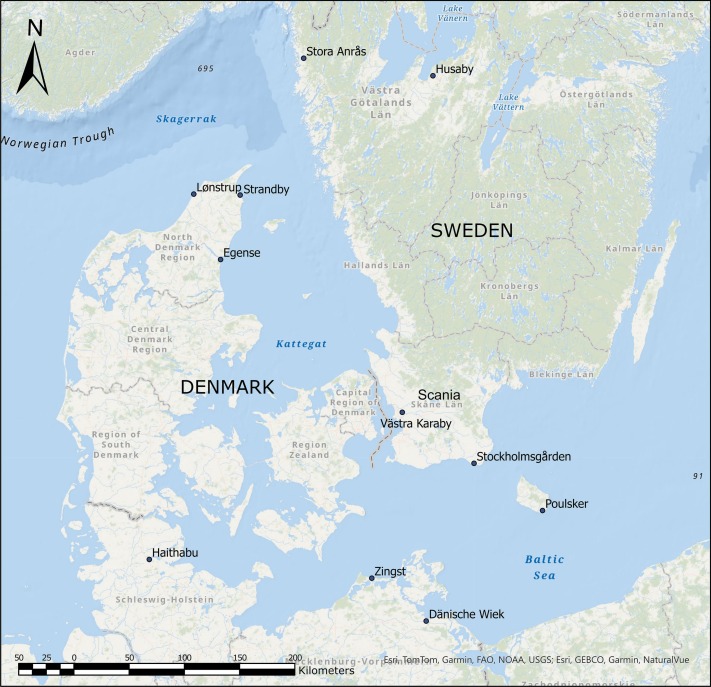
The four whale bones examined in the study came from two settlement sites. Three were recovered from Västra Karaby, a large Late Iron Age settlement known for pit houses and evidence of craft activity. The fourth came from Stockholmsgården in Valleberga parish, a site partly excavated under the direction of Swedish archaeologist Märta Strömberg.
For decades, the bones remained part of museum collections. They were not dramatic new finds pulled from the soil this year. Their importance emerged because researchers returned to older archaeological material with modern scientific tools and new questions.
That point is central to the study. Archaeological archives often contain fragments that could not be fully understood when they were first excavated. In this case, old animal bones became evidence for something far larger: the movement of whale bone through Iron Age Scandinavian society.
ZooMS Analysis Identifies Humpback, Fin and Right or Bowhead Whale
The researchers used Zooarchaeology by Mass Spectrometry, known as ZooMS, to identify the bones. The method analyses collagen peptide markers preserved in bone, allowing scientists to determine species even when fragments are too worn or incomplete for identification by shape alone.
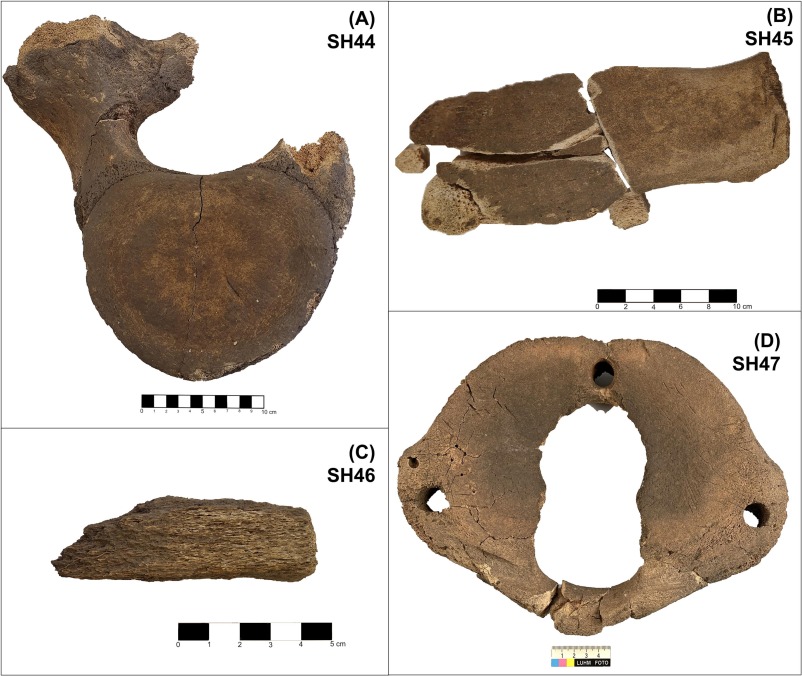
The results showed that the Scanian remains belonged to baleen whales. One specimen from Västra Karaby was identified as either North Atlantic right whale or bowhead whale. ZooMS cannot separate these two closely related taxa because they share the same peptide markers. Another specimen from Västra Karaby was identified as fin whale, making it the first confirmed find of this species from Scania.
Two other bones, one from Västra Karaby and one from Stockholmsgården, were identified as humpback whale.
For the region, that finding is significant. Until now, confirmed baleen whale remains from Iron Age contexts in Scania were unknown. The new identifications add a rare marine dimension to the archaeological picture of southern Sweden.
Worked Bone Points to Craft Production
The bones do not appear to be ordinary refuse. Several show traces of human modification, suggesting that they were worked, shaped or prepared for use.
The Stockholmsgården specimen is especially unusual. It is an atlas vertebra, the uppermost bone of the spine, and it had three drilled holes. It also showed wear marks. The researchers note that no clear parallel for the object is currently known, which makes its original function difficult to determine.
At Västra Karaby, one whale bone fragment had been heavily partitioned and abraded, exposing the spongy internal structure of the bone. Another showed chop marks from being separated from the vertebral body.
These traces point toward craft activity rather than food waste. Whale bone was large, durable and workable. Across northern Europe, it could be transformed into tools, gaming pieces and other crafted objects. The Scanian material fits that wider pattern of whale bone as a valued raw material.
A Small Settlement Linked to Wider Exchange Networks
Västra Karaby gives the finds a stronger archaeological setting. The whale bones were recovered from features such as pit houses and wells, in an area that may have functioned as a workshop zone. The settlement is also associated with other craft activities, including bronze casting.
That context makes the bones difficult to dismiss as accidental debris. They may have entered the site as raw material intended for production.
This interpretation changes how the discovery should be read. The bones do not necessarily prove that humpback whales, fin whales or right whales were swimming near the Scanian coast when the objects reached the settlement. They could have come from stranded whales, hunted whales or traded material from another region.
The authors therefore caution against using Iron Age whale bones as simple evidence for local whale populations. In an active exchange world, the material itself may have travelled a long distance before it was cut, drilled, used or deposited.
The comparison with Haithabu is important here. The Viking Age trading centre in present-day Germany has produced the largest number of Iron Age baleen whale specimens in the region. Haithabu was a major hub for trade, redistribution and craft.
Västra Karaby was much smaller. Yet the new evidence suggests that access to whale bone was not limited to major emporia or elite centres. More local settlements could also participate in networks that moved marine resources across southern Scandinavia.
Whale Bone and the Maritime Economy of the Iron Age
The discovery adds another layer to the economic life of Iron Age Scandinavia. Scania is often understood through settlement archaeology, agriculture, craft production and its role within Scandinavian exchange systems. These whale bones show that maritime resources were also part of that world.
Whale bone was not just a remnant of a dead animal. It was a material with practical and possibly symbolic value. It could be obtained, transported, modified and turned into objects within settlement communities.
The finds also contribute to the deeper history of whales in northern Europe. Before the rise of large-scale commercial whaling, baleen whales were more common in European waters than they are today. Species such as the North Atlantic right whale, now critically endangered, once had a much wider historical presence.
Still, the Scanian bones speak most clearly about people. They show that Iron Age communities valued whale bone and incorporated it into craft practices and exchange networks. The archaeology is stronger as evidence for human behaviour than as a direct map of ancient whale distribution.
Old Collections Still Hold New Discoveries
Perhaps the most compelling part of the study is its source. The evidence came not from a new excavation, but from a return to museum storage.
The bones had already been found decades earlier. What changed was the method, the question and the ability to identify species from fragmentary remains. That makes the discovery a reminder that museum collections are not finished archives. They are active research spaces, where overlooked material can still reshape historical interpretation.
For Iron Age Scania, four whale bones now open a view toward distant seas. They suggest that even a small settlement in southern Sweden could contain traces of marine resources, craft knowledge and exchange networks stretching across northern Europe.
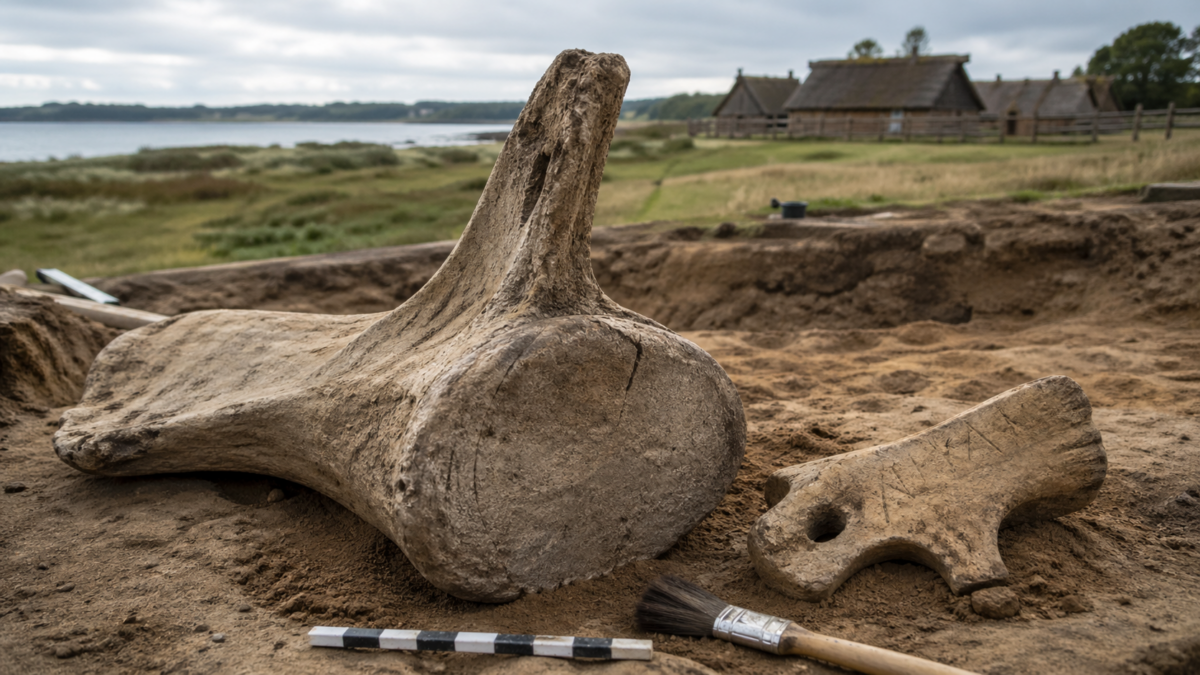
Cover Image Credit: AI-generated illustration created by the author for visual representation of the Iron Age baleen whale bone findings in Scania