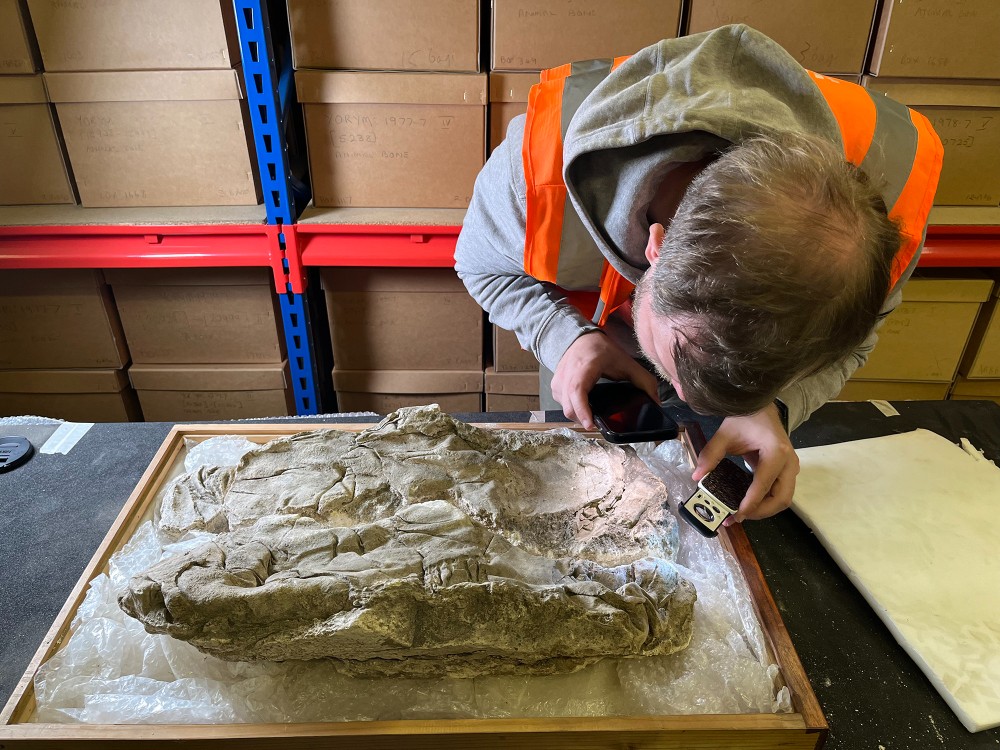
A trace of purple, almost invisible to the eye, has opened an unusually intimate window into grief, wealth and childhood in Roman Britain.
New research from the University of York has revealed that two infants buried in Roman York nearly 1,700 years ago were wrapped in fine cloth dyed with Tyrian purple, one of the most expensive and symbolically charged materials in the Roman world. The textile was also embellished with gold thread, placing it among the highest-status fabrics known from the period.
The discovery marks the first confirmed identification of Tyrian purple on Roman textile remains in York. It is also one of only a small number of cases recorded in Britain, making the burials a striking addition to what archaeologists know about status, trade and family loss in the northern reaches of the Roman Empire.
Rare Tyrian purple found in Roman infant burials
The traces were detected in two gypsum burials now held in the collections of York Museums Trust. Both date to the late third or early fourth century A.D., when Eboracum, Roman York, was one of the most important cities in Britain.
One infant had been placed in a stone coffin together with two adults. The coffin is now on display at the Yorkshire Museum. The second baby was buried in a lead coffin, another sign of considerable expense.
What makes these burials exceptional is not only the survival of textile evidence, but the identity of the dye itself. Tyrian purple was made from murex marine molluscs and required enormous labor to produce. Ancient sources describe it as a luxury commodity, and in the Roman world it became closely associated with imperial authority, aristocratic privilege and public rank.
According to the University of York team, the dye could be valued at up to three times the price of gold.
A luxury from the far edge of the empire
Tyrian purple takes its name from Tyre, the Phoenician city in modern Lebanon that became famous for producing the dye. Its presence in Roman York suggests that wealthy families in Britain had access to goods and materials circulating across vast imperial networks.
“For the first time we now have confirmation of the use of this costly dye in Roman York,” said Professor Maureen Carroll, project director from the Department of Archaeology at the University of York. She said the find shows that the city’s wealthy inhabitants could obtain “expensive and exotic commodities from the other end of the empire.”
That detail matters. Roman York was not a remote military outpost cut off from Mediterranean luxury. It was a major urban centre with elite households, long-distance connections and burial practices that could display rank even in death.
The closest comparison in is the burial of the so-called Spitalfields woman in London, where rare purple textile evidence was also found. The York discovery now expands that small group of high-status finds and shows that such luxury was not limited to the southern capital.
Gypsum preserved what time almost erased
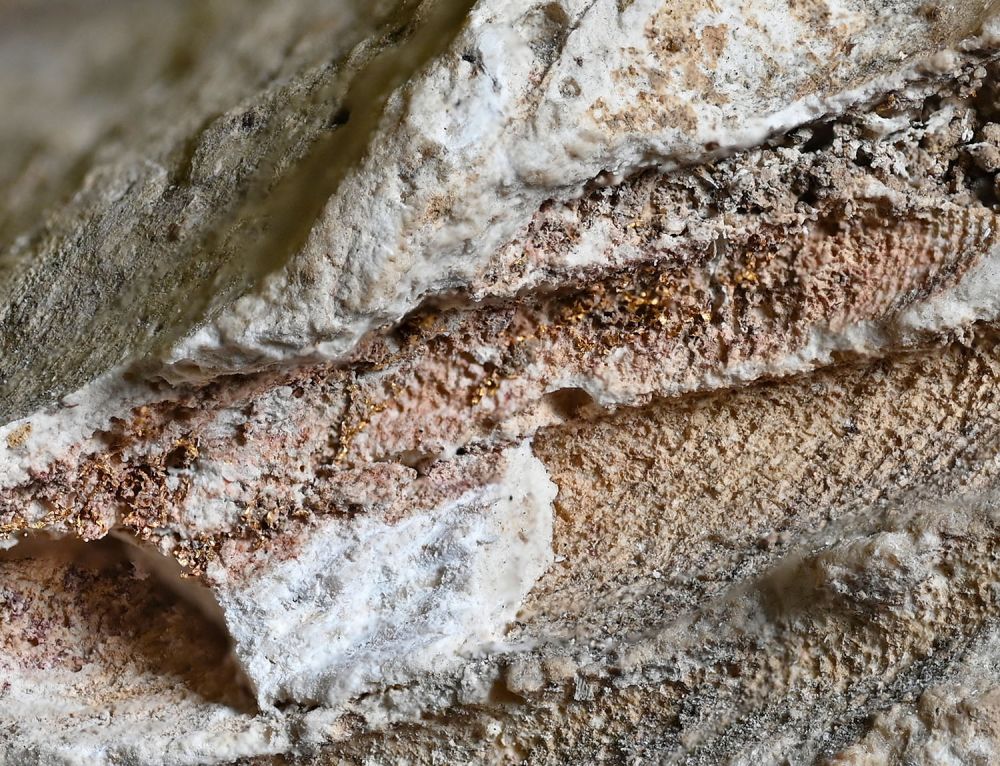
The textiles survived because of an unusual Roman funerary practice. In some burials, liquid gypsum was poured over the clothed and shrouded bodies of the dead. As it hardened, the material captured the shape of the body, the folds of fabric and, in rare cases, microscopic traces of substances once present in the textile.
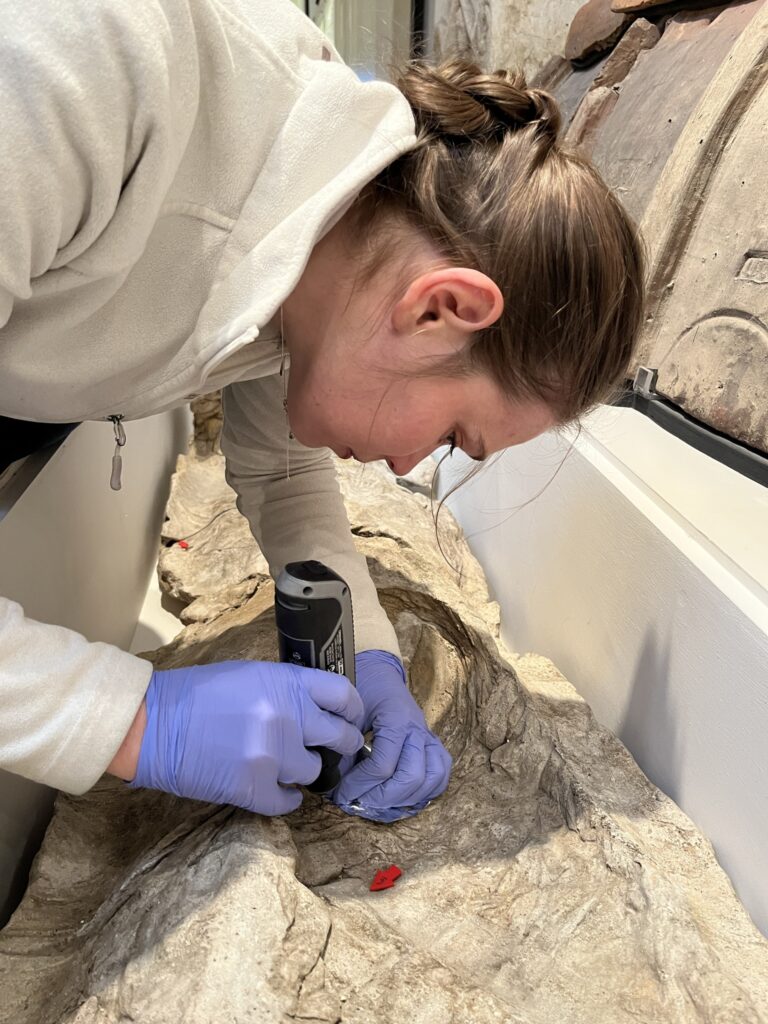
To the naked eye, the purple traces were not always visible. Chemical analysis carried out as part of the “Seeing the Dead” project revealed what the gypsum surfaces had preserved.
“Traces of purple were not always visible on the gypsum surface but chemical analysis has rewarded us with surprising results,” said Dr Jennifer Wakefield, a postdoctoral research assistant in the Department of Archaeology who conducted the laboratory analysis.
This makes the find more than a spectacular luxury discovery. It also shows how museum collections can still hold unseen evidence, waiting for new analytical methods to reveal it.
A burial that speaks of grief
The discovery also touches a more human question: how did Roman families respond to the deaths of infants?
Roman legal and social traditions are often interpreted as limiting public mourning for very young children. Infant mortality was high, with around three in ten babies not surviving their first year. Because of this, scholars have sometimes assumed that infant deaths were treated with emotional restraint or reduced ritual investment.
The York burials challenge that assumption.
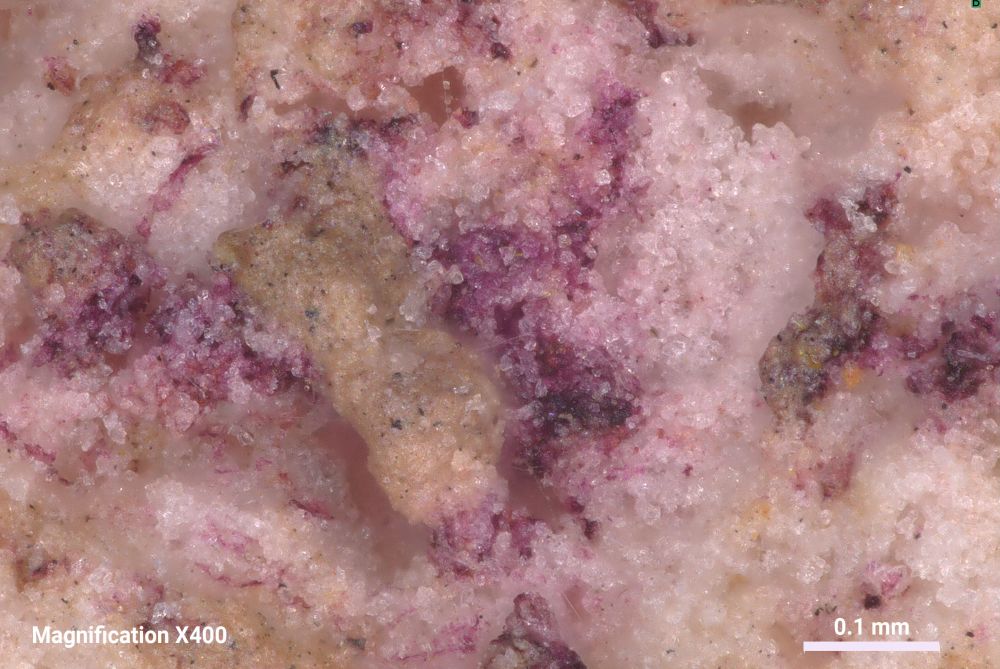
These babies were not placed in simple graves with minimal care. They were wrapped in extremely costly cloth, one enriched with gold thread and dyed with a color linked to elite power. Their families invested extraordinary resources in the act of farewell.
“This remarkable discovery tells us a lot about the importance of children in Roman York and the willingness of the family to give their baby the best possible send-off in tragic circumstances,” Carroll said.
That phrase, “best possible send-off,” is important. Archaeology rarely preserves emotion directly. But it can preserve choices. Here, the choice was clear: two infants were buried with materials that carried meaning, cost and prestige.
Roman York’s elite lives come into sharper focus
The discovery emerged from the Arts and Humanities Research Council-funded “Seeing the Dead” project, which brings together archaeologists, scientists and museum specialists to re-examine Roman gypsum burials from York.
Dr Adam Parker, Curator of Archaeology at the Yorkshire Museum, said the project has uncovered evidence within the museum’s Designated Archaeology collection that had never been visible before. He described the identification of purple dye as a result that is providing “exciting new insights into Roman York.”
Further sampling for dye residues is expected to continue on gypsum casings from York and other sites in North Yorkshire.
For Roman Britain, the finding is small in scale but large in implication. Two infant burials now show that the language of elite status extended even to the youngest members of society. In the hardened gypsum of Roman York, a family’s grief survived not as words, but as purple and gold.
Cover Image: A researcher examines a Roman gypsum burial from York, where chemical analysis identified rare traces of Tyrian purple dye linked to elite infant burials in Roman Britain. Credit: University of York.