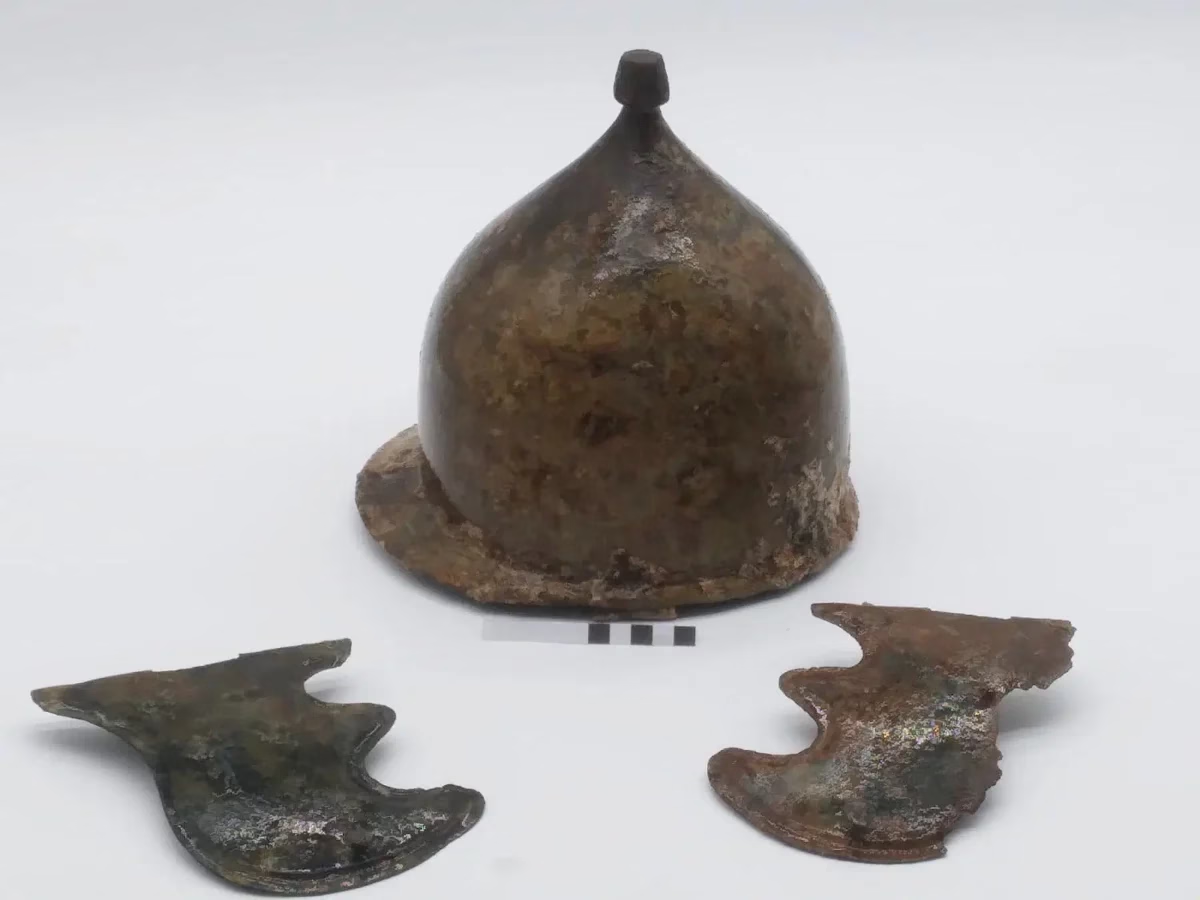
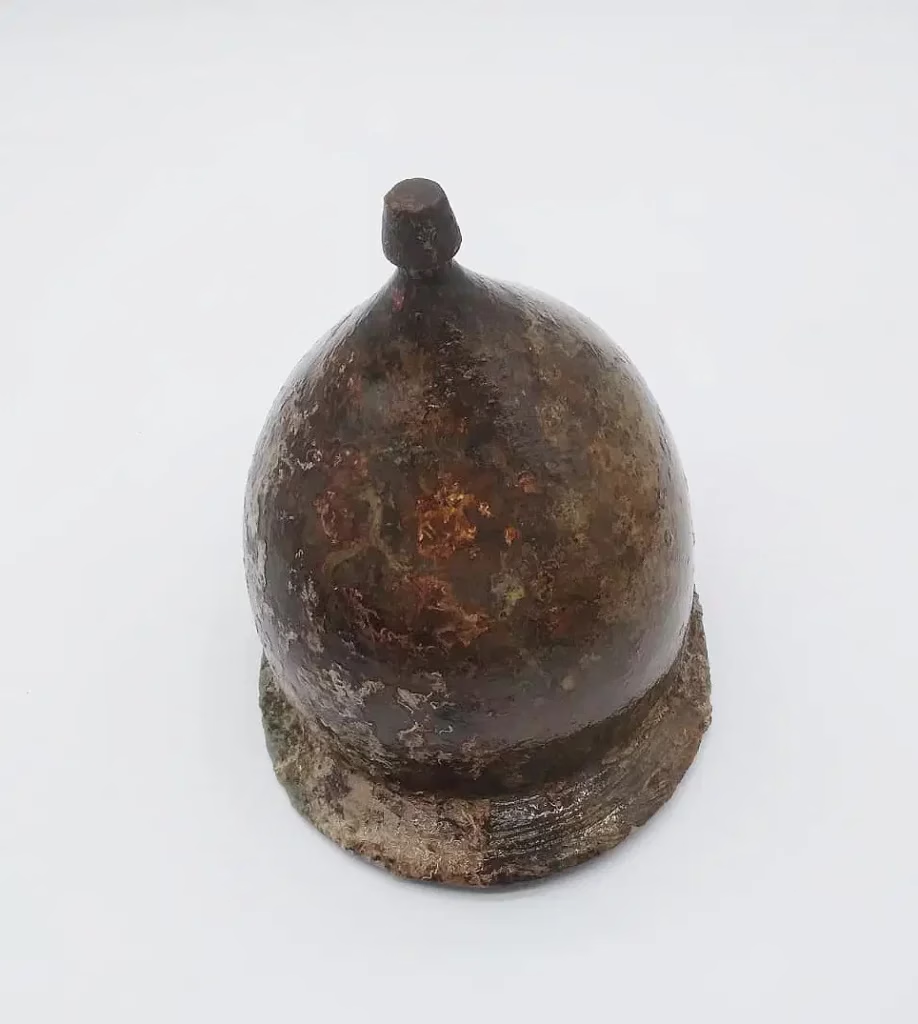
A bronze Montefortino-type Roman helmet has been recovered from the waters off the Egadi (Aegates) Islands, at the very site of the decisive 241 BC naval battle that ended the First Punic War. Lifted in August and announced this week, the piece is exceptional for retaining its cheek guards, making it one of the most complete examples of its kind from a combat context.
The operation was coordinated by the regional maritime heritage authority and carried out by the Society for the Documentation of Submerged Sites (Sdss), with support from local institutions including the marine protected area, the municipality of Favignana and the coast guard. Sicily’s regional councillor for Cultural Heritage, Francesco Paolo Scarpinato, described the helmet as “one of the most beautiful and most complete ever recovered.”
Scientific imaging complemented the recovery. At a radiology centre in Trapani, around thirty encrusted metal objects from the same survey were CT-scanned, revealing concealed swords, spears and javelins that have remained sealed within marine concretions for over two millennia. The work showcases a joined-up approach that brings archaeology, conservation and medical imaging under a single protocol.
The campaign also retrieved a large bronze handle from a 5th-century AD wreck colloquially known as the “fish-counter wreck,” pointing to layers of activity in the area long after the Roman–Carthaginian conflict. The helmet and the handle have undergone preliminary conservation with support from international patrons, while seafloor mapping and target identification were enhanced by an oceanographic research vessel and advanced survey equipment.
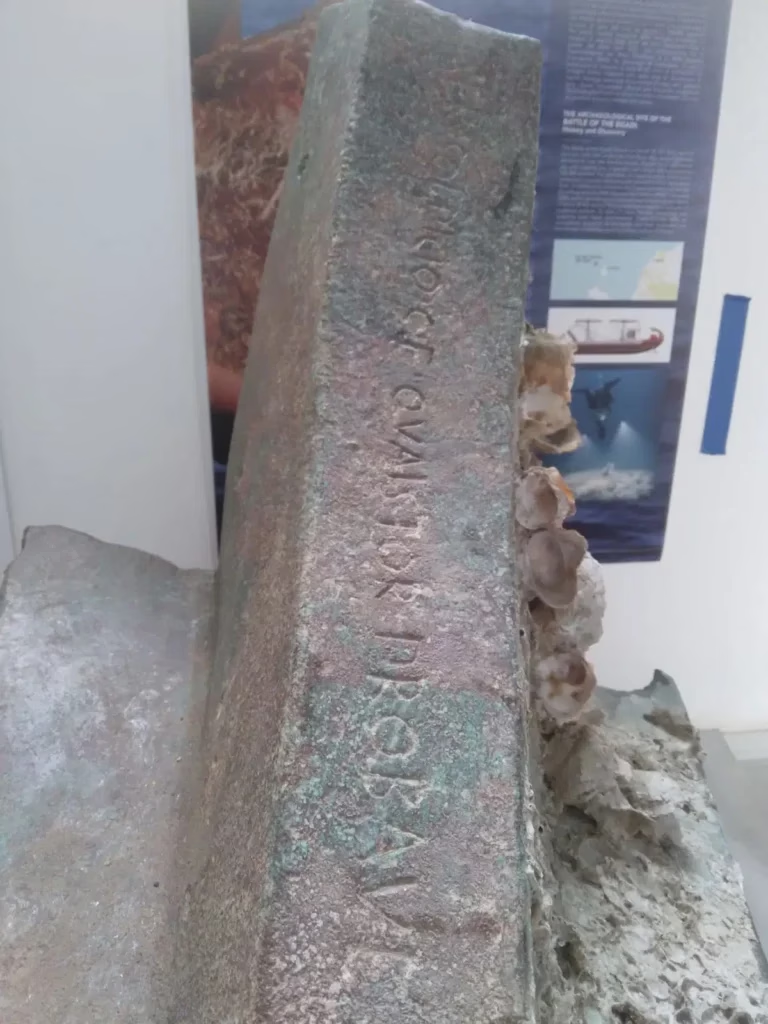
Egadi has produced a series of bronze naval rams (rostra) in recent years. On Rostrum 25, the Latin inscription “Ser. Solpicius C. F. Quaestor Probavit” records an official approval by a Roman quaestor; the patronymic “C. F.” (“son of Gaius”) has prompted discussion about links to a prominent family active in the war’s final years.
Why it matters:
Montefortino helmets were standard issue in the Roman Republic from the 4th century BC to the 1st century AD, but examples preserving their cheek guards are rare. The Egadi helmet’s completeness offers direct evidence for manufacturing techniques, standardisation of kit and supply logistics in the Republican navy. Together with the CT-identified weapons and the Late Antique find, the assemblage confirms the Egadi seabed as a multi-layered historical record where traces of warfare, commerce and everyday seafaring intersect across centuries.