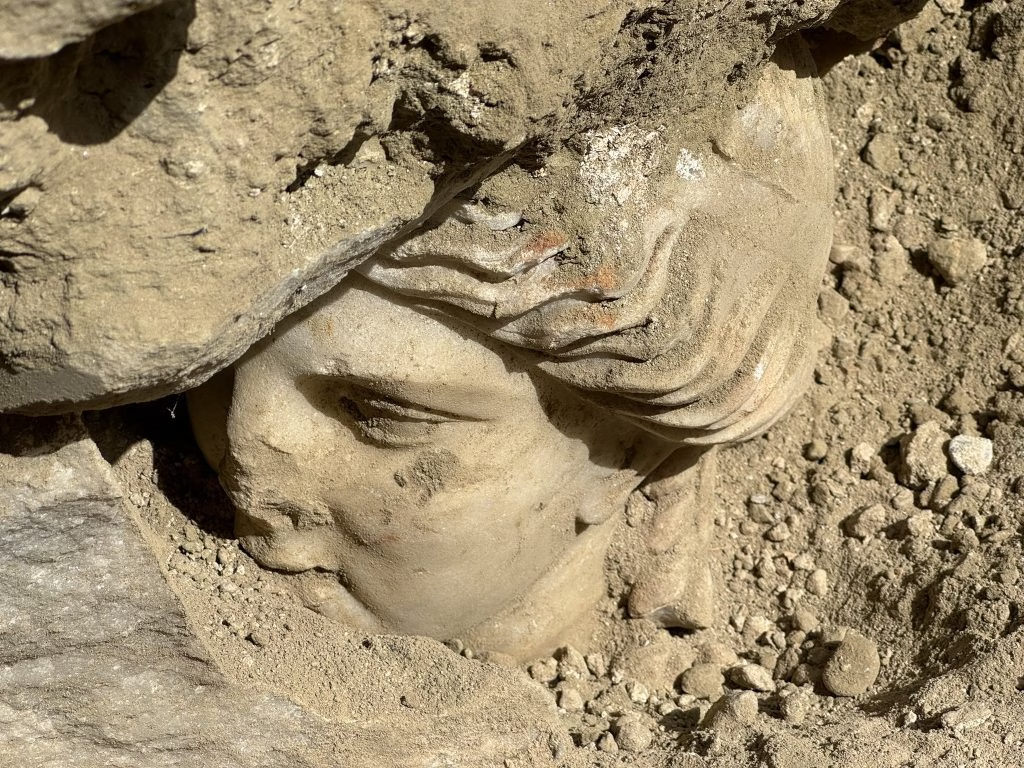
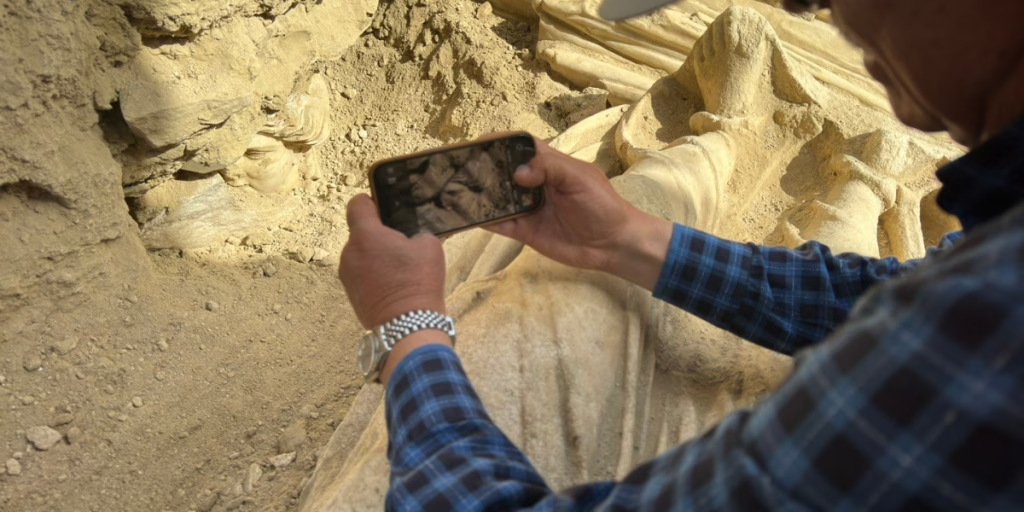
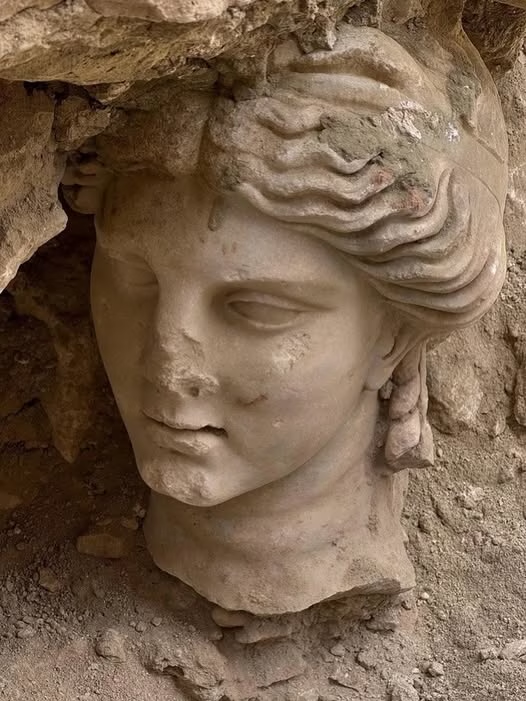
The discovery of a 2,100-year-old marble head of Hygieia, unearthed in 2024 during excavations at the ancient city of Laodicea in southwestern Türkiye, has become one of the most significant finds in recent years. Conducted under the leadership of Professor Celal Şimşek, head of Pamukkale University’s Department of Archaeology, the excavation revealed the artifact in the stage building of the city’s Western Theatre, offering a rare glimpse into the region’s deep-rooted association with health and healing practices in antiquity.
Professor Şimşek announced the discovery on social media, writing: “After 2,100 years, Hygieia meets us once again in Laodicea.”
A Rare Depiction of the Goddess of Health
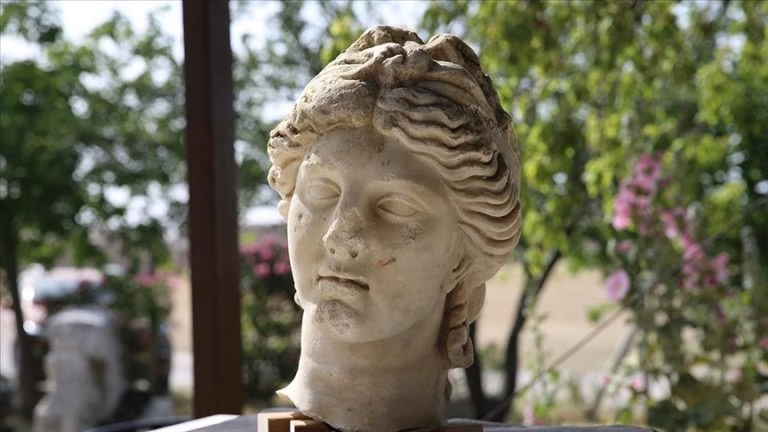
In both Greek and Roman mythology, Hygieia symbolized health, cleanliness, and hygiene, often depicted with a serpent coiled around her arm and a bowl in hand. The Laodicea sculpture fragment stands out for its larger-than-life scale, fine craftsmanship, and white marble of exceptional quality, suggesting that it once belonged to a monumental statue adorning an important civic structure.
This find reinforces Laodicea’s historical role not only as a thriving commercial and cultural hub of Asia Minor but also as a center where ancient approaches to medicine and wellness flourished.
Laodicea: A Cultural and Medical Powerhouse
Located near modern-day Pamukkale in Denizli Province, Laodicea was founded in the 3rd century BCE by Seleucid King Antiochus II, who named the city after his wife, Laodice. Under Roman rule, it became one of the wealthiest cities in Anatolia, renowned for its stadium, colonnaded avenues, theatres, agora, and sophisticated water systems.
Listed on the UNESCO World Heritage Tentative List, Laodicea’s proximity to Hierapolis—an ancient spa city famous for its thermal waters—underscores its importance in the region’s cultural and medical history. The Hygieia head is now considered a key artifact that reflects this legacy.