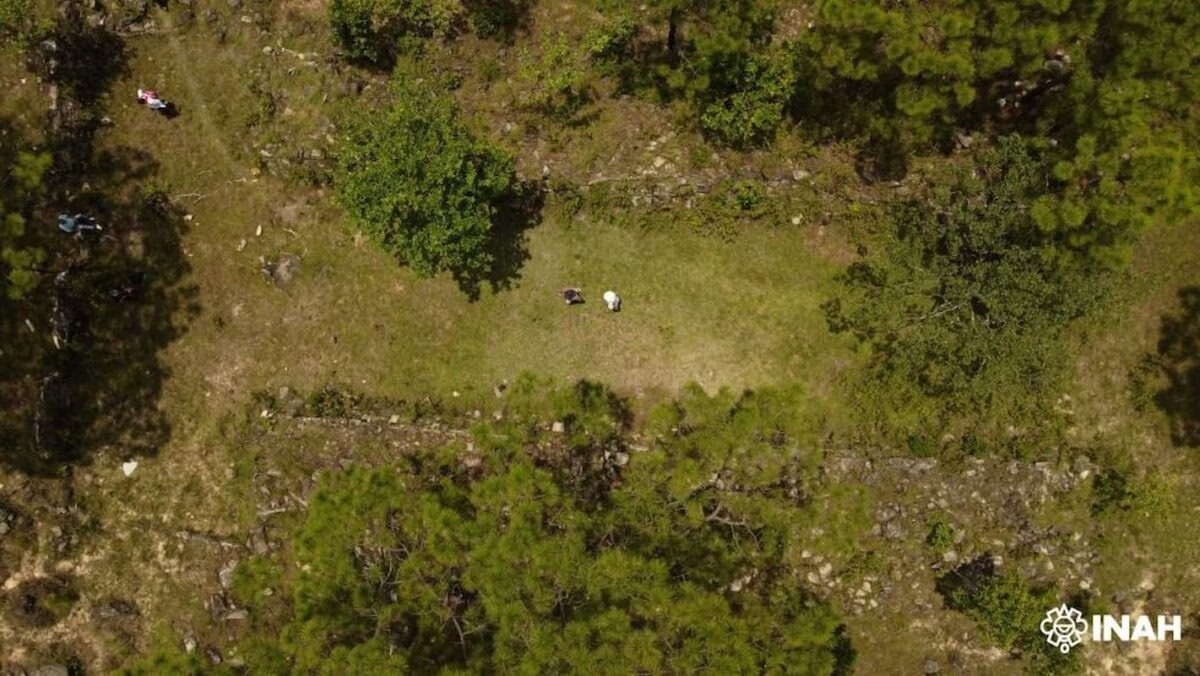
Archaeologists in southern Mexico have uncovered a remarkably well-preserved 1,200-year-old city built atop rugged mountain ridges in Guerrero’s Costa Chica region — a discovery that may redefine what is known about the prehispanic cultures of southwestern Mesoamerica.
The newly documented site, officially named Paso Temprano (known locally as Corral de Piedra), features a ceremonial ballcourt at its heart, surrounded by terraces, platforms, and a defensive wall that encloses a vast urban layout stretching over 1.2 kilometers. Researchers from Mexico’s National Institute of Anthropology and History (INAH) describe the city as one of the most intact Epiclassic (A.D. 650–950) settlements ever recorded in the region.
“Paso Temprano offers a rare snapshot of an ancient mountain civilization that mastered both defense and design,” says archaeologist Miguel Pérez Negrete, who co-directs the ongoing research with Cuauhtémoc Reyes Álvarez. “Its study could help define an entire cultural tradition that has remained in the shadows of Mesoamerican archaeology.”
A mountain fortress of ceremony and power
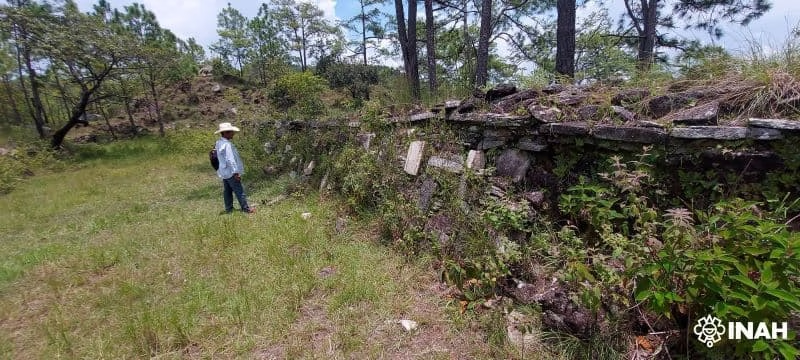
Built along steep ridges and natural escarpments, Paso Temprano’s strategic placement reveals both ingenuity and anxiety — a city conceived to impress, yet ready for conflict. The inhabitants fortified the site with a stone perimeter wall and constructed their dwellings in tiers: common houses along the lower slopes and elite or ceremonial structures commanding the heights.
At the urban core lies the ballcourt, a symbolic and political axis of Mesoamerican life. Its presence suggests that Paso Temprano was not merely a refuge but a thriving ceremonial center where ritual games, religious gatherings, and displays of authority once took place.
Distinctive Mixtec-style masonry
Architectural remains display a construction technique known as the Mixtec walling system (paramento mixteco) — a method of placing upright stone slabs interspersed with smaller flat stones to build durable walls. The same method is seen at Tehuacalco, linking Paso Temprano to a wider cultural sphere of Epiclassic highland communities.
A forgotten culture in the Amuzgo lands
Although the area today belongs to Amuzgo and Nahua communities, the ancient builders’ identity remains uncertain. The region likely witnessed shifting alliances among Mixtec-speaking groups during the transition from the Epiclassic to the Early Postclassic periods. Archaeologists hope continued excavation will reveal whether Paso Temprano served as a regional capital or a fortified sanctuary in times of unrest.
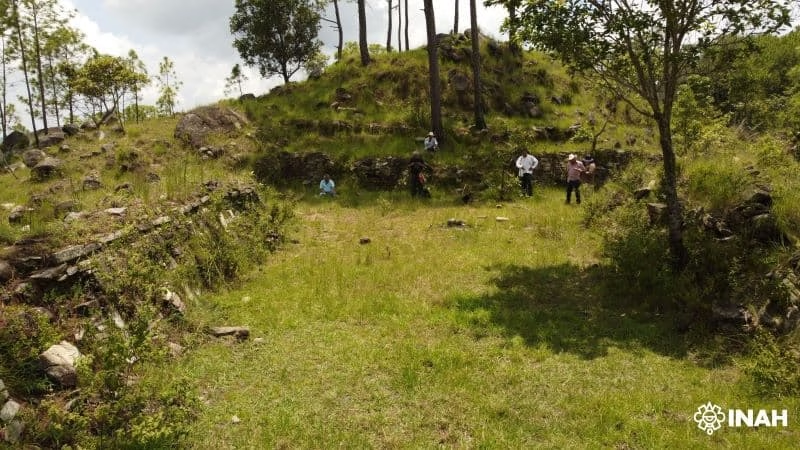
The research forms part of the Mexican government’s Plan de Justicia y Desarrollo de la Nación Amuzga, which seeks to document and protect cultural heritage across the Costa Chica. Local collaboration has been crucial — community leaders and residents of El Carmen have guided the teams through dense vegetation and hidden architectural remains that have long been part of their oral history.
A rare preservation window
From above, the site unfolds like a petrified memory — clusters of platforms, stairways, and open courtyards carved into the mountainside. Despite centuries of erosion, much of the city’s original form remains legible. For Pérez Negrete, this level of preservation makes Paso Temprano “a living textbook of Epiclassic urbanism,” a place where defensive engineering, social hierarchy, and ceremonial symbolism converge in stone.
Cover Image: Aerial view of the ancient ballcourt. Credit: CINAH Guerrero