Archaeologists in Croatia uncover the remains of seven men believed to be Roman legionaries who perished during the Empire’s bloody 3rd-century crisis.
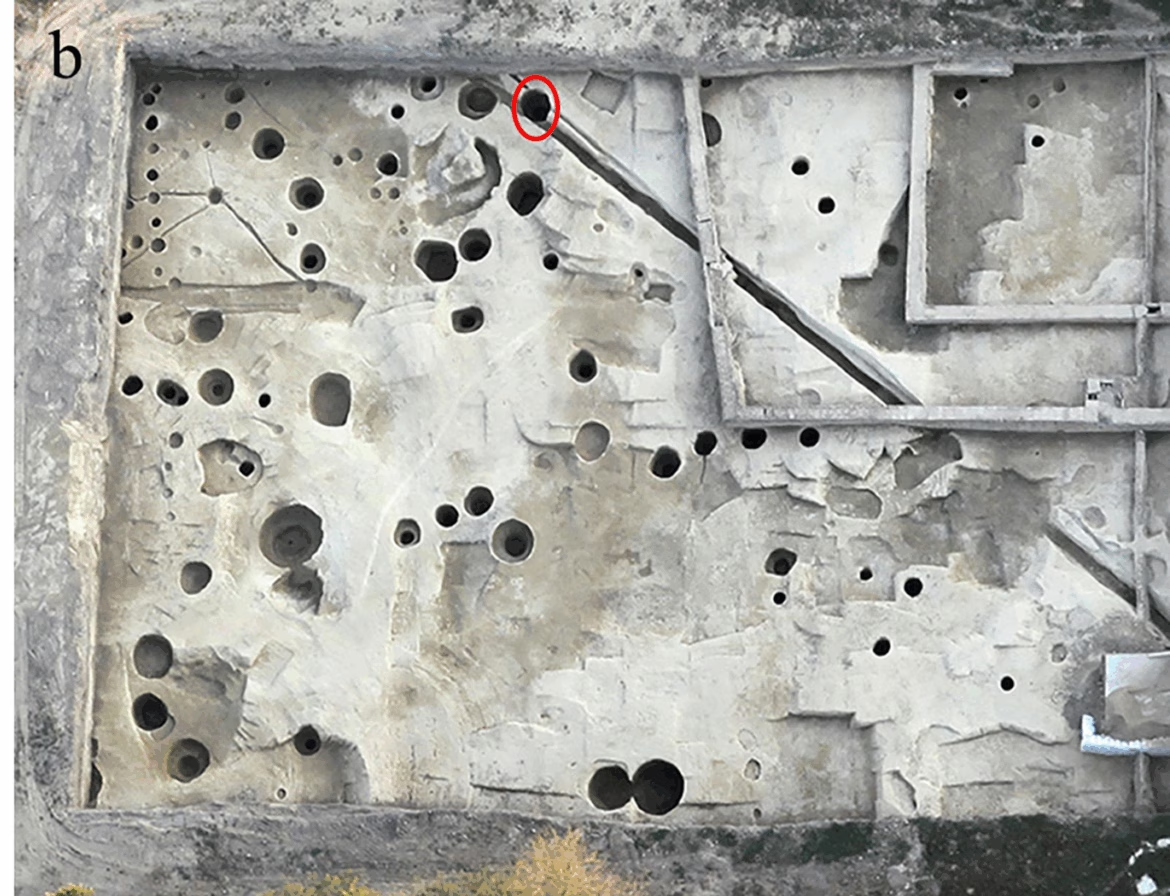
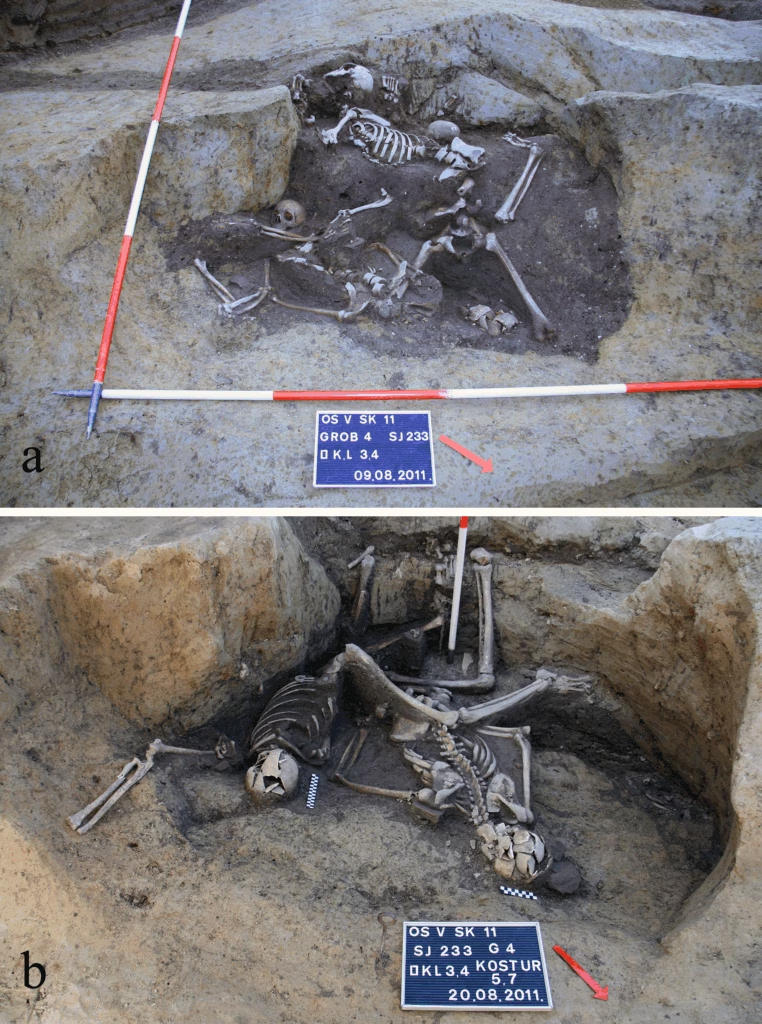
When Croatian archaeologists lowered their lights into a Roman well in Osijek, they didn’t expect to find a silent echo of imperial chaos. Inside the stone shaft lay seven articulated skeletons — men who had died together nearly 1,700 years ago.
A new multidisciplinary study published in PLOS ONE has now confirmed what the bones whispered: these were Roman soldiers, likely casualties of one of the bloodiest internal conflicts in the Empire’s history, the Battle of Mursa (ca. 260 CE).
Buried in a Time of Collapse
Excavated in 2011 from the ancient Roman city of Mursa (modern Osijek), the well contained a single mass deposition of seven adult males. Radiocarbon dating places their deaths between 240 and 340 CE — the heart of Rome’s so-called “Crisis of the Third Century,” when civil wars, foreign invasions, and plagues nearly dismantled the empire.
A coin minted under Emperor Hostilian (251 CE) helped narrow the event’s date, and the physical evidence told a brutal story. The men had been dumped rapidly, one atop another, their bodies still intact — no formal burial, no ritual.
“Everything points to a single catastrophic event,” said Dr. Mario Novak of the Institute for Anthropological Research in Zagreb. “These individuals were likely killed in battle and disposed of immediately afterward.”
Soldiers from Across the Empire
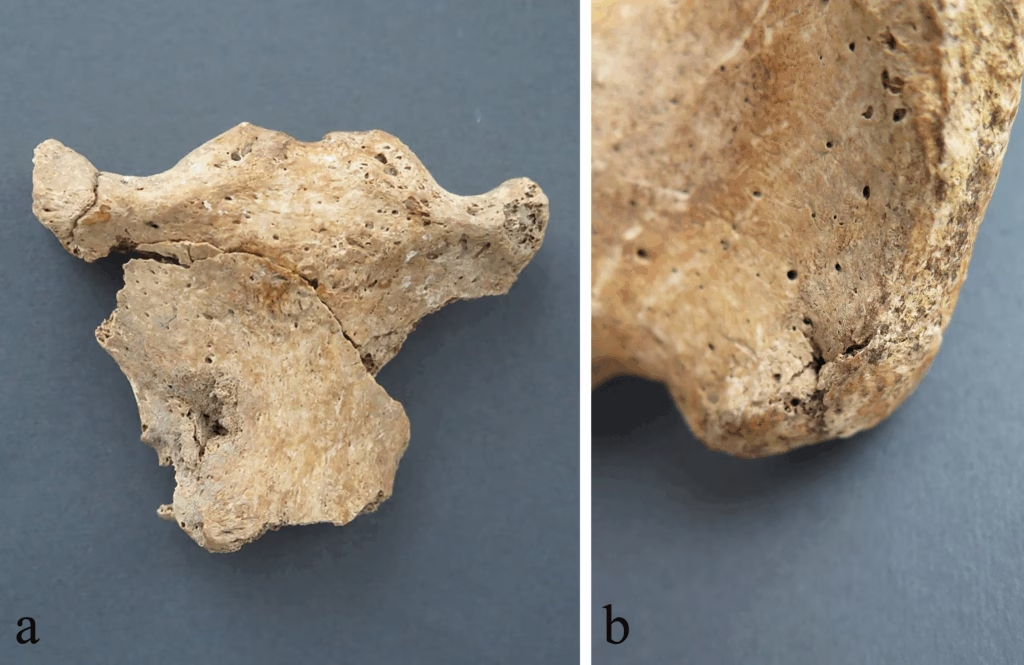
All seven men were tall and muscular — averaging 172.5 cm — with bone wear typical of trained soldiers. Several bore combat injuries: a spear wound through the chest, a sword slash to the ribs, and blunt trauma to the skull.
Stable isotope analysis showed a diet of wheat, barley, and millet — the standard Roman military rations — with little meat or fish. DNA sequencing of four skeletons revealed striking diversity: Northern European, Eastern Mediterranean, and Pontic-Caspian genetic profiles.
“This reflects the incredible diversity of the Roman army,” said Dr. Cosimo Posth of the University of Tübingen. “Men from distant provinces fought and died side by side in the Empire’s wars.”
Echoes of the Battle of Mursa
Historical sources mention fierce clashes near Mursa, including Emperor Gallienus’s confrontation with the usurper Ingenuus around 260 CE. Contemporary chronicles describe enormous losses — tens of thousands dead. The newly examined well may mark one of the few physical traces of that forgotten slaughter.
For centuries, the evidence of that civil war lay buried beneath modern Osijek. Now, the discovery of the seven soldiers offers a rare human glimpse into an empire unraveling from within.
“Their bones remind us that Rome’s power came at a human cost,” Novak noted. “These men were victims not of barbarians, but of Rome itself.”
A Window into the Empire’s Breaking Point
The find stands as a microcosm of the Roman world — diverse, militarized, and fragile under the weight of ambition. By combining archaeology, genomics, and isotopic chemistry, researchers can now reconstruct individual lives from ancient wars once known only from texts.
As the study concludes, “The Mursa well preserves, in haunting detail, the human cost of Rome’s third-century turmoil.”
Novak M, Yavuz OE, Carić M, Filipović S, Posth C (2025) Multidisciplinary study of human remains from the 3rd century mass grave in the Roman city of Mursa, Croatia. PLoS One 20(10): e0333440. https://doi.org/10.1371/journal.pone.0333440
Cover Image Credit: The exact location of the well SU 233/234 during the excavation (in red circle). Credit: PLoS One (2025)