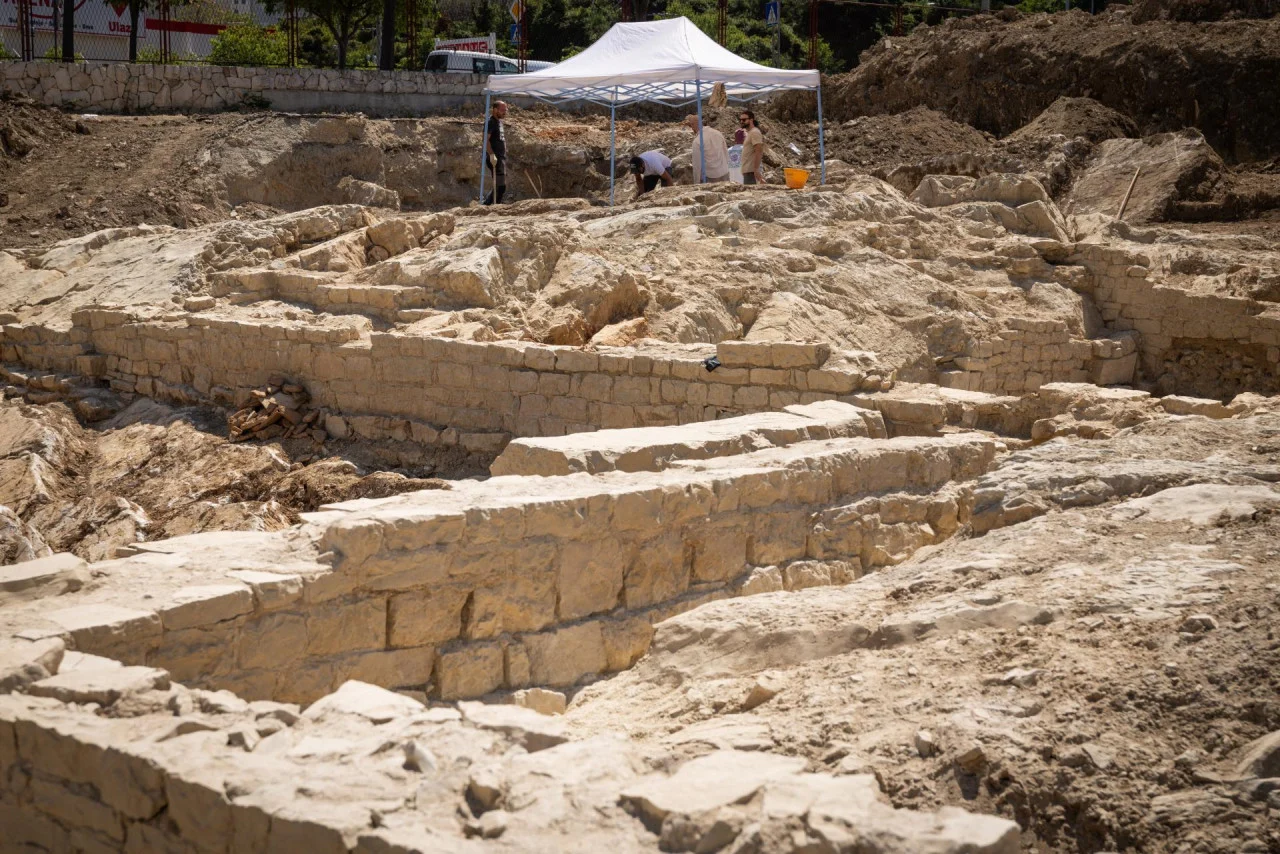
Archaeologists at Mostine, near Split in Croatia, have uncovered a vast Roman agricultural and residential complex linked to ancient Salona, one of the most important cities of Roman Dalmatia.
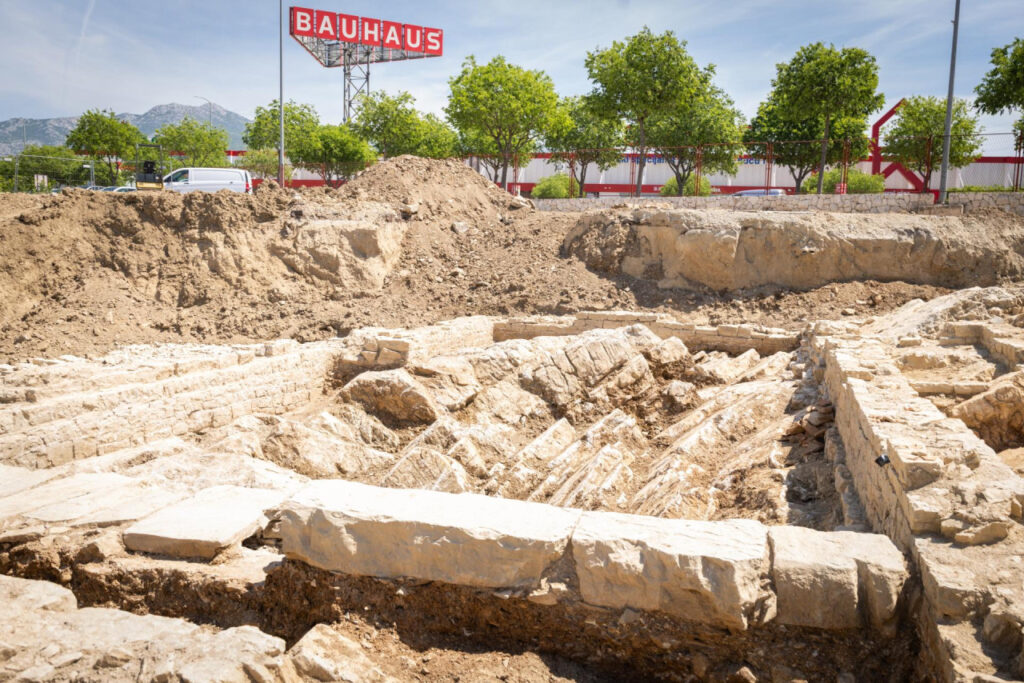
The discovery was made during rescue excavations across from the Bauhaus retail center, where a new drive-in store is planned. What first appeared as a routine archaeological check soon revealed something far larger: a well-preserved Roman estate covering around 2,000 square meters, with stone walls still standing up to 1.5 meters high.
The complex appears to have combined production, storage, and elite domestic life. Archaeologists believe it may have been in use from as early as the 1st century AD, with later finds showing activity across several centuries.
A Roman estate beneath a modern commercial zone
The excavation is being carried out by the Hvar-based archaeological company Kantharos. Its director, archaeologist Eduard Visković, said the scale of the site became clear almost immediately.
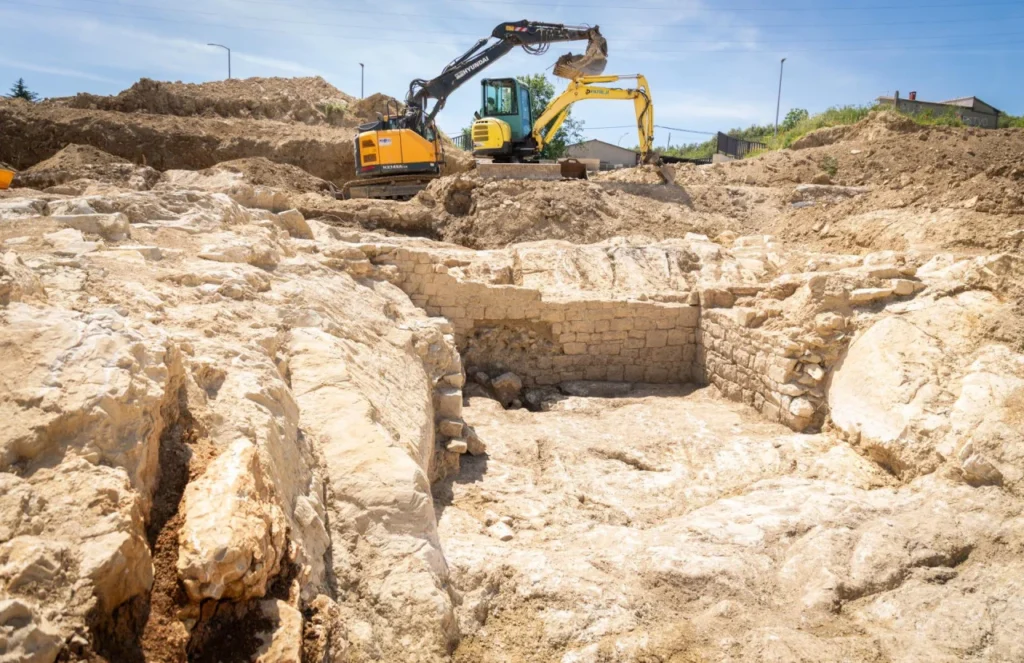
The first test trench revealed the threshold of a large doorway. Further excavation showed that this was not an isolated architectural fragment, but the entrance to an extensive Roman complex. The building includes six large rooms, one of them measuring about 300 square meters, along with preserved plaster, stone walls, channels, and production areas.
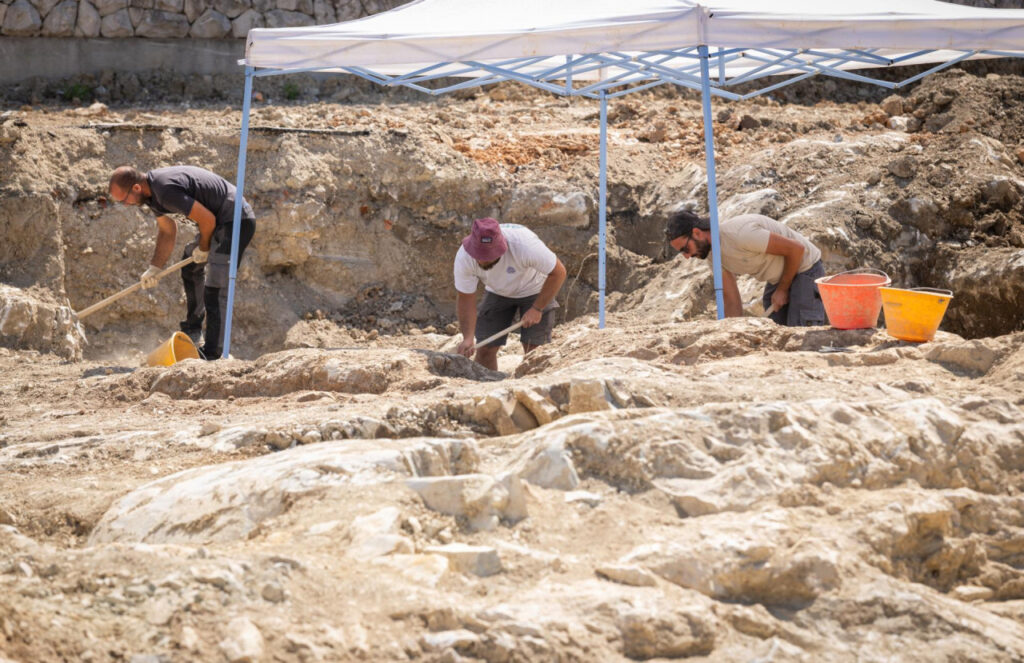
The work was required because earlier archaeological remains had been found nearby in 2011, including a structure with an apse and several graves. Since the new construction area lies within a sensitive archaeological zone, trial excavations had to be carried out before development could proceed.
Over several months, the field team removed hundreds of cubic meters of earth from the site. The work has not been easy. Large amounts of water have repeatedly filled the excavation area, slowing the process and making the remains harder to expose.
Olive oil production in Salona’s countryside
The finds point strongly to a large agricultural production facility. Archaeologists identified columns and part of the base of a torcular, a Roman press used for processing olives or other agricultural products. They also found an oil channel leading into small basins, as well as a cistern or storage area, amphora fragments, and other ceramic remains.
These discoveries suggest that the Mostine complex formed part of the productive countryside of ancient Salona. In Roman terms, this surrounding territory was the city’s ager, the agricultural zone that supplied food, oil, wine, and other goods to the urban center.
The site therefore offers more than the remains of a rural building. It shows how the wealth of Salona may have been created and managed beyond the city walls. storage facilities, and transport links all point to an organized estate economy connected to the wider Roman market.
A carefully built road, about 40 meters long, continues from the entrance toward the north. Its quality suggests that the complex was not isolated. It was likely connected to a larger network of movement, production, and exchange around Roman Salona.
Mosaics, glass, and coins point to an elite Roman residence
The complex was not only a place of work. Archaeologists also found evidence of a residential section, possibly a villa rustica belonging to a wealthy landowner.
Among the most telling finds are tesserae from colored mosaics, including glass pieces. These small cubes once formed decorated floors, a sign of comfort and status in Roman domestic architecture. The team also recovered glass vessels, kitchen pottery, and coins dating from the 2nd to the 6th century AD.
Together, these objects suggest a long-lived estate where agricultural production and refined living existed side by side. In the Roman world, a villa rustica often served both as a working farm and as a residence for an owner or estate manager. The Mostine discovery fits that model closely, but its size makes it especially important for understanding the rural landscape around Split.
The contrast is striking. Today, the area is defined by roads, shops, and modern construction. Beneath it, archaeologists have found the remains of a Roman estate where olive oil moved through channels, mosaic floors decorated living spaces, and agricultural wealth supported one of the Adriatic’s major ancient cities.
The rural estate that fed ancient Salona
Ancient Salona, located near modern Solin and Split, was the capital of the Roman province of Dalmatia and one of the most important urban centers on the eastern Adriatic. It had monumental walls, roads, baths, a theatre, an amphitheatre, and later major early Christian buildings.
But cities of that scale depended on much more than public monuments. They needed estates, roads, presses, cisterns, storage rooms, and workers. The Mostine complex brings that quieter economic world into focus.
Its discovery helps explain how Salona’s urban life was sustained. The city’s wealth did not come only from administration, trade, or military presence. It was also rooted in the surrounding countryside, where estates processed agricultural goods and linked rural production to urban demand.
According to Visković, no other agricultural and residential complex of this size is currently known in the immediate area. That makes the Mostine site a rare discovery for the archaeology of Split and a valuable new piece in the story of Roman Dalmatia.
Excavations are expected to continue for several more weeks. After documentation is completed, the remains will be protected with geotextile and gravel. It is a practical measure, but also a reminder of the fragile balance between modern development and the ancient landscapes still hidden beneath it.
For now, the Mostine discovery has changed how archaeologists read this part of Split. What looked like a modern construction zone has revealed a large Roman estate tied to oil production, elite rural life, and the agricultural power of ancient Salona.
Cover Image: Archaeological remains of the Roman agricultural and residential complex uncovered at Mostine. Credit: Saša Burić/Cropix