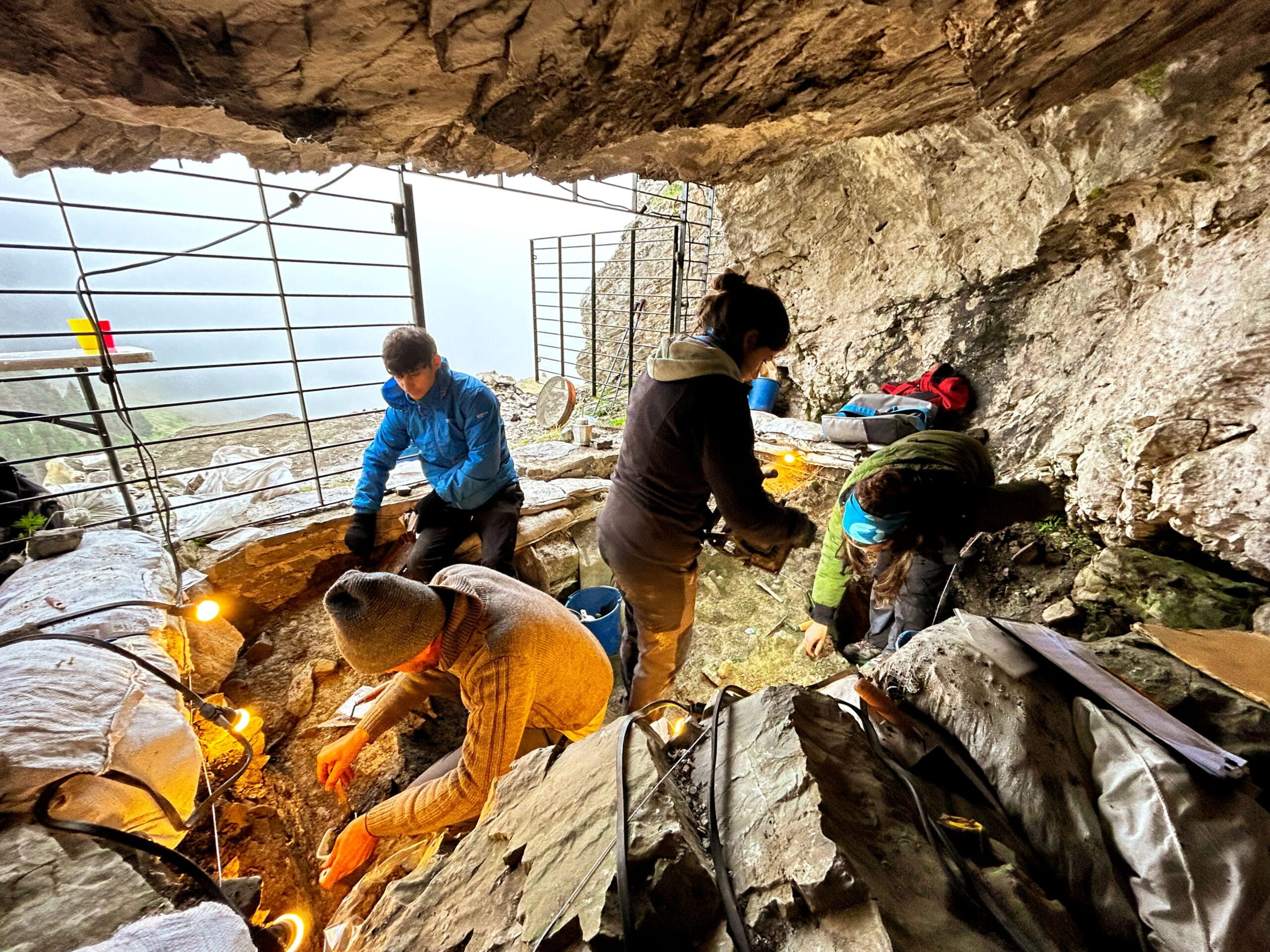
Cave 338 sits more than 2,200 meters above sea level in the eastern Pyrenees, where prehistoric visitors left behind fires, bones, ornaments and nearly 200 fragments of green stone. The cave, located near Queralbs in Girona, Spain, close to the French border, may now offer one of the clearest early records of high-altitude copper mineral processing in Europe.
Excavations carried out between 2021 and 2023 uncovered a long archaeological sequence dating from the early fifth millennium BC to the late first millennium BC. At 2,235 meters above sea level, Cave 338 is currently considered the highest-altitude cave in the Pyrenees with sustained prehistoric human occupation.
The discovery challenges an old assumption about mountain archaeology. High alpine zones were often seen as marginal landscapes, visited only briefly by prehistoric communities. Cave 338 tells a different story. Its layers suggest repeated use over thousands of years, with people returning to the same difficult, remote place for activities that were practical, seasonal and possibly symbolic.
Green stones brought into the cave
The most striking evidence comes from two middle occupation layers, where archaeologists found dense remains of combustion pits, animal bones, ceramic vessels and an unusual concentration of green mineral fragments. Nearly 200 pieces were recovered, many of them associated with charcoal inside 23 pit-like hearths.
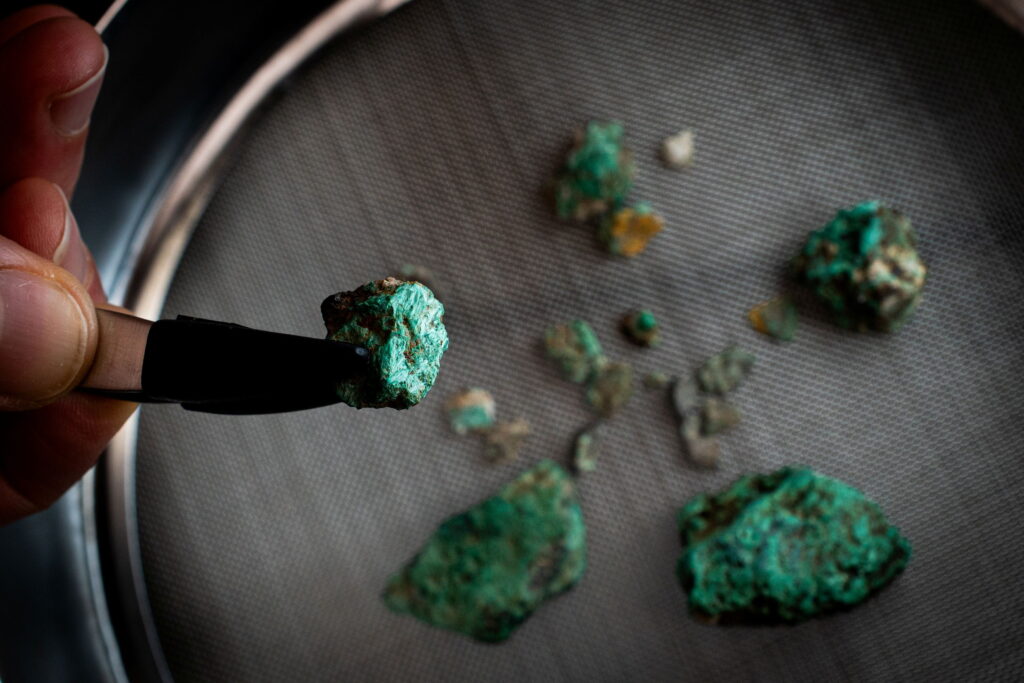
Researchers believe the green mineral may be malachite, a copper carbonate mineral often linked to early copper production. The identification is still being tested through chemical and microstructural analysis, so the evidence must be treated with caution. Still, the pattern is difficult to ignore.
Malachite is not native to the cave. It had to be transported there, which suggests deliberate human activity rather than chance accumulation. Several fragments also show signs of thermal alteration, while other materials from the cave do not. That selective burning points to controlled processing.
“Many of these fragments are thermally altered, while other materials in the cave are not, which clearly suggests that fire played an important role in their processing and that there was a deliberate intention behind it,” said Dr Julia Montes-Landa of the University of Granada, co-author of the study. “In other words, they weren’t burned by accident.”
When heated with charcoal, malachite can be transformed into copper-bearing material. That makes the hearths at Cave 338 especially important. If the mineral identification is confirmed, the site may represent one of the earliest archaeological contexts for prehistoric copper-rich mineral processing at high altitude in Europe.
A place people returned to for generations
The hearths also reveal something about time. Some combustion pits cut across earlier ones, showing that people reused the same area inside the cave. Yet the features remain distinct, which means the visits were separated by enough time for individual activity episodes to survive in the archaeological record.
Radiocarbon dating places one upper hearth at around 3,000 years old. Deeper combustion structures date between roughly 5,500 and 4,000 years ago, placing the strongest phases of occupation in the Late Neolithic and Bronze Age.
The evidence does not point to a permanent settlement. Instead, Cave 338 seems to have been part of a repeated mountain route or seasonal activity system. People may have climbed into the high Pyrenees to process minerals, manage animals, shelter temporarily or conduct other tasks linked to local resources.
“For a long time, high-mountain environments were seen as marginal, places prehistoric communities passed through occasionally,” said Prof Carlos Tornero of the Catalan Institute of Human Paleoecology and Social Evolution, lead author of the article. “But we found a really rich archaeological sequence, including multiple combustion structures and a very large number of green mineral fragments.”
Tornero noted that the evidence does not yet show exactly how long people stayed during each visit. Even so, the repeated use of the space and the density of remains suggest short to medium stays that happened again and again over long periods.
Child remains and rare ornaments
Cave 338 was not only a place of fire and mineral processing. Archaeologists also recovered human remains and personal ornaments that add a more intimate layer to the discovery.
A finger bone and a baby tooth from a child around 11 years old were found in one of the prehistoric layers. It is not yet possible to say whether both remains belonged to the same child. Their presence, however, suggests that the cave may also have had a funerary role. Researchers believe deeper excavation may reveal whether this was an isolated deposit or part of a broader burial practice.
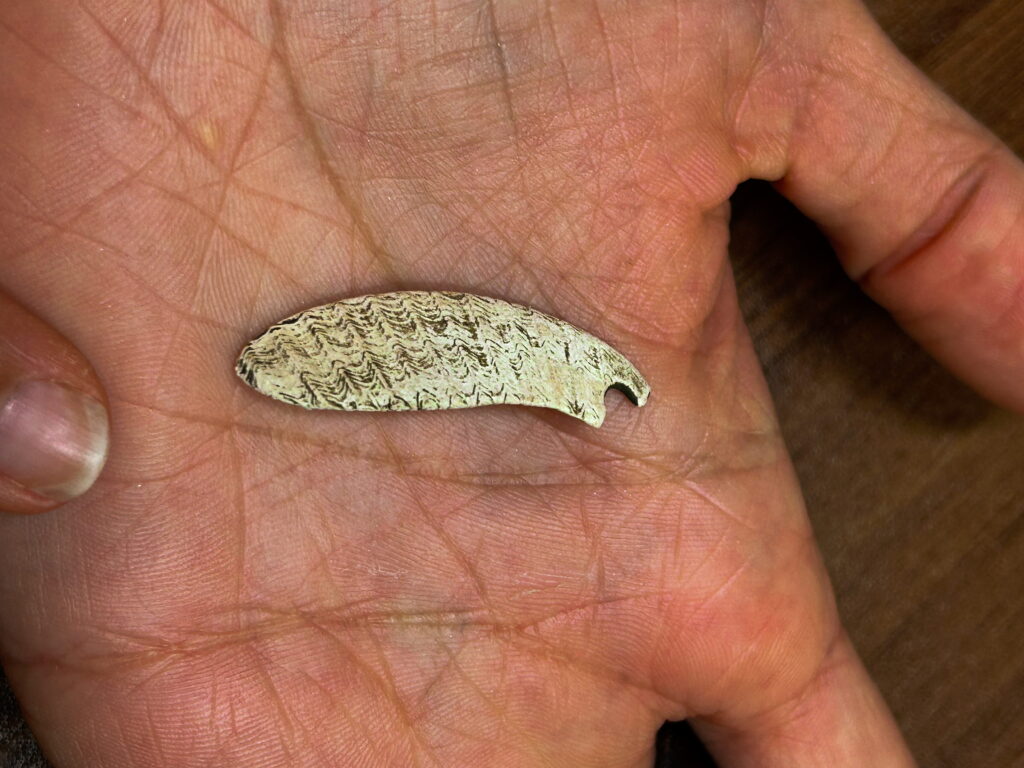
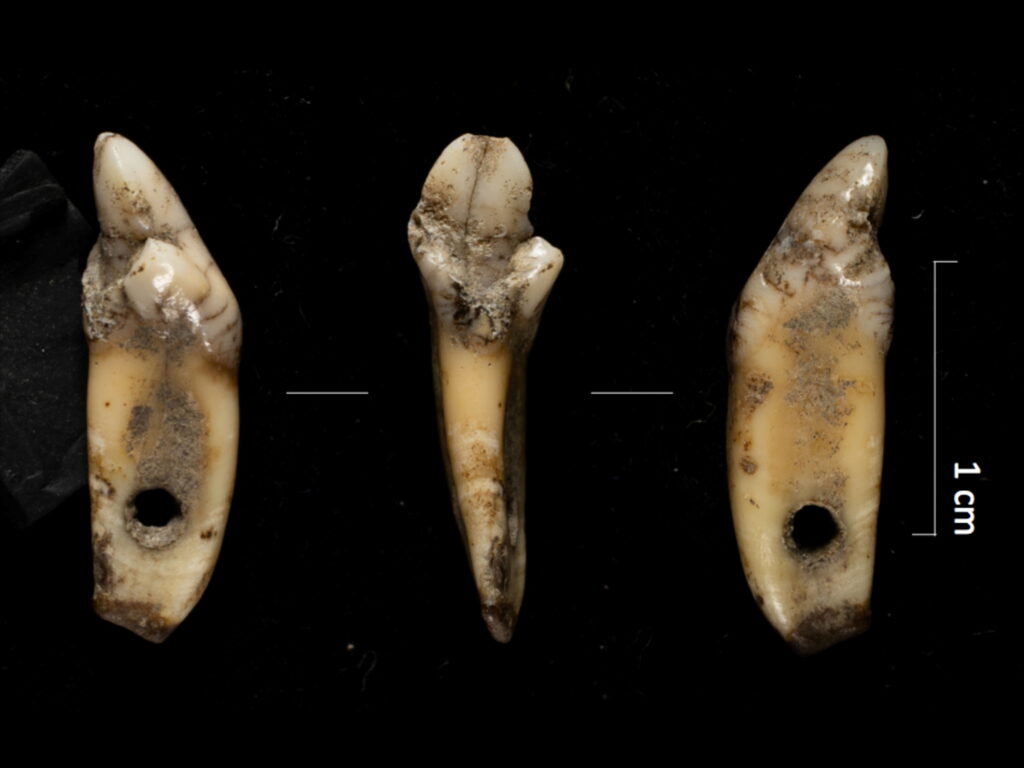
Two ornaments were also found in a later prehistoric layer: a shell pendant and a perforated brown bear tooth pendant, likely dating to around the second millennium BC. The shell pendant has parallels at other prehistoric sites in Catalonia, hinting at shared traditions or contact between communities. The bear tooth is rarer and may reflect a connection to the mountain environment itself.
These finds complicate the picture of Cave 338. It was not simply a workshop, shelter or burial place. It may have been all of these at different moments across thousands of years.
Mountains were not empty spaces
The location makes the discovery even more remarkable. Cave 338 is not easy to reach. Even today, access to the Vall de Núria area is limited, and the cave requires a steep approach through high mountain terrain. Prehistoric visitors who reached it were not wandering without purpose. They knew where they were going.
That is what makes the site important. Cave 338 shows that prehistoric communities understood high-altitude landscapes in detailed ways. They knew where to find resources, how to move through difficult terrain and how to return to the same places across generations.
The cave now stands as a key reference point for Pyrenean archaeology. Its fires, green stones, child remains and ornaments suggest a mountain world far more active than once imagined. Above 2,000 meters, prehistoric people were not merely passing through. They were working, returning, remembering and reshaping one of Europe’s highest prehistoric landscapes.
Tornero, C., Díez-Canseco, C., Soler, R., Calvo, S., Delgado-Raack, S., Messana, C., Montes-Landa, J., Morales, J. I., Picornell-Gelabert, L., Soriano, E., & Carbonell, E. (2026). Beyond 2,000 meters, first evidence of intense prehistoric occupation in the Pyrenees. Frontiers in Environmental Archaeology, 5, 1811493. https://doi.org/10.3389/fearc.2026.1811493