
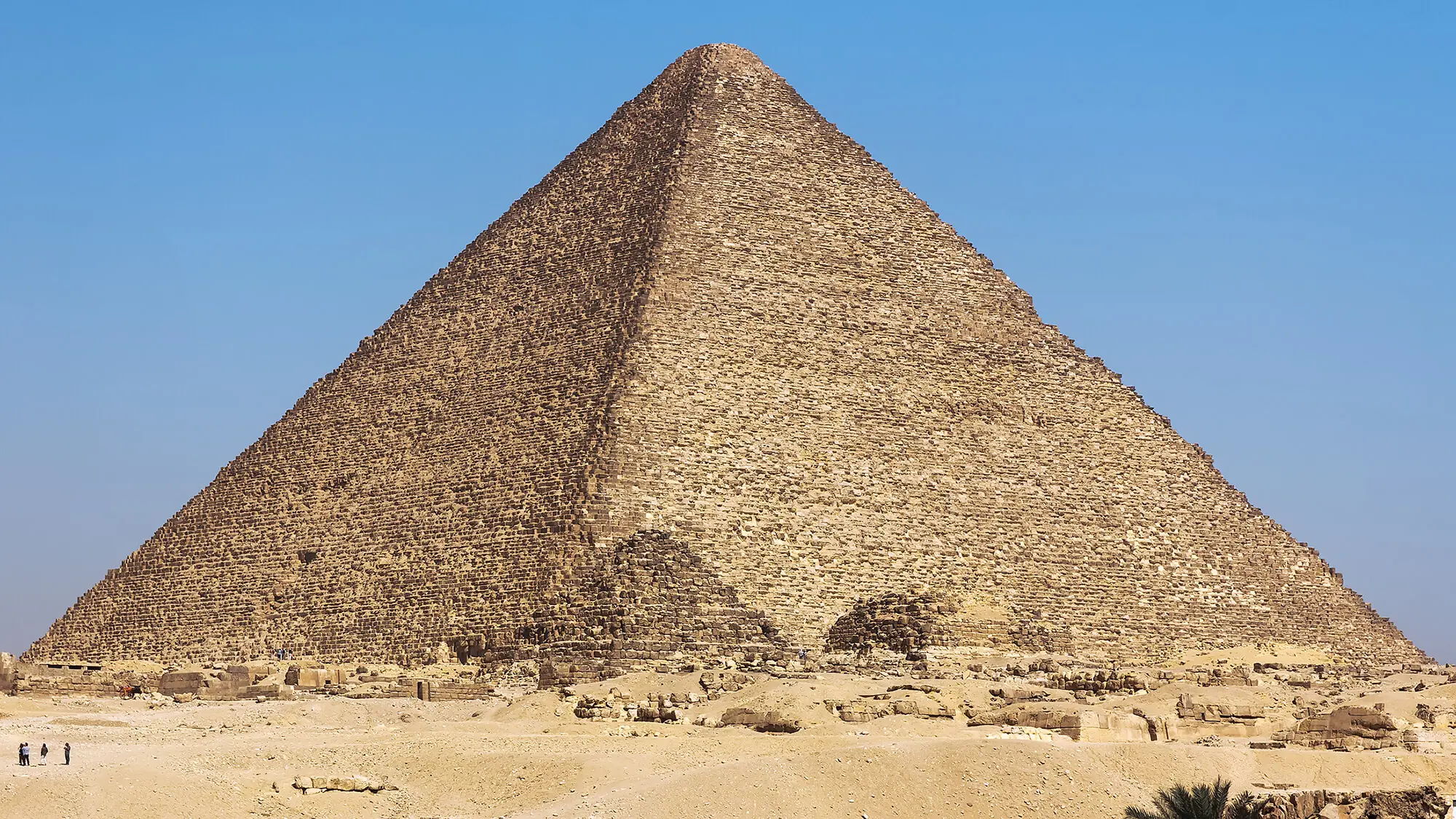
A scientific paper claiming that satellite radar data had revealed previously unknown rooms, corridors and tunnels inside the Great Pyramid of Giza has been retracted. Remote Sensing, which published the study in 2022, said an investigation found serious methodological flaws and statistical errors that undermined its conclusions.
The decision also casts new doubt on later claims made with the same method, including reports of enormous shafts and chambers extending deep beneath the Giza Plateau.
Why was the paper retracted?
Written by Filippo Biondi and Corrado Malanga, the study was uploaded to arXiv in August 2022 and published that October in the MDPI journal Remote Sensing. It claimed that synthetic aperture radar images from Italy’s COSMO-SkyMed satellite system could be processed to reconstruct the internal architecture of the Great Pyramid, also known as the Pyramid of Khufu.
According to a formal retraction notice issued by Remote Sensing on August 10, 2026, the investigation began after a reader contacted the journal with concerns about the study’s methodology. The Editorial Office and Editorial Board subsequently confirmed serious methodological flaws and statistical errors that were considered sufficient to undermine the paper’s scientific conclusions.
The decision was approved by the journal’s editor-in-chief. Biondi and Malanga were informed of the retraction and expressed their disagreement.
The notice does not specify which calculations, statistical tests or stages of data processing failed during the journal’s review.
How did the method supposedly work?
Synthetic aperture radar, commonly known as SAR, can image the Earth’s surface in darkness and through cloud cover. The satellite-based system used in the study, however, is not designed to penetrate a massive stone monument and directly image chambers inside it.
Remote sensing itself is widely used in archaeology to identify features visible on or near the ground. In southern Iraq, for example, satellite imagery, drone photography and field observations were combined to map an ancient irrigation network around Eridu. The disputed Giza study went much further by claiming that satellite data could reconstruct structures concealed inside a massive stone monument.
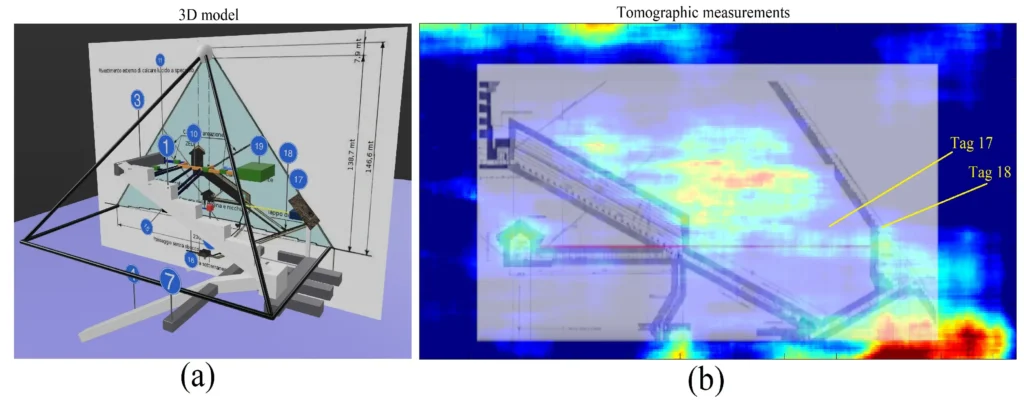
Biondi and Malanga proposed an indirect way around that limitation. They argued that background seismic noise created extremely small movements within the pyramid and that these movements produced measurable changes in the satellite radar signal.
By processing these “micro-movements,” the researchers said they could construct a three-dimensional model of objects and cavities inside the monument. The paper’s archived arXiv version claimed that the method had produced high-resolution images of the pyramid’s interior and subsurface, allowing previously unknown structures to be identified and measured.
Radar specialist questioned the physics
Lawrence Conyers, professor emeritus at the University of Denver and a specialist in the archaeological use of radar, told Retraction Watch that the method faced fundamental physical problems.
According to Conyers, a synthetic aperture radar signal could not travel through the pyramid, reflect from internal structures and return to a satellite sensor. He also argued that the micro-vibrations described by the researchers would be far too small to detect from orbit.
Conyers said he had been asked to review the original paper before publication. He told the journal that he could not recommend publishing it without an additional reviewer capable of assessing its mathematical equations.
What does this mean for the claims beneath Giza?
In March 2025, Biondi, Malanga and their collaborators announced that the method had been applied across a much larger part of the Giza Plateau. During a press conference, the team claimed to have identified eight cylindrical shafts surrounded by spiral pathways beneath the Pyramid of Khafre. These reportedly led to two cube-shaped structures comparable in scale to city blocks.
The researchers said the system of chambers and tunnels extended approximately two kilometers below the surface. Despite never appearing in a peer-reviewed paper, the claims spread widely and later reached the History Channel and The Joe Rogan Experience.
No detailed study presenting the underlying data has been published in a peer-reviewed journal. The proposed structures have not been confirmed by another research team or through a separate imaging method.
The 2026 retraction applies only to the 2022 paper about the Pyramid of Khufu. It does not formally retract or disprove the later claims concerning structures beneath the Pyramid of Khafre.
Both sets of claims, however, rely on the same disputed radar approach. The retraction of the 2022 paper now places greater pressure on the team to release data that can be independently examined and tested.
Not the same as the confirmed corridor discovery
The retracted radar study should not be confused with the confirmed discovery of a corridor inside the Great Pyramid. The ScanPyramids project used cosmic-ray muons to detect a corridor-shaped void behind the monument’s northern face.
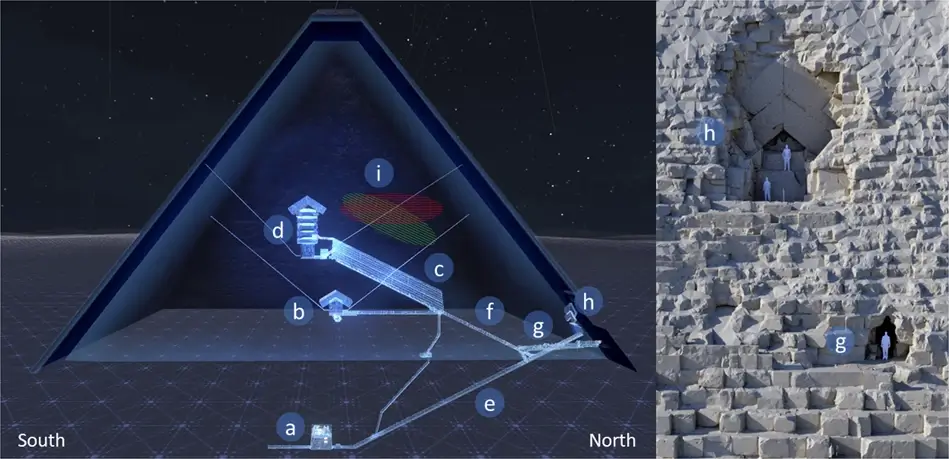
The approximately nine-meter-long ScanPyramids North Face Corridor was measured with different muon detection systems and later viewed directly with an endoscopic camera. The results were published in a peer-reviewed Nature Communications study in 2023.
The difference lies in the evidence. The ScanPyramids corridor was detected with several instruments and then seen through a camera, while nothing comparable has yet been presented for the vast structures claimed beneath the Pyramid of Khafre.
The Great Pyramid of Giza, also known as the Pyramid of Khufu. A 2022 study claiming to reveal hidden structures inside the monument using satellite radar has been retracted. Credit: Dvdzee/Wikimedia Commons, CC BY-SA 4.0