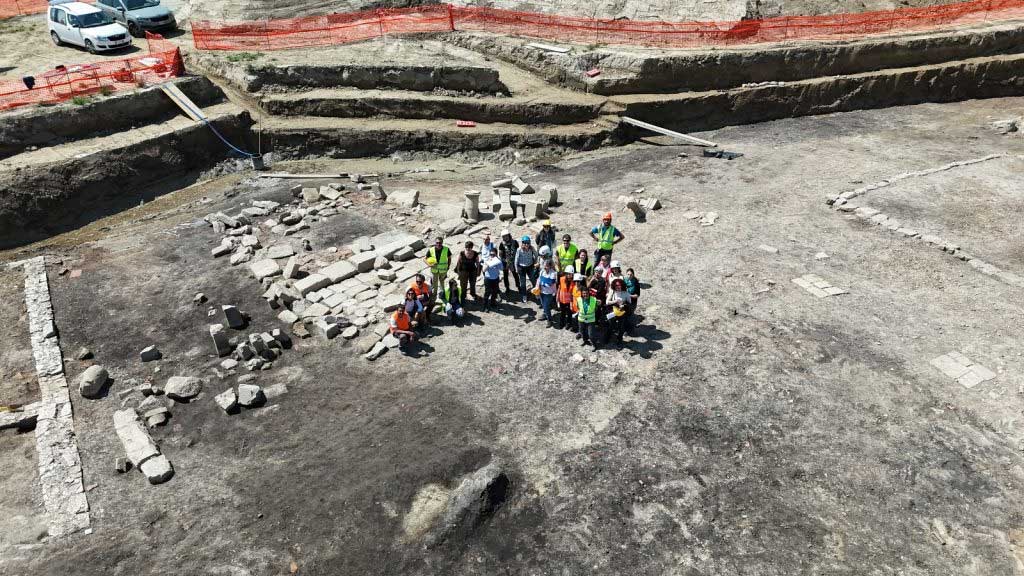
A road construction project in northern Italy has uncovered an important ancient cult site linked to the Veneti, a people who lived in the Veneto region long before Roman rule.
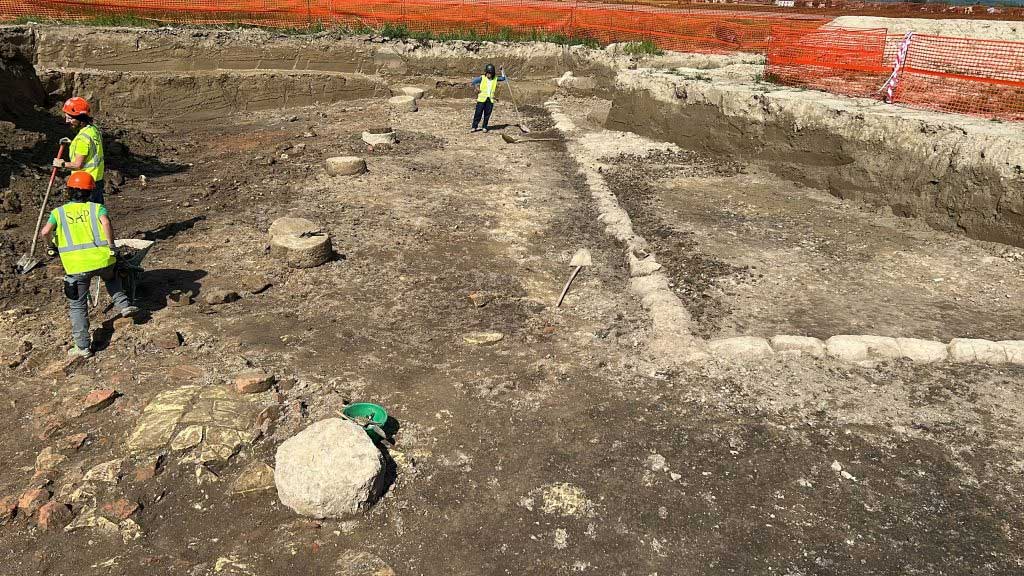
The discovery was made in Ponso, in the Province of Padua, during works for a new section of Regional Road 10. Archaeologists found inscribed stones, possible votive blocks, traces of Latin and Venetic writing, and large foundations that may have belonged to temple structures.
The first signs appeared during the clearance of wartime munitions. Once trial trenches were opened, the site quickly proved to be far more than an isolated find. Some of the inscribed stones had been reused in a later paved surface, while others may still be standing close to their original position.
Who were the Veneti?
The Veneti were an ancient people of northeastern Italy, especially associated with the region that later became known as Veneto. Before Rome absorbed the area, they had their own language, religious traditions, and local identity.
They are known from ancient sources and from inscriptions found across the region. These texts are especially valuable because they preserve rare traces of a pre-Roman society that stood between the Adriatic world, the Po Valley, and the Alpine routes.
That is why the discovery at Ponso matters. It does not simply add another archaeological site to the map. It offers a direct glimpse into the sacred life of a people many modern readers have never heard of, but who played an important role in the early history of northern Italy.
Inscribed stones may have been offerings
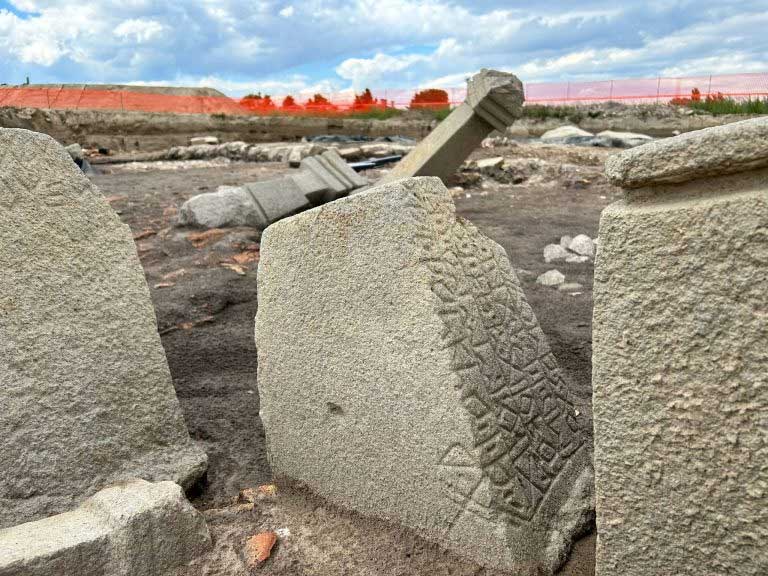
Many of the inscribed stones have been preliminarily dated to the 5th and 4th centuries BCE. According to archaeologists, the inscriptions appear to have had a votive character, meaning they were likely connected to offerings made in a sacred setting.
Some inscriptions were carved on three sides of the stones. That detail suggests they were meant to be seen, approached, and perhaps read as part of ritual activity. Even short inscriptions can be highly valuable in this kind of context. They may preserve names, dedications, divine references, or formulas linked to local religious practice.
For the study of the Veneti, such evidence is rare and important. Written traces from pre-Roman Italy often survive in fragmented form. When they appear inside a possible sanctuary, they become even more significant.
A sacred site that survived into the Roman period
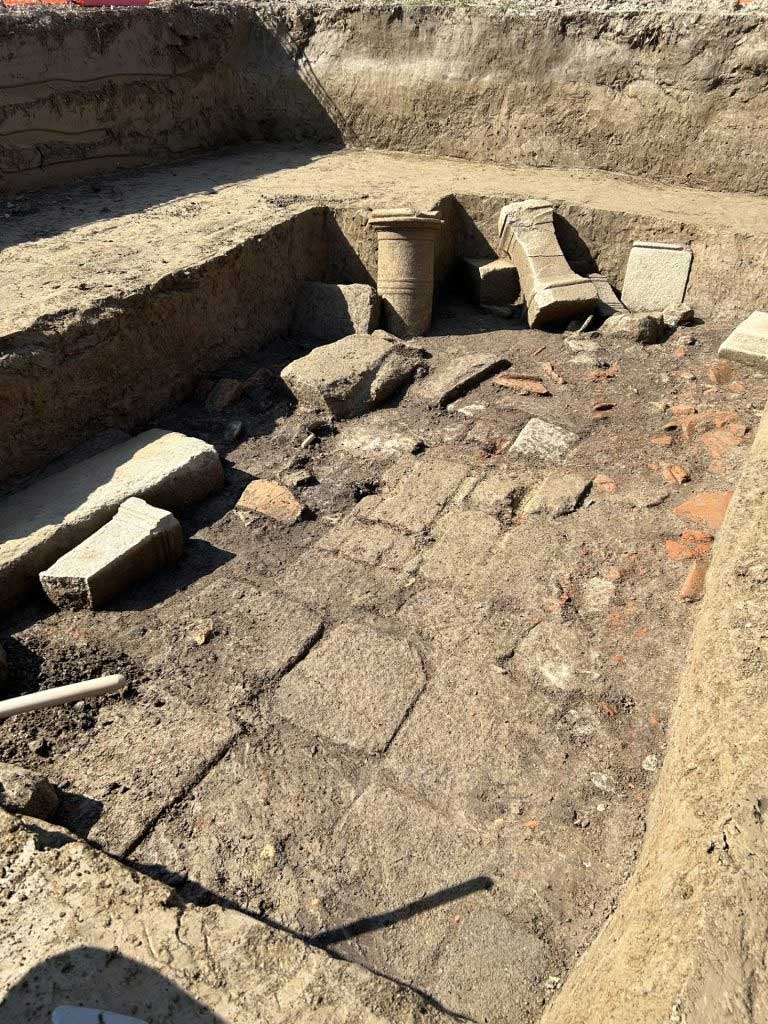
As the excavation continued, archaeologists uncovered large rectangular foundations. One structure may have belonged to a peripteros temple, a temple form surrounded by columns.
The evidence also suggests that part of the paved area may have been created in the 1st century CE, during the Roman period. Older Venetic stones appear to have been reused within this later setting.
This may be the most interesting part of the discovery. The cult site does not seem to have vanished when Roman influence reached the region. Instead, it may have changed. Its architecture, rituals, and cultural expression likely evolved, but the sacred importance of the place may have continued.
That kind of continuity is difficult to capture archaeologically. At Ponso, however, the combination of Venetic votive stones and later Roman-period structures may show how local traditions were absorbed, reshaped, or reinterpreted under Rome.
The site was eventually buried by a major flood from the nearby Adige River, which once flowed through this area. The flood may have sealed the remains under layers of sediment, preserving traces of a sacred landscape that had been used for centuries.
Excavations are still ongoing. Further study may clarify which deities were worshipped here, how the sanctuary was organized, and how the Veneti adapted as their world became part of Rome.
For now, the discovery points to one clear conclusion: near Padua, a sacred place existed long before Roman rule, and it may have remained important even after Rome transformed the region.
Cover Image: Excavation area in Ponso near Padua, where archaeologists uncovered a cult site linked to the pre-Roman Veneti people. Credit: Soprintendenza Archeologia, Belle Arti e Paesaggio per le Province di Padova, Treviso e Belluno