
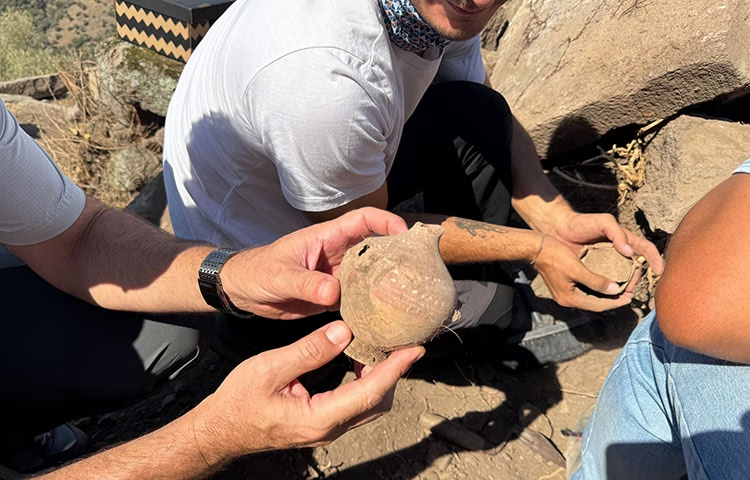
Nearly 1,000 miniature water vessels have been discovered in a newly excavated sanctuary at Aigai, shedding light on rituals dedicated to the Greek goddess Demeter.
The excavation, directed by Prof. Dr. Yusuf Sezgin of Manisa Celal Bayar University, is bringing fresh insights into the religious life of the Hellenistic period.
A Sacred Space Hidden for Centuries
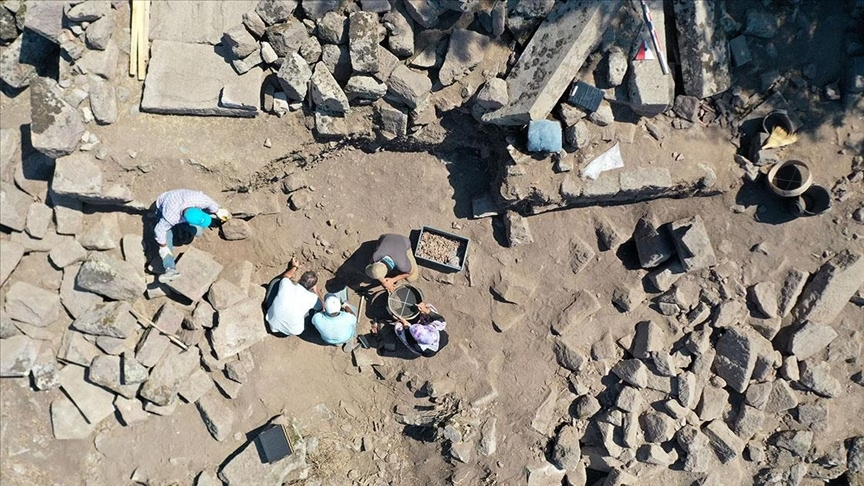
The ancient city of Aigai, one of the twelve Aeolian settlements in Western Anatolia, dates back to the 8th century BC. While previous seasons revealed temples devoted to Athena and Apollo, this year archaeologists turned their attention to a secluded area west of the city’s theater, near the fortification walls and rocky cliffs.
The modest two-room structure, measuring about 50 square meters, had long been suspected as a sanctuary. An inscription recorded by German researchers in 1886 confirmed that it was dedicated to Demeter, the deity of agriculture and fertility in Greek mythology.
Water, Fertility, and Devotion
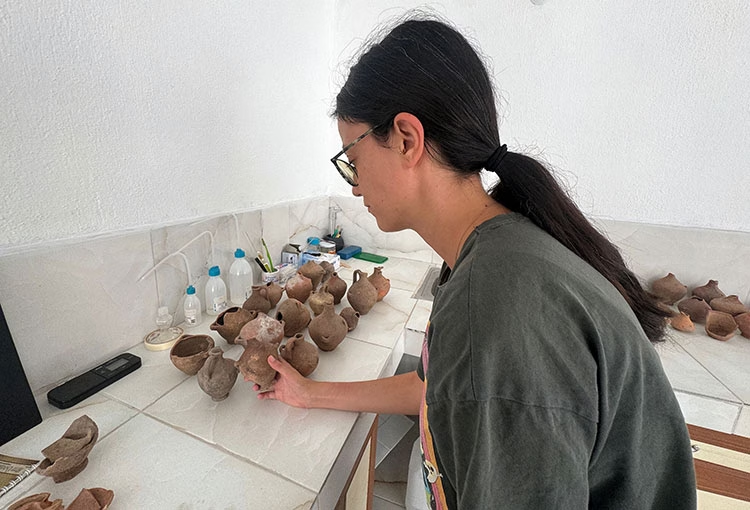
Inside the temple, the team unearthed an extraordinary deposit: around 1,000 miniature hydriae (water jars). According to Prof. Sezgin, these vessels were not ordinary household items but offerings symbolizing abundance:
“Water was the essence of prosperity in a region where arable land was scarce. These small jars were likely filled with water from local springs and either poured out in ritual libations or left as votive gifts to the goddess,” he explained.
Although the sanctuary suffered heavy looting during the 1960s, many votive objects have survived, providing rare evidence of local cult practices.
Why Demeter Mattered in Aigai
For the inhabitants of Aigai, surrounded by rugged terrain and limited farmland, Demeter represented hope for agricultural success. This explains why such an elaborate offering practice evolved in her honor.
Prof. Sezgin adds, “These discoveries reveal how deeply Aigai’s people valued Demeter, even in a landscape that was far from ideal for farming.”