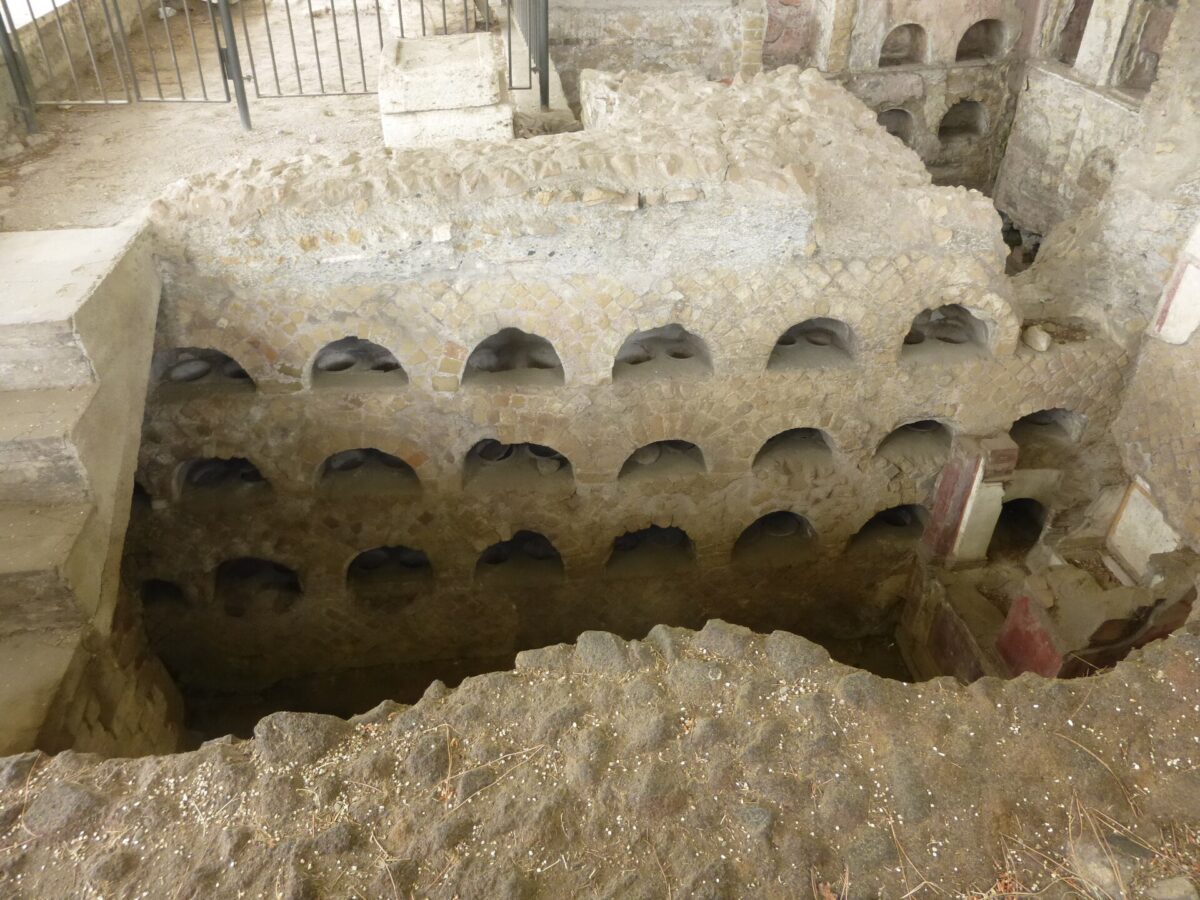
A quiet section of ancient Rome is raising new questions about how the dead were treated—and feared. In the Ostiense Necropolis, archaeologists have uncovered a series of burials marked by a striking and deliberate act: nails placed on the chest of the deceased.
At first glance, the detail feels unsettling. But within the logic of Roman belief, it may have carried a very specific purpose.
A Burial Ground Along Rome’s Lifeline
The necropolis stretches along the Via Ostiense, the road that once connected Rome to the port of Ostia. Over centuries, this corridor evolved into one of the city’s most important funerary landscapes.
Elaborate mausoleums once stood beside simpler graves cut directly into the soil. Some were richly decorated with frescoes and inscriptions; others were far more modest. Together, they reflect a society where status, identity, and belief continued even after death.
The newly excavated graves belong to this quieter layer of the necropolis—Late Antique burials, simple in form but unexpectedly rich in meaning.
The Repeated Presence of Nails
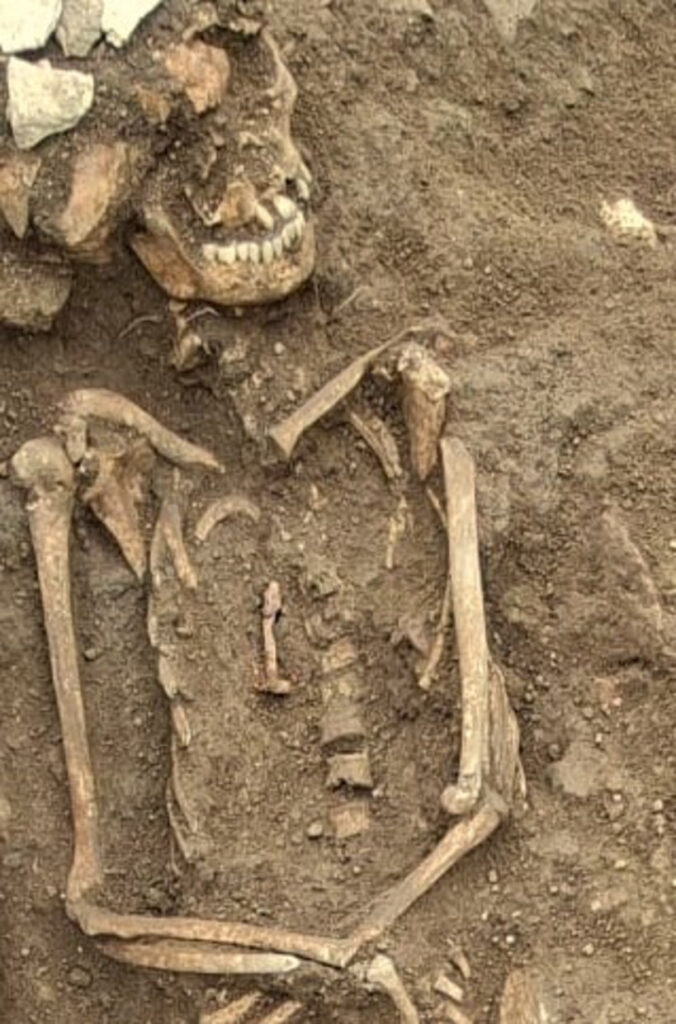
Across several graves, archaeologists observed the same detail: a nail positioned over the chest of the deceased.
This was not accidental. The repetition suggests a deliberate and shared practice.
While unusual to modern observers, similar uses of nails have been documented elsewhere in the Roman world. Still, each new example adds weight to a question that remains only partially understood—what exactly were these nails meant to do?
Fixing Death, Securing the Soul
In Roman and earlier Etruscan traditions, nails were not just tools. They carried symbolic force.
To drive a nail was, in a ritual sense, to fix something in place—to make it stable, irreversible. Applied to burial, the gesture may have marked death as final. A way of ensuring that the transition could not be undone.
Placed on the body, the nail may have served to anchor the soul, preventing it from wandering or returning. Not a punishment, but a precaution.
Protection for the Living—and the Dead
The act may also have worked in multiple directions at once.
For the deceased, it could offer protection against disturbance or malevolent forces. For the living, it may have functioned as a safeguard—a barrier between worlds.
Roman society, especially in Late Antiquity, was deeply shaped by superstition and inherited ritual knowledge. Death was not seen as a clean break, but as a threshold that required careful management.
In that context, even a small object could carry significant weight.
A Tradition with Deep Roots
The symbolic power of nails appears across different areas of Roman life.
In public ritual, the act known as clavum figere—driving a nail—marked moments of transition, such as the passing of a year. It signaled closure, stability, and sometimes purification.
Ancient writers also describe nails in healing practices. They were believed to counter illness, including fever and epilepsy. In one account, a nail driven into the ground at the site of a collapse could help cure the afflicted person.
Even natural threats were thought to be controllable through such acts. The nail, in essence, became a tool for imposing order on uncertainty.
Between Protection and Curse
Yet the same object could take on a darker role.
In the practice of defixiones, or curse tablets, nails were used to bind written spells directed at enemies. Piercing the tablet was not symbolic alone—it was meant to ensure the curse “held.”
This dual nature—protective in one context, harmful in another—reflects a broader truth about Roman belief: objects were rarely neutral. Their meaning depended on how and why they were used.
A Small Object, A Complex Belief System
The graves of the Ostiense Necropolis do not offer a single, definitive explanation. Instead, they reveal a mindset.
Death was something to be managed. Controlled. Secured.
And sometimes, that control came down to a simple act—a nail, carefully placed, carrying the weight of fear, protection, and belief all at once.
As excavations continue, more clues may emerge. For now, the pattern is clear enough to suggest that this was no isolated gesture, but part of a wider ritual language—one we are only beginning to understand.
Cover Image Credit: Public Domain