A remarkable zoological discovery has emerged from the highlands of Peru. A team led by Cal Poly Humboldt professor Silvia Pavan has identified a previously unknown species of mouse opossum in the cloud forests of the Peruvian Andes. The finding, published in American Museum Novitates, sheds light on South America’s still-hidden biodiversity and links modern science with the cultural legacy of the ancient Chachapoya people.
A Small Mammal with Distinctive Traits
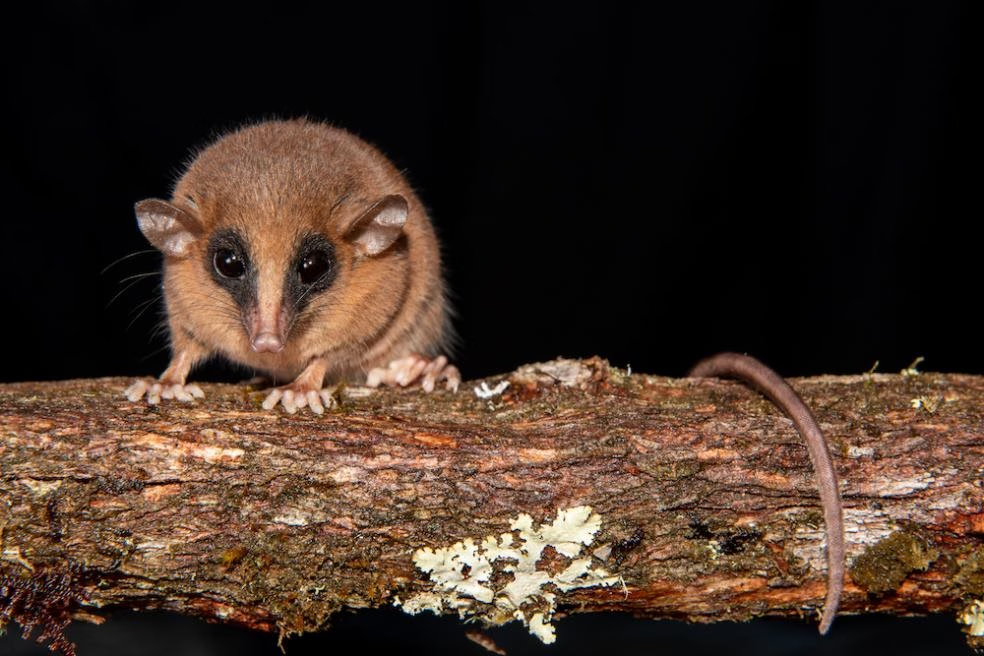
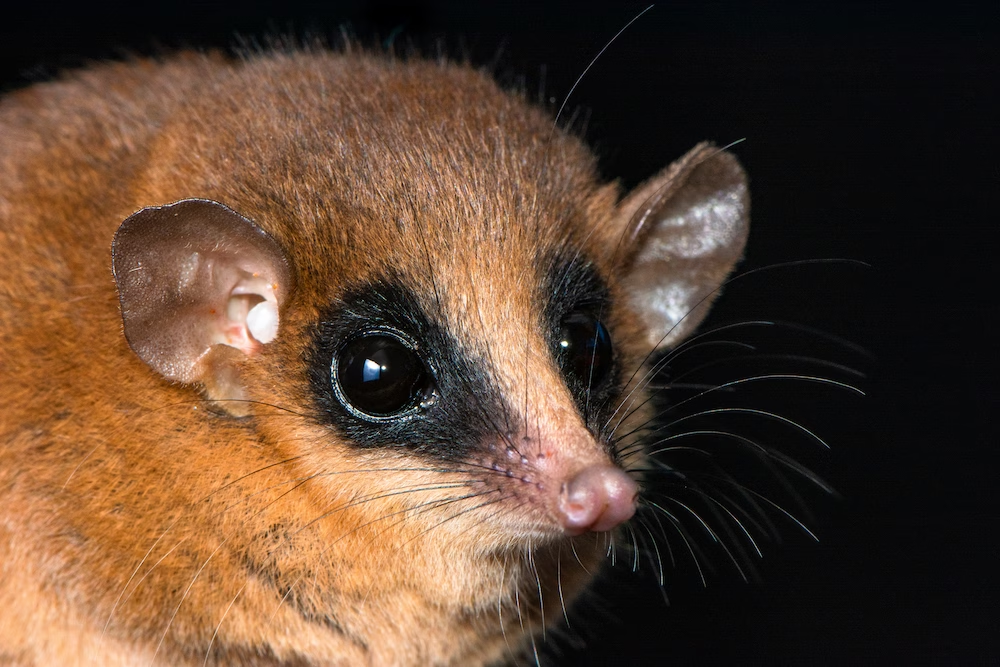
The newly described species, named Marmosa chachapoya, displays a unique combination of features that separates it from its close relatives. Its tail is longer than its body, an adaptation that aids climbing through dense vegetation. The animal also bears a distinctive dark facial mask, narrow elongated snout, and subtle differences in skull structure. Genetic analysis confirmed an 8% divergence from other Marmosa species, establishing its status as a distinct lineage.
From the Andes to Global Science
The discovery traces back to fieldwork in Río Abiseo National Park in 2018, a UNESCO World Heritage site known for its combination of archaeological and natural treasures. Only one specimen of Marmosa chachapoya has so far been collected, leaving many questions about its distribution, behavior, and population size unanswered. For researchers, this single find underscores both the fragility of Andean ecosystems and their potential to reveal new species.
Honoring the Chachapoya Civilization
The species’ name pays tribute to the Chachapoya, a pre-Columbian culture that thrived in the cloud forests of northern Peru before Inca conquest. Sometimes referred to as the “Warriors of the Clouds,” the Chachapoya are remembered for their cliffside settlements and distinctive funerary traditions. By naming the animal Marmosa chachapoya, scientists aim to highlight the deep interconnection between natural and cultural heritage in the Andes.
Broader Implications for Conservation
The discovery not only enriches mammalian taxonomy but also raises urgent conservation questions. Cloud forests in northern Peru are under pressure from agriculture, logging, and climate change. Scientists warn that species like Marmosa chachapoya, still unknown to science until recently, could be at risk of extinction before their ecological role is understood.
Cover Image: The Marmosa chachapoya’s is a small mammal with a delicate body about 4 inches in length and a long tail. Photos by Pedro Peloso.