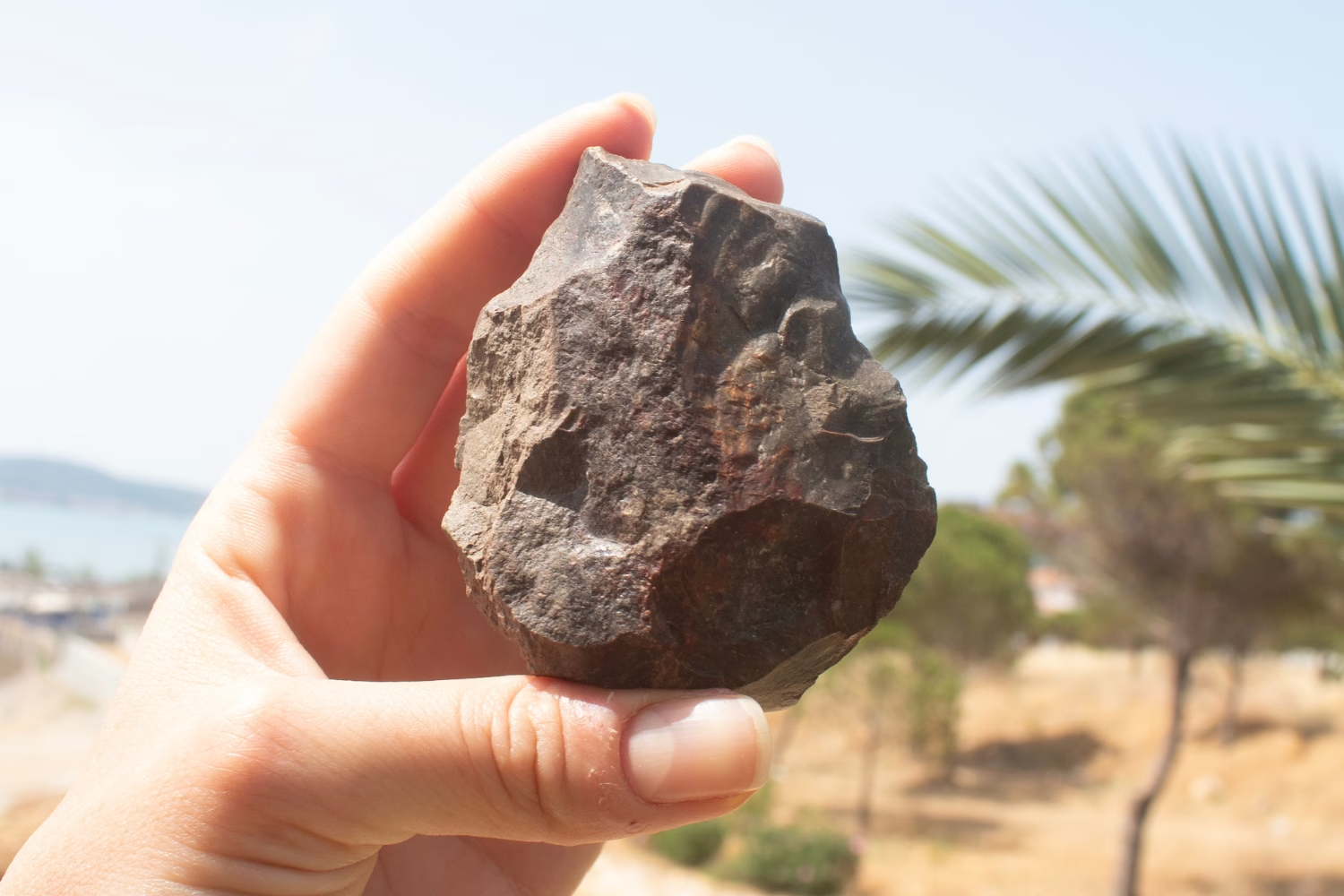
The coastal town of Ayvalık in western Turkey, long known for its scenic beauty, is now reshaping our understanding of human prehistory. A groundbreaking study published in the Journal of Island and Coastal Archaeology reveals that early humans may have crossed into Europe via a land corridor in Ayvalık during the Ice Age, altering one of the most fundamental narratives of migration.
138 Stone Tools Unearthed in Ayvalık
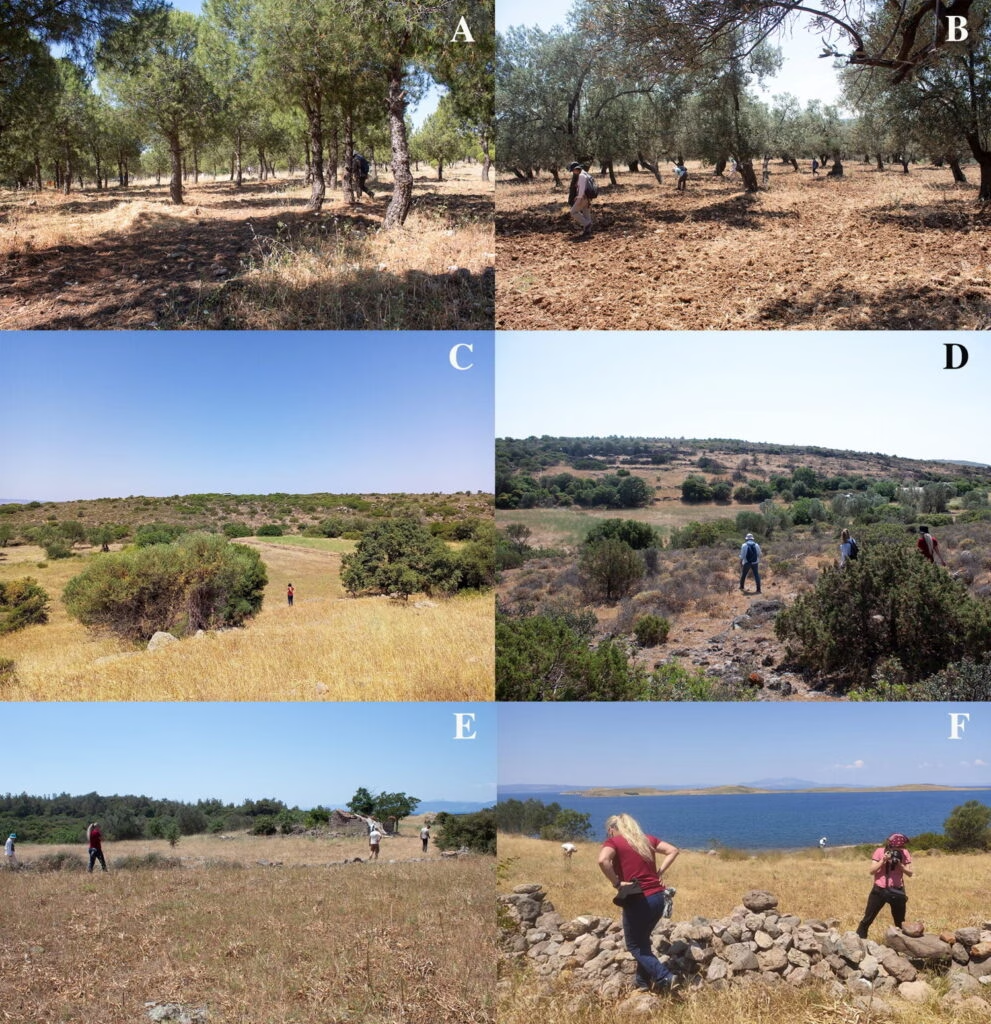
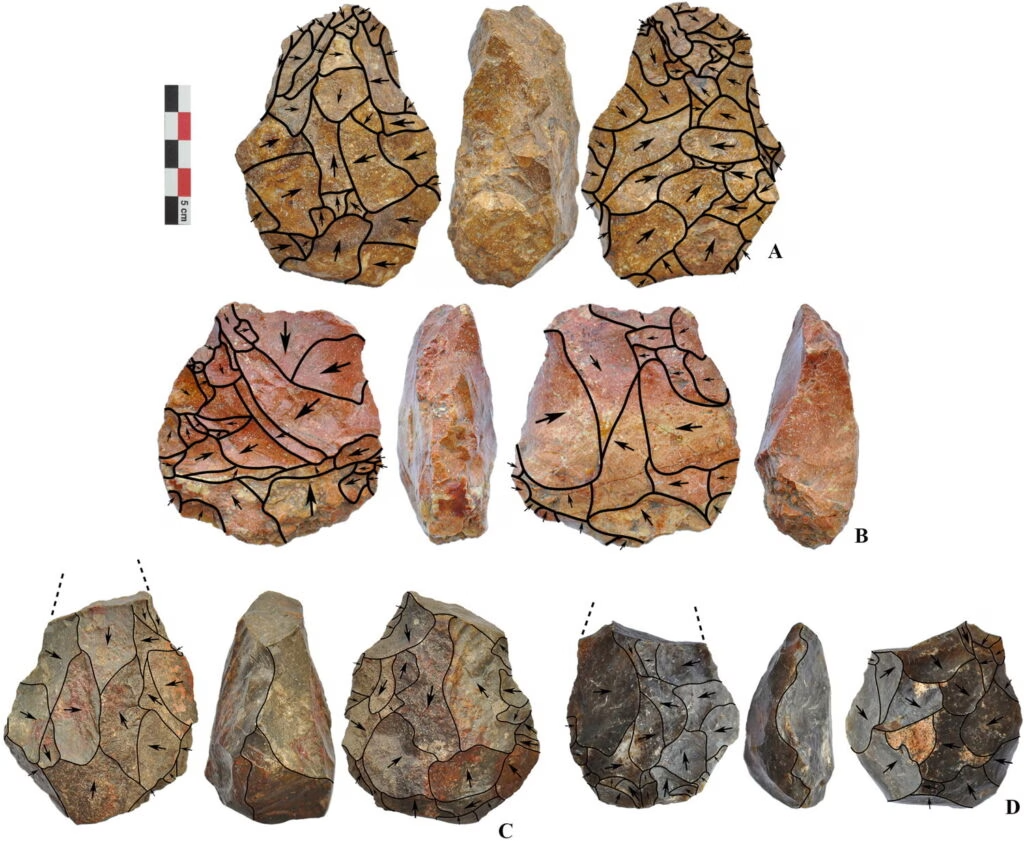
Led by Dr. Göknur Karahan of Hacettepe University, the research team surveyed a 200 km² area and documented 138 lithic artifacts. Among them were handaxes, large cleavers, and Levallois-style flakes—a hallmark of Middle Paleolithic technology associated with both Neanderthals and early Homo sapiens.
“These findings demonstrate that Ayvalık served as a vital land bridge between Anatolia and Europe during the Pleistocene,” Dr. Karahan explained. “When sea levels dropped, islands and peninsulas merged into a continuous landmass that facilitated human and animal movement.”
An Ice Age Land Bridge
During glacial periods, sea levels fell by more than 100 meters, exposing vast coastal plains. This transformed Ayvalık’s present-day archipelago into a terrestrial passage that linked continents.
Co-author Prof. Kadriye Özçelik of Ankara University emphasized:
“Paleogeographic reconstructions show that Ayvalık was part of a broader terrestrial landscape, providing an overlooked corridor into Europe. This challenges the idea of a single dominant migration route and instead supports a mosaic of pathways.”
Local Resources and Technological Innovation
The archaeologists also identified rich sources of flint and chalcedony, suggesting that Ayvalık was not only a transit zone but potentially a hub for tool production. The Levallois flakes directly connect the region to global technological traditions spanning Africa, Asia, and Europe.
A Team of Female Archaeologists
The project stands out for another reason: it was conducted entirely by expert female archaeologists from Türkiye. Co-author Dr. Hande Bulut of Düzce University highlighted the broader significance:
“Ayvalık was not just a passageway; it was a long-term Paleolithic habitat and an important locus of technological development in the eastern Aegean.”
A Two-Week Study with Groundbreaking Results
Remarkably, these results stem from only a two-week field survey conducted in June 2022. Despite its brevity, the project has already provided evidence that Europe’s first populations may have entered through multiple routes, not only via the Balkans or Levant as traditionally assumed.
Rewriting the Story of Human Migration
The discovery of diverse Paleolithic tools reveals resilience, adaptation, and connectivity across continents. By placing Ayvalık on the prehistoric map, the study not only enriches our knowledge of human dispersal but also underscores Anatolia’s pivotal role as a crossroads of cultures, continents, and innovations.
As Dr. Karahan concluded:
“It feels as if we are adding an entirely new page to the story of human dispersal. These findings will inspire future exploration and may reshape Pleistocene archaeology for decades to come.”
Bulut, H., Karahan, G., & Özçelik, K. (2025). Discovering the Paleolithic Ayvalık: A Strategic Crossroads in Early Human Dispersals Between Anatolia and Europe. Journal of Island and Coastal Archaeology, 1–23. https://doi.org/10.1080/15564894.2025.2542777