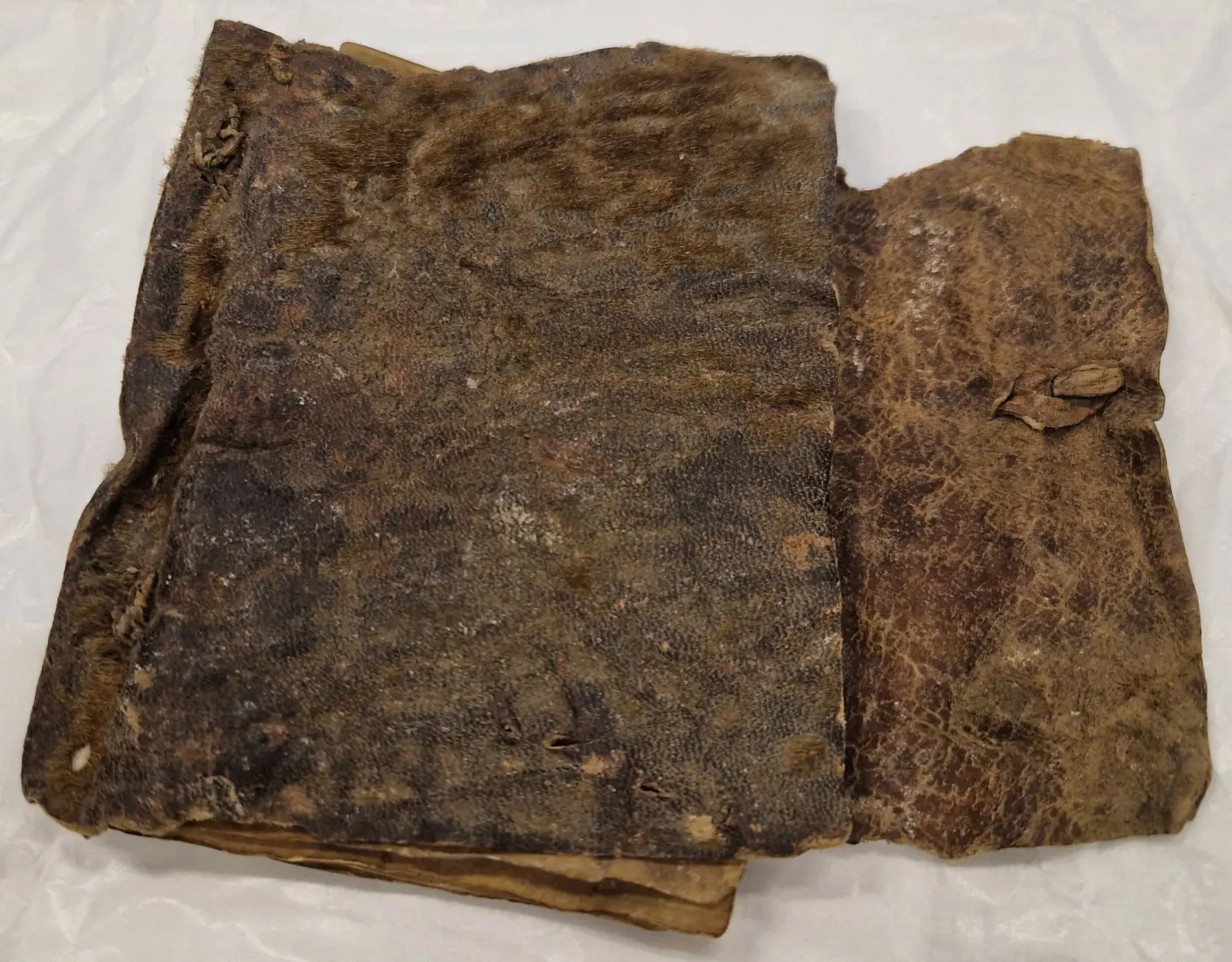
At first glance, it looked like a small, weathered booklet — nothing more. But when conservators at the National Library of Norway examined it, they realized they might be holding the country’s oldest surviving book: a 13th-century manuscript bound in fur-covered seal skin, handwritten on calf parchment, and still preserved in its original form.
A Medieval Relic Hidden on a Farm
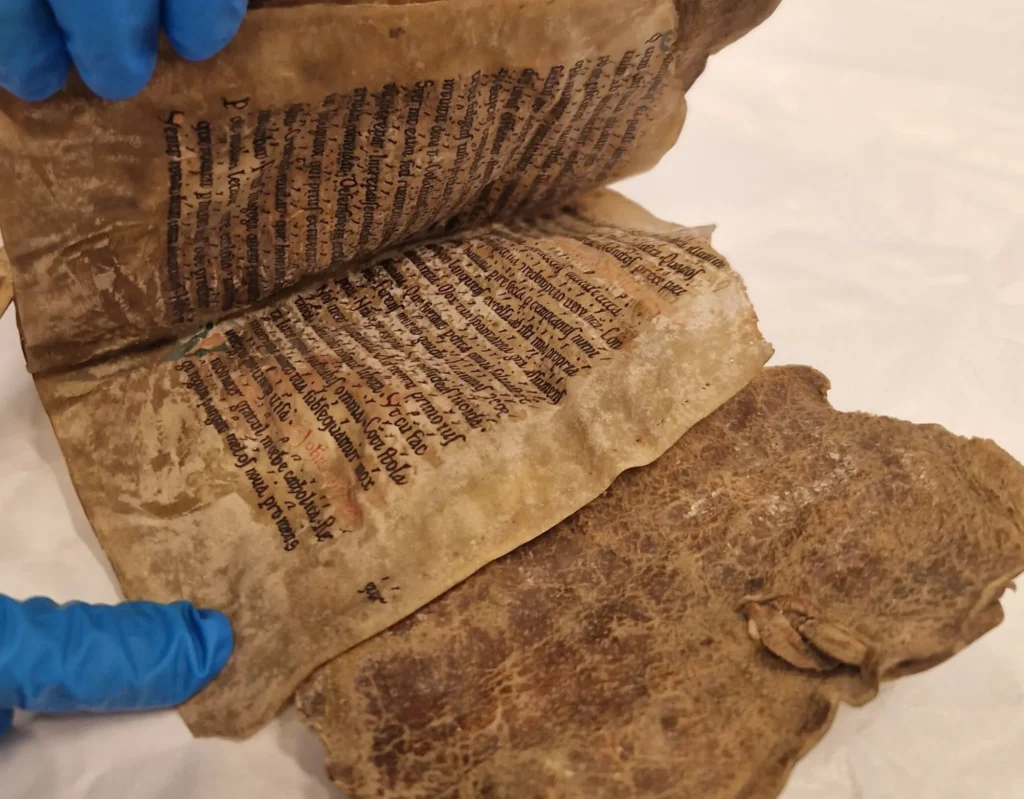
For generations, the so-called Hagenes manuscript lay quietly at a family farm near Bergen. Oral tradition claimed it had once belonged to a medieval monastery in Western Norway. Earlier this year, the owners entrusted the relic to the National Library — a decision that has turned into one of the most remarkable manuscript discoveries in Norway’s history.
“When I first saw it, I knew it was something truly special,” said conservator Chiara Palandri, who leads the restoration work.
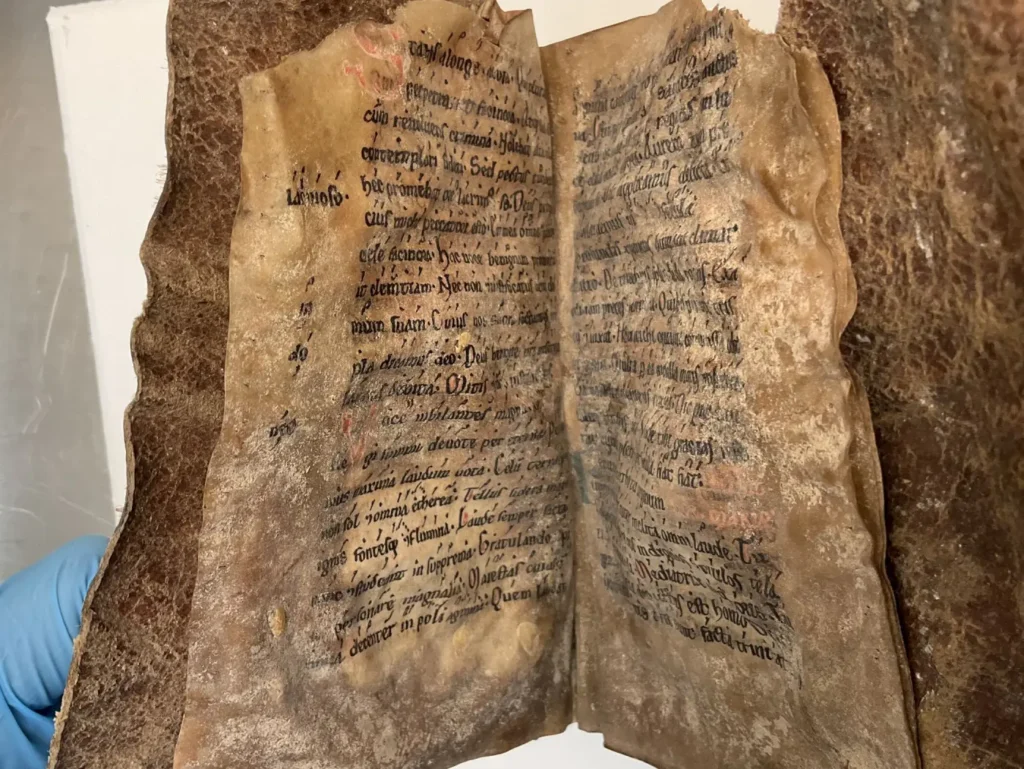
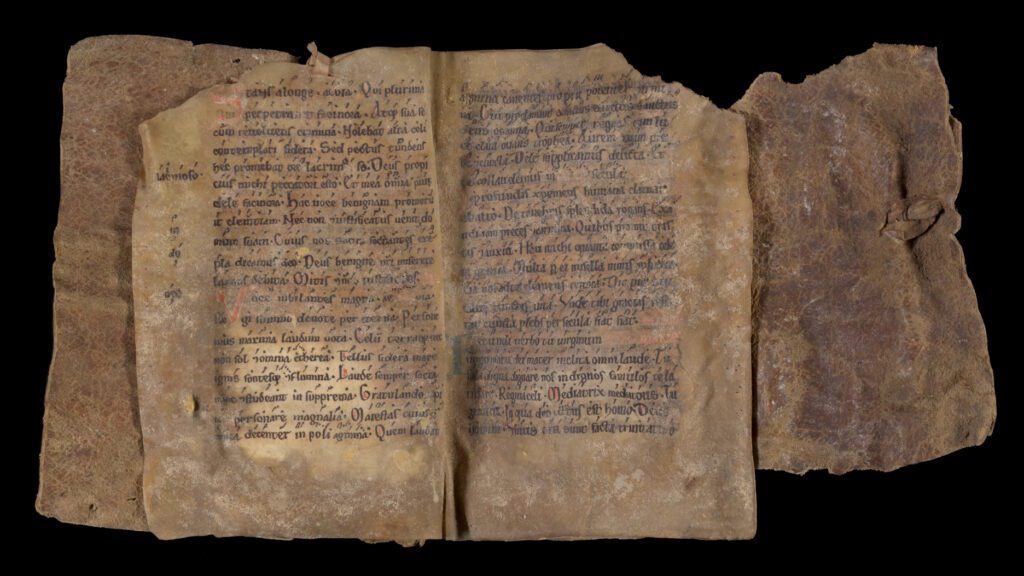
The eight-page volume, filled with Latin religious songs, dates tentatively to the 13th century — or possibly earlier. Despite its small size, experts say it could dramatically expand knowledge of Norway’s medieval book culture.
A Unique Seal-Skin Binding
While the manuscript’s parchment pages were made from calfskin — the standard material of medieval Europe — its seal-skin cover shocked even experienced conservators.
“I had never seen such a binding before,” Palandri told Science Norway.
After consulting specialists abroad, she received confirmation from a French researcher that the binding appears to be of Nordic origin — perhaps even Norwegian. If DNA and protein analyses confirm that both the calf and the seal were local, the artifact would stand as the earliest entirely Norwegian-made book ever found.
Even the remnants of a strap, now believed to be reindeer hide, could reinforce that conclusion.
Songs for Saints and Feasts
Inside, the manuscript contains what scholars call sequences — liturgical hymns sung during mass on feast days. Professor Åslaug Ommundsen, a medieval Latin expert at the University of Bergen, identified hymns dedicated to the Virgin Mary and All Saints’ Day.
“It feels incredibly authentic,” she explained. “This isn’t a collector’s item but a working book — something a priest or cantor would have used in church.”
Such utilitarian manuscripts rarely survived the upheavals that followed Norway’s transition to Protestantism in 1537, when Catholic books were destroyed, repurposed, or sent to Denmark.
That survival makes the Hagenes manuscript “a once-in-a-generation discovery,” Ommundsen said.
Only Two Other Books Like It
Until now, only two Norwegian books from the same era were known: the Kvikne Psalter — preserved with its wooden covers — and the Old Norwegian Homily Book in Copenhagen, which lost its binding long ago.
The new discovery, with both its text and binding intact, makes it the only complete medieval Norwegian book still in existence.
Science Meets History
Laboratory tests now aim to trace the biological origins of the materials. Protein analysis has already confirmed animal sources; DNA sequencing could soon identify where the seal swam and where the calf grazed eight centuries ago.
The National Library plans to host an international seminar this November, gathering experts to study the manuscript — and even build a replica to understand its construction.
“By recreating it, we’ll learn how it was originally made,” Palandri said.
Under the microscope, she has even found two tiny insects preserved between the pages. “They’re dead, so they’ll stay,” she said with a smile.
A Balancing Act of Preservation and Access
To minimize handling, the book has been digitally photographed in ultra-high resolution, allowing scholars to study it safely.
“We must protect old books, but they also exist to be used,” said Arthur Tennøe, head of the Visual Media and Conservation Department.
The fragile little volume — part seal, part calf, part reindeer — now stands as a rare survivor from a vanished world of Norwegian monastic life. And for the first time in centuries, it’s finally being read again.