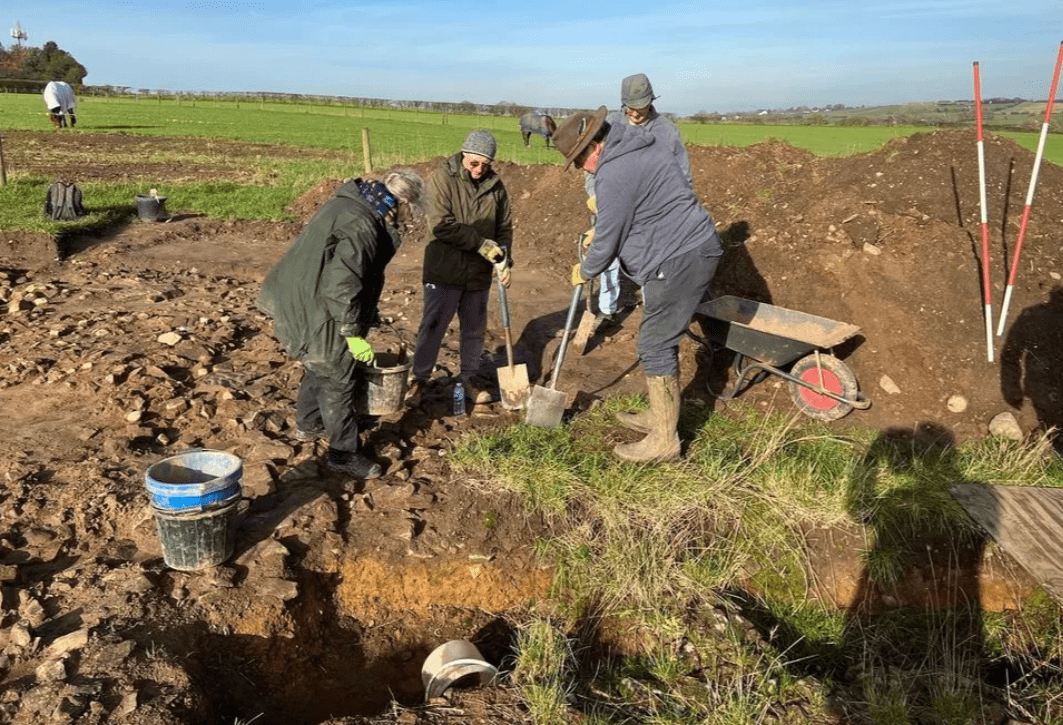
On a quiet stretch of farmland near the outskirts of Wigan, northern England, a team of volunteers have stumbled upon what could be one of the region’s most remarkable prehistoric finds — a 4,000-year-old Bronze Age cemetery that may sit atop an even older Neolithic henge.
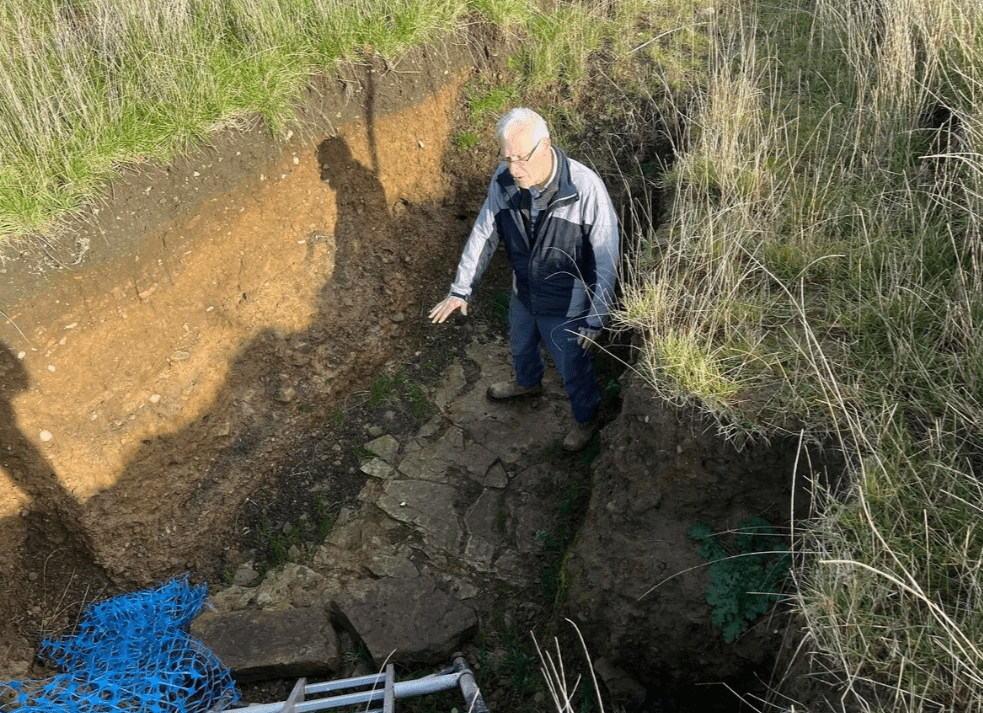
Members of the Wigan Archaeological Society, who have been excavating the Aspull site for the past four years, uncovered dozens of fragmented human bones — remnants of ancient funeral pyres. Unlike modern cremations, these open-air burials left bones partially intact, allowing archaeologists to identify them as human remains.
“When we first unearthed the bones, we had to call the police and coroner to confirm they weren’t modern,” said Bill Aldridge, the society’s secretary. “Once radiocarbon dating confirmed they were thousands of years old, we knew we had stumbled onto something extraordinary.”
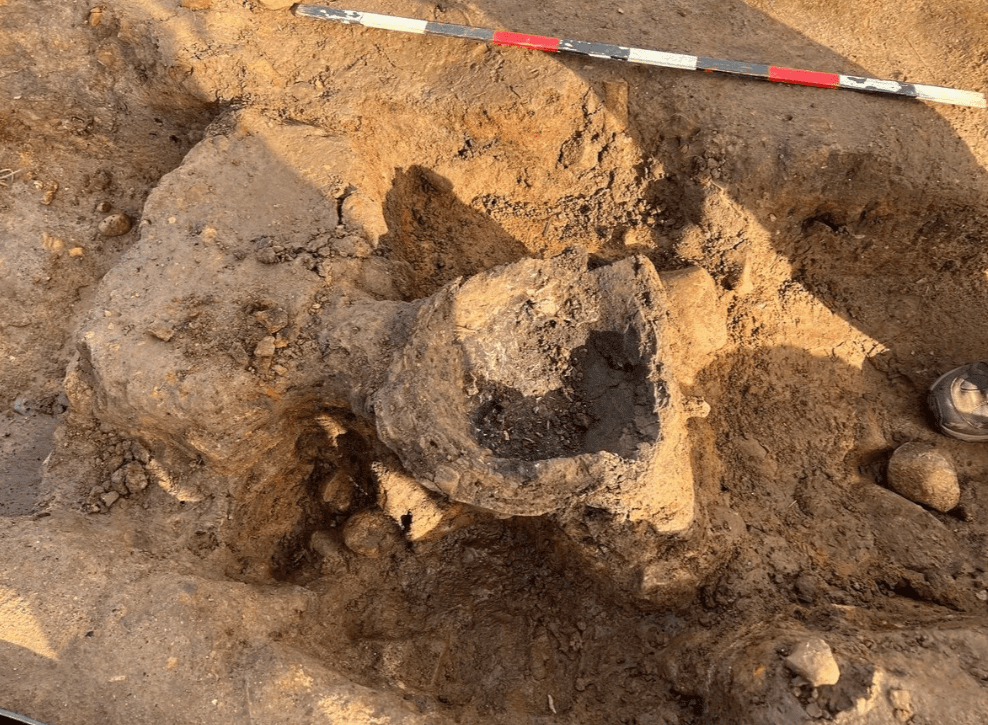
Recent digs have revealed a well-preserved Bronze Age cremation urn, still containing traces of burned bone. Samples sent for radiocarbon analysis to universities in Oxford, Belfast, and Edinburgh confirmed that the site dates back to the early Bronze Age — roughly between 2,000 and 1,800 BCE.
Echoes of an Earlier Age
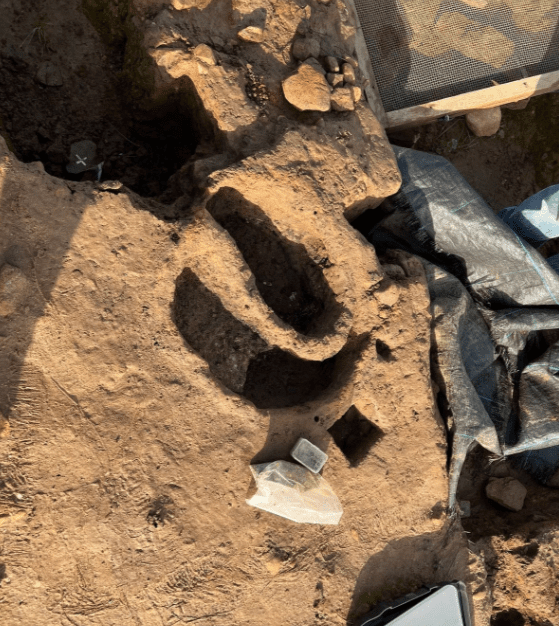
What makes the discovery even more intriguing is the site’s oval layout, encircled by a shallow ditch. This geometric form suggests that the location might once have been a Neolithic henge, potentially dating back over 5,000 years — long before the cemetery phase. If confirmed, it would place Aspull among a rare class of early ritual landscapes in northwestern Britain.
Community Archaeology at Its Best
The Wigan Archaeological Society, founded in 1986, operates entirely through volunteers, carrying out professional-standard research across Greater Manchester. Over the decades, the group has documented Roman, Medieval, and Industrial sites — including the remains of a Roman bathhouse discovered in Wigan’s town centre in 2005.
To protect the Aspull site from looting, the team has chosen not to reveal its exact coordinates. “We’ve had incredible support from local farmers and residents,” Aldridge said. “Everyone’s fascinated by how far back Wigan’s story seems to go.”
From Roman Coccium to Bronze Age Origins
Archaeologists have long known Wigan’s significance as the Roman settlement of Coccium, strategically positioned between Manchester and Ribchester. Yet this latest discovery hints that the area’s ritual and settlement history reaches far deeper — into the mists of prehistory, where the boundary between life and death was marked by fire, earth, and memory.
Cover Photo: Volunteers from the Wigan Archaeological Society excavating the Bronze Age cemetery near Aspull, Greater Manchester. Credit: Wigan Archaeological Society