For generations, the Late Bronze Age of Central Europe has been defined by fire.
Between roughly 1300 and 800 BCE, communities associated with the Urnfield culture increasingly cremated their dead, placing ashes in urns and burying them in carefully organized cemeteries. The ritual transformed Europe’s mortuary landscape — but it also erased much of the biological evidence modern science relies on. Burned bone rarely preserves ancient DNA. For archaeogenetics, the period has long been frustratingly opaque.
A new interdisciplinary study published in Nature Communications changes that picture. By turning to rare inhumation burials in Germany, Czechia, and Poland — and combining them with isotope data from cremated individuals at Kuckenburg and Esperstedt in Central Germany — researchers have reconstructed how Late Bronze Age people lived, moved, ate, and understood death.
The project, led by Eleftheria Orfanou of the Max Planck Institute for Evolutionary Anthropology, brings together ancient DNA analysis, strontium and oxygen isotope testing, and osteoarchaeology. The result is not a story of sudden upheaval, but something more nuanced: gradual shifts unfolding within communities that remained deeply rooted in place.
Genetic Change Without Population Replacement
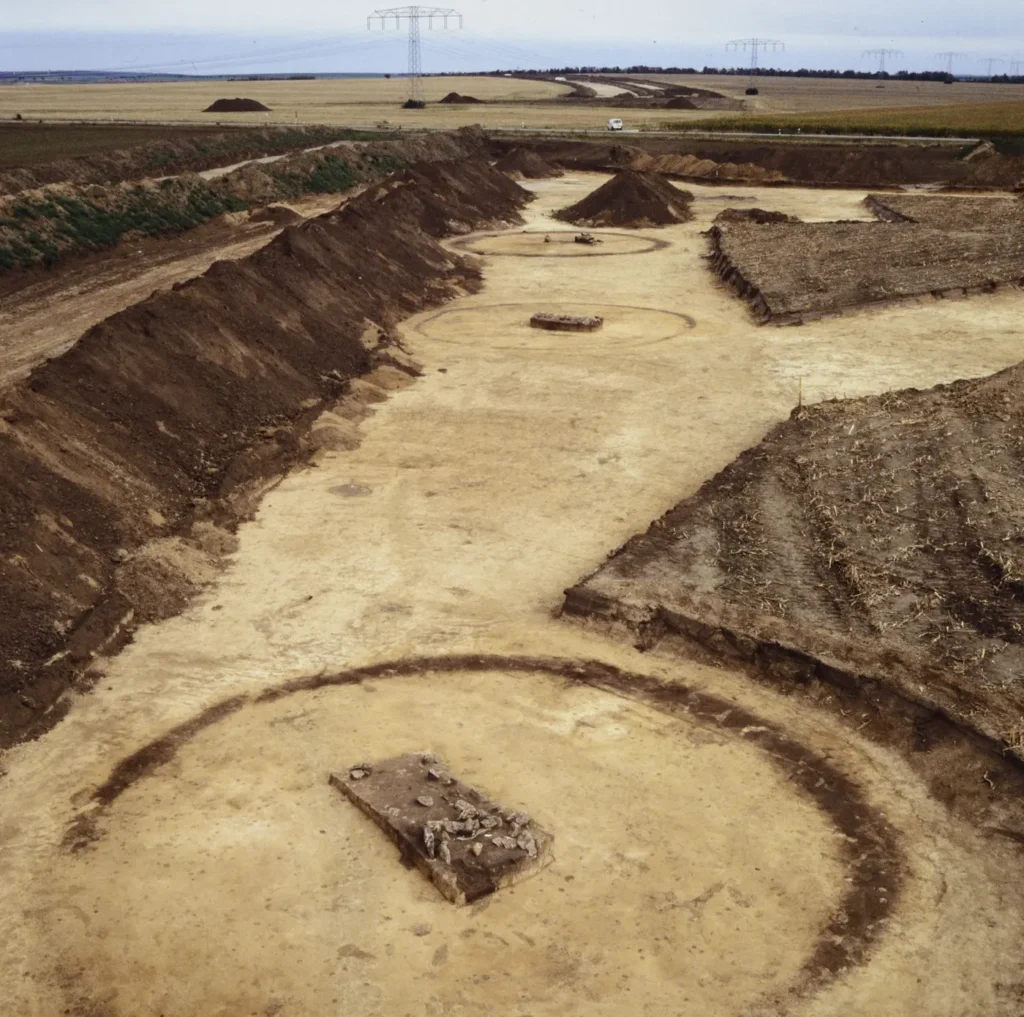
The genetic data reveal subtle, regionally varied transformations in ancestry during the Late Bronze Age. In Central Germany, noticeable changes appear mainly in the later phases of the period. These shifts correspond with growing connections to regions south and southeast of the Danube — areas linked through expanding exchange networks.
Yet isotope signatures tell a crucial part of the story. Strontium and oxygen isotopes, which reflect the geological environment in which a person grew up, show that most individuals were local. This applies not only to those buried intact, but also to cremated individuals whose remains could still yield isotopic signals.
In other words, ideas were traveling more than people.
The cultural transformations of the Urnfield period — including cremation itself — do not appear to have been driven by large-scale migration. Instead, communities seem to have adopted and adapted new practices through contact, trade, and long-standing regional ties.
A Short-Lived Millet Experiment
Diet offers another window into change. During the early Late Bronze Age, broomcorn millet begins appearing in Central European diets. Originally domesticated in northeast China, the crop had made its way westward across Eurasia. Its arrival in Europe represents one of the clearest examples of long-distance agricultural transmission in prehistory.
Millet is fast-growing and resilient — useful under environmental or economic stress. Isotopic data suggest it became a meaningful dietary component for some communities. Yet its adoption was not accompanied by major demographic turnover. The people eating millet were, genetically speaking, largely the same populations who had previously relied on wheat and barley.
Even more intriguing is what happened later. In the subsequent phases of the Late Bronze Age, millet consumption declines. Communities appear to return to more established cereal traditions.
This was not a straightforward march toward intensification. It looks more like experimentation — a pragmatic response to shifting conditions, followed by recalibration. Bronze Age farmers were neither static nor blindly progressive. They adjusted.
Health, Labor, and Everyday Realities
The skeletal evidence grounds the broader narrative in daily life. Researchers detected bacterial DNA associated with oral health issues, but found no signs of widespread epidemic disease. There is no indication of large-scale health crises sweeping through these communities.
Bones, however, carry the marks of hard work. Indicators of childhood physiological stress appear in several individuals. Degenerative joint conditions suggest physically demanding labor. Occasional trauma hints at accidents — or perhaps conflict — though nothing on a scale suggesting endemic violence.
Overall, most individuals were in relatively stable condition. Life was strenuous, but not uniformly grim.
Death as Choice, Not Uniformity
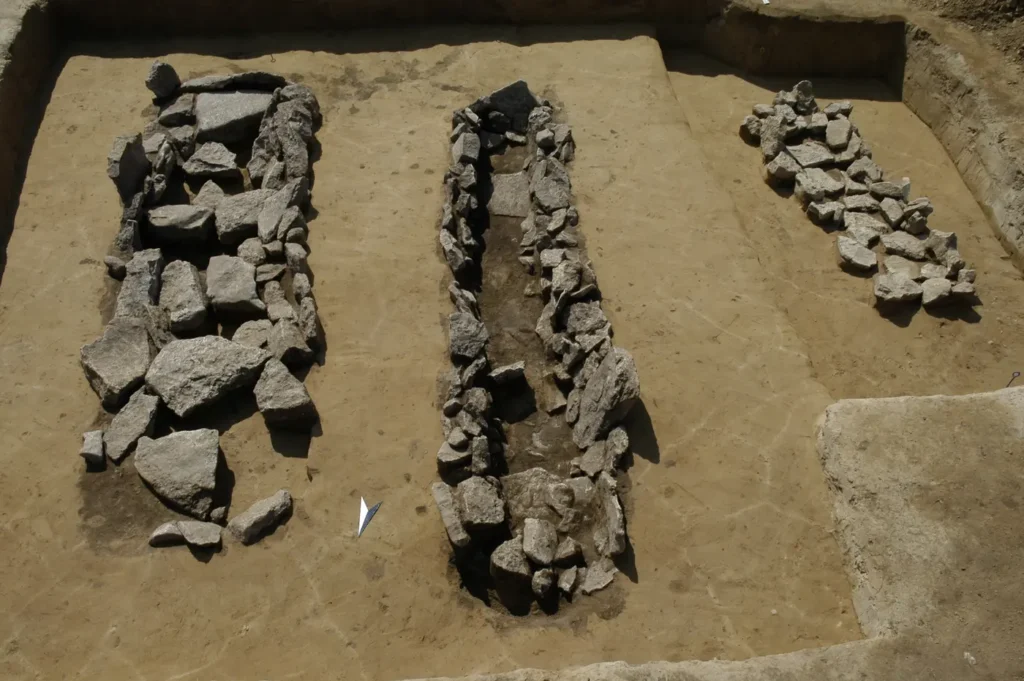
The mortuary record is perhaps the most striking aspect of the study. While cremation became increasingly dominant, it did not erase other practices. Inhumations persisted. Some graves contained only skulls. Multi-stage burial rites appear to have been practiced within the same communities that embraced cremation.
These were not marginal deviations. They formed part of a shared cultural repertoire.
As Orfanou notes, the Late Bronze Age was not experienced as a single rupture, but as a sequence of decisions — about food, social ties, memory, and the body itself. Burial was not merely disposal; it was a statement about identity and belonging.
A Dynamic Bronze Age Europe
By integrating archaeology, biomolecular science, and isotopic chemistry, the study reframes the Late Bronze Age as a period of layered transformation. Cultural change did not necessarily require population replacement. New crops did not demand new peoples. Even radical shifts in burial practice coexisted with continuity.
Communities were negotiating their world — drawing from tradition, experimenting with innovation, and maintaining local identities while participating in broader networks.
The Urnfield horizon may have been shaped by fire, but beneath the ashes lay societies that were adaptable, interconnected, and far more complex than the archaeological silence once suggested.
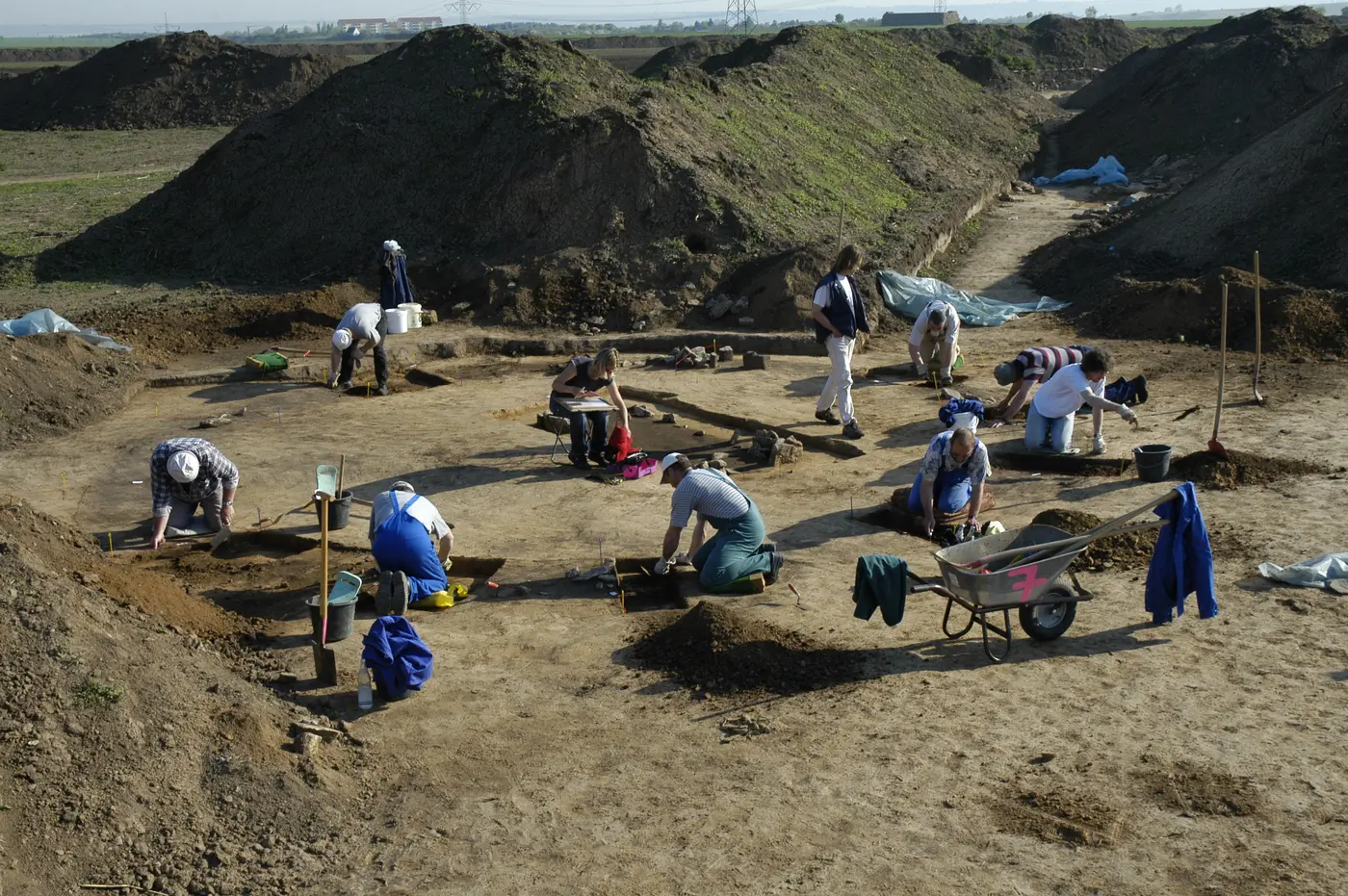
Cover Image: Excavations near Esperstedt on the route of the BAB 38 motorway. © State Office for Heritage Management and Archaeology Saxony-Anhalt