
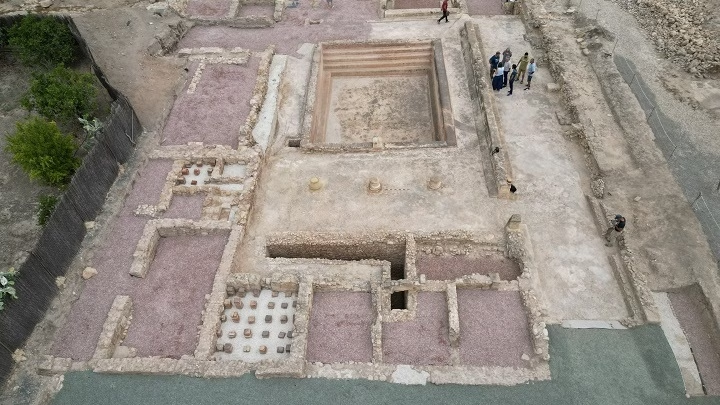
After eight years of continuous excavations, archaeologists from the University of Alicante have uncovered a monumental 1,300-square-meter bath complex in the ancient Roman colony of Iulia Ilici Augusta. The site, adorned with mosaics and once bustling with life in the 2nd century CE, ranks among the largest thermal facilities ever discovered in Hispania.
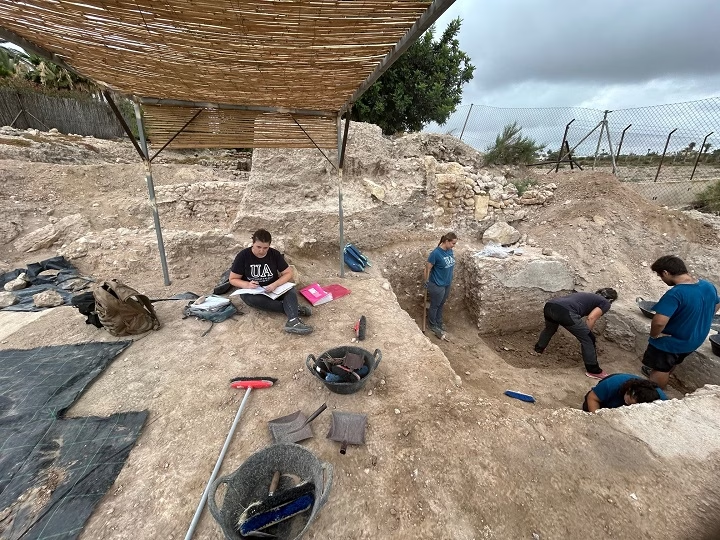
In the heart of Spain’s southeastern city of Elche, the La Alcudia archaeological site has yielded one of the most impressive public buildings of Roman Hispania. Known as the Eastern Baths, the sprawling complex was brought to light during the ASTERO Project, a research initiative launched in 2017 by the University of Alicante.
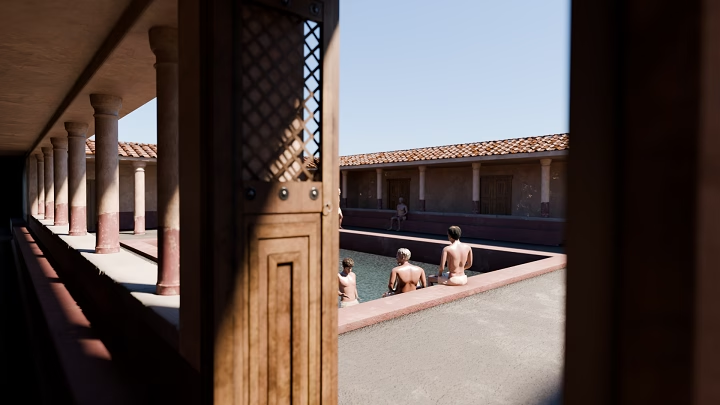
Lead archaeologist Prof. Jaime Molina Vidal described the discovery as “a symbol of the city’s prosperity during the Roman Empire.” He added, “Built in the 2nd century CE, these baths stand out for their sheer size and luxurious design—mosaic floors, a massive swimming pool, and an array of bathing rooms at different temperatures, all reflecting Ilici’s golden age.”
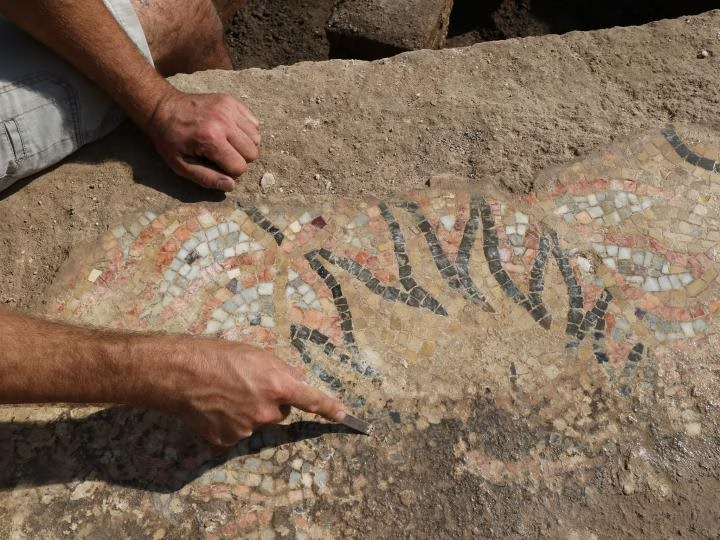
Covering an area of around 1,300 square meters, the Eastern Baths comprised a frigidarium (cold room) with one of the largest natatio (pools) in Hispania, a tepidarium (warm room), a caldarium (hot room), a laconicum (sauna), and an apodyterium (changing room). Among the most notable features are two remarkable mosaics: one imitating marble panels and another decorated with acanthus leaves, flowers, and elegant spirals.
From Iberian settlement to Visigothic town
The excavation revealed more than just Roman grandeur. Beneath the bath complex, archaeologists uncovered an Iberian neighborhood dating back to the 3rd century BCE—evidence that the site was already a thriving settlement long before Rome established its colony. In addition, a 55-meter-long Roman street with a drainage system, building entrances, and original paving has been excavated, offering a rare glimpse into the city’s urban layout and its evolution from Iberian to Visigothic times.
Decline and rediscovery
The baths began to fall into disuse during the 3rd and 4th centuries CE, likely due to economic hardship and population decline. Later partial restorations reduced their size and functionality, and the site was eventually abandoned in the 5th–6th centuries. Today, the remains are preserved with protective coverings and are open for public viewing, with future plans for a fully sheltered archaeological display.
Iulia Ilici Augusta, strategically located between Carthago Nova (modern Cartagena) and Valentia (Valencia), was one of the most important colonies in southeastern Hispania. Initially planned under Julius Caesar and later re-founded by Emperor Augustus for veterans of the Cantabrian Wars, the city held both military and commercial significance in the Roman Empire.
“This discovery goes beyond Roman architecture—it tells us how urban life took shape in the Mediterranean world,” said Prof. Molina. “We are now moving into the scientific publication phase and preparing to make this heritage accessible to the public.”