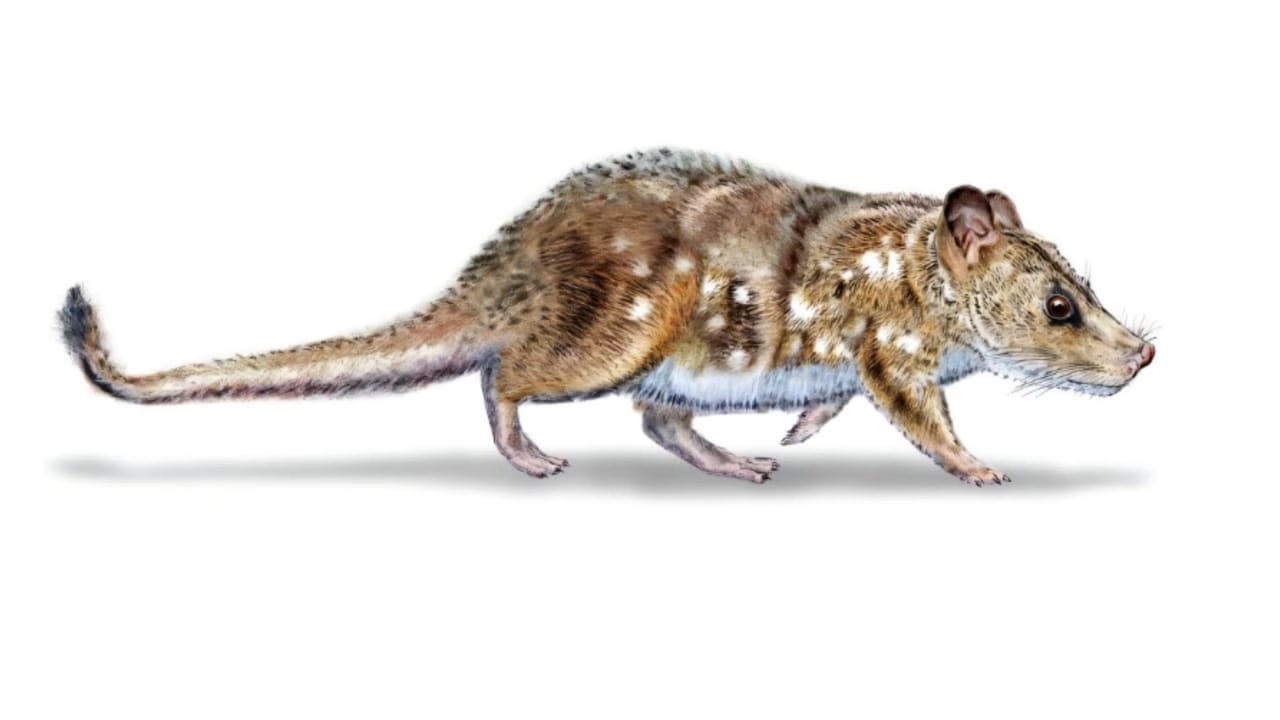
A discovery in Chilean Patagonia has revealed one of the tiniest mammals to coexist with dinosaurs: a mouse-sized species named Yeutherium pressor, dating back approximately 74 million years. This remarkable fossil provides rare insights into mammalian evolution in South America during the Late Cretaceous, when the continent was still part of Gondwana.
A Tiny Mammal from the Age of Dinosaurs
The fossil was discovered in the Río de las Chinas Valley in Chile’s Magallanes region, about 3,000 kilometers south of Santiago. Excavated by a team from the University of Chile’s Paleontological Network, led by Hans Püschel and Alexander Vargas, the specimen consists of a jaw fragment with one complete molar and the roots of two others. While most Southern Hemisphere Mesozoic mammal finds consist of isolated teeth or bones, this jaw provides a rare and identifiable insight into early mammalian anatomy.
“Finding a mammal from the era of the dinosaurs—and particularly in South America, where fossil evidence is scarce—makes it a very important discovery,” said Püschel.
Weighing an estimated 30–40 grams, Yeutherium pressor represents the smallest mammal yet recorded in South America during the dinosaur era, coexisting with the last non-avian dinosaurs before their extinction 66 million years ago.
Diet and Dental Adaptations
Microscopic examination of Yeutherium’s molars revealed rounded, crenulated crests, which researchers described as resembling an orange juicer. These dental adaptations suggest a diet primarily consisting of tough plant material, bridging the evolutionary gap between generalized insectivorous teeth and the specialized grinders seen in later herbivorous mammals.
Because these dental characters lie between generalist insect-eating teeth and the more advanced herbivore adaptations, Yeutherium pressor offers a window into the early evolution of plant-based diets. Understanding these traits helps scientists track how early mammals diversified their feeding strategies in prehistoric ecosystems.

Reproduction and Lifestyle
Although reproductive methods cannot be confirmed from the fossil alone, researchers propose that Yeutherium may have either laid eggs like modern monotremes or carried its young in a pouch, similar to early marsupials. This hypothesis aligns with its classification on an early mammalian branch exhibiting both primitive and specialized traits. Future excavations at the site aim to uncover additional skeletal remains to clarify this aspect of its biology.
The Significance of the Discovery
Yeutherium pressor is not only a scientific breakthrough for paleontologists but also a rare glimpse into mammalian life in Gondwana. Its discovery expands our understanding of mammalian diversity in the Southern Hemisphere during the Mesozoic era.
The Río de las Chinas site has previously yielded fish, reptiles, and dinosaur fragments. However, mammals had remained elusive, making this fossil a crucial piece in reconstructing Patagonia’s prehistoric ecosystems. The findings contribute to our understanding of how mammals coexisted with dinosaurs, highlighting their evolutionary strategies for survival and diversification.
Future Research
Fieldwork scheduled for the next austral summer aims to uncover additional skeletal pieces that may provide further details on Yeutherium’s diet, reproductive methods, and skeletal structure. Researchers hope that new discoveries will offer deeper insights into how small mammals adapted to their environment alongside giant dinosaurs, and how they contributed to the evolutionary lineage of modern mammals in South America.
Yeutherium pressor, the “one-ounce wonder,” is a testament to the remarkable adaptability and diversity of early mammals. From its tiny size and specialized teeth to its possible reproductive strategies, this species illuminates a previously obscure chapter of South American prehistory. As research continues, it promises to reshape our understanding of mammalian evolution during the age of dinosaurs and the ecosystems of ancient Gondwana.
Hans P. Püschel et al, A subantarctic reigitheriid and the evolution of crushing teeth in these enigmatic Mesozoic mammals, Proceedings of the Royal Society B: Biological Sciences (2025). DOI: 10.1098/rspb.2025.1056
Cover Image credit: An Illustration of the Yeutherium Pressor by Mauricio Alvarez