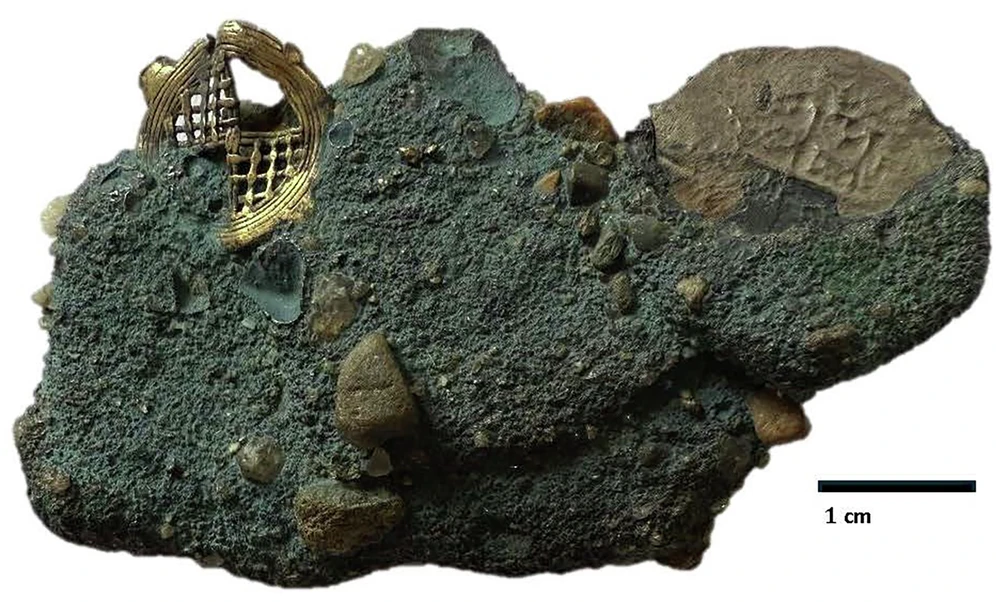
A 300-Year-Old Shipwreck Challenges a Persistent Myth
For centuries, European traders claimed that West African gold was unreliable—deliberately diluted to deceive buyers.
A new scientific study suggests those claims were wrong.
Analyzing gold recovered from the Whydah Gally—a pirate shipwreck that sank in 1717—researchers found no evidence of systematic adulteration. Instead, the metal’s composition reflects natural geological variation, not fraud.
A Rare Snapshot of Atlantic Trade
The Whydah Gally offers something archaeology rarely provides: a precisely dated cargo tied to a single historical moment.
Before its capture by pirate Samuel “Black Sam” Bellamy, the ship had operated within the Atlantic slave trade. When it sank off the coast of Massachusetts, it carried a diverse cargo—including gold sourced from West Africa.
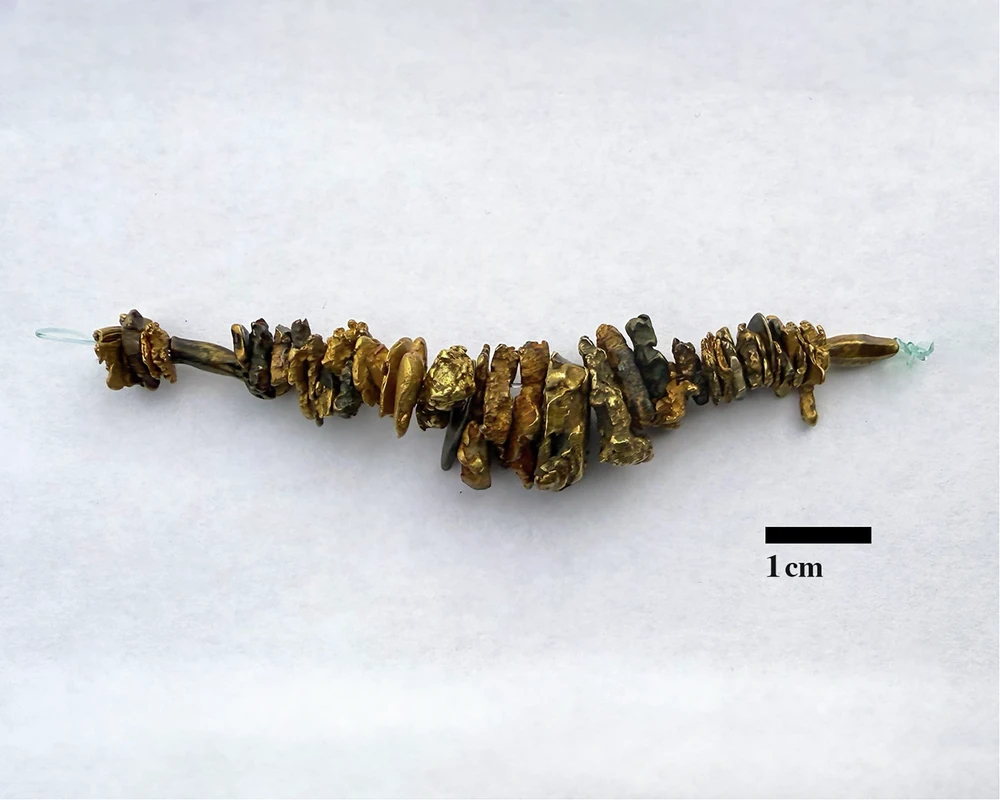
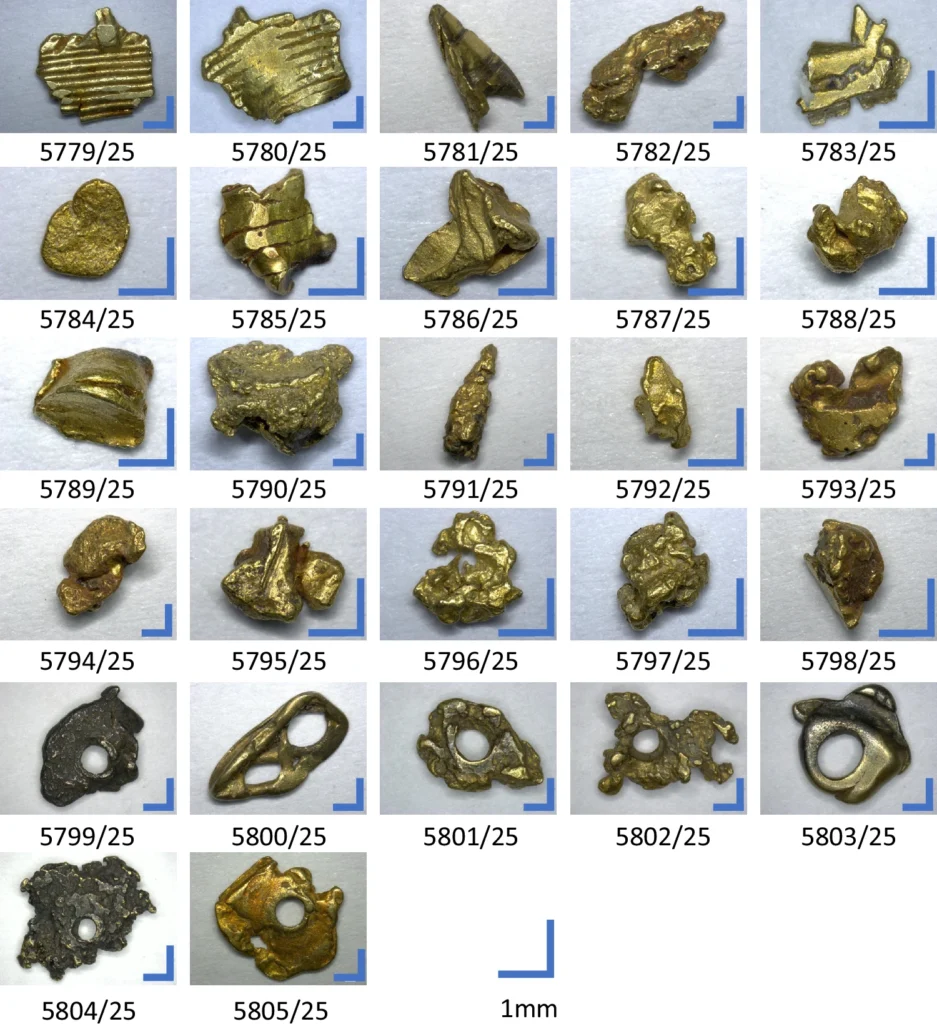
More than 300 gold artifacts have been recovered from the wreck. Beads, nuggets, jewelry fragments, and casting debris together form the most securely dated assemblage of Akan gold ever studied.
Unlike museum collections with uncertain origins, this material provides a clean, reliable dataset for scientific analysis.
Testing a Long-Standing Accusation
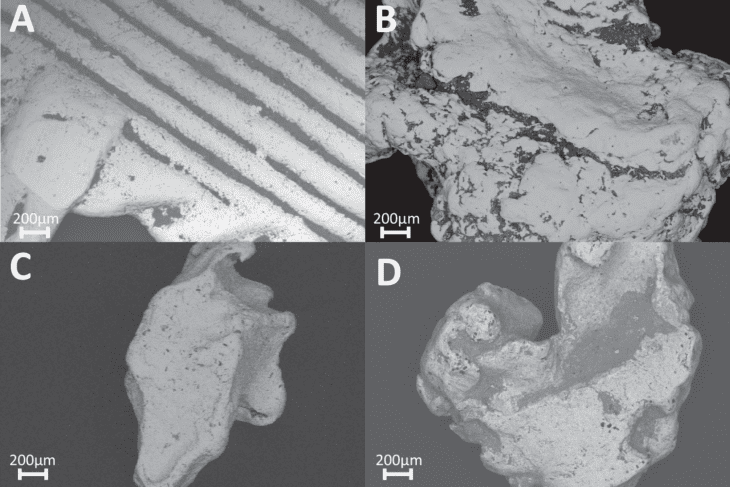
To investigate historical claims, researchers analyzed 27 samples using advanced techniques, including portable X-ray fluorescence (pXRF) and scanning electron microscopy (SEM-EDS).
European accounts from the 17th to 19th centuries repeatedly accused Akan traders of mixing gold with silver, copper, brass—or even sand and glass.
The results do not support those accusations.
The elemental patterns observed in the samples fall squarely within the expected range of naturally occurring West African gold.
What the Science Actually Shows
Silver was found to be the most common accompanying element—but this is a natural feature of gold deposits, not a sign of manipulation.
Copper appeared in slightly higher concentrations in cast objects, yet still remained low—typically under 4 percent. This likely reflects metalworking practices or minor contamination, not deliberate attempts to reduce value.
Even zinc, sometimes cited historically as evidence of tampering, turned out to be a product of long-term seawater exposure, not part of the original composition.
There is no consistent chemical signature of intentional dilution.
Rethinking the Historical Narrative
The study does more than analyze metal—it challenges how history has been written.
European descriptions of “adulterated” African gold were often treated as authoritative. Yet many lacked empirical testing and were based on repetition rather than verification.
Suspicion was shaped not only by trade disputes, but also by cultural bias and limited understanding of natural mineral variation.
What earlier observers interpreted as fraud may, in reality, have been a misreading of geology.
Gold, Power, and Global Trade
For over a millennium, West African gold was a cornerstone of global exchange. It fueled trans-Saharan trade networks and later became central to European expansion along the Atlantic coast.
From the 15th century onward, European powers established forts along the Gold Coast—modern Ghana—to control access to these resources.
At the same time, powerful African states such as the Asante Kingdom were rising, supported by sophisticated trade systems and skilled craftsmanship.
The Whydah cargo captures this world in motion—a moment where African production, European demand, and Atlantic exchange intersected.
Limits—and Future Research
The researchers caution that the findings represent a specific historical snapshot, not the entirety of West African gold trade.
Centuries underwater have also affected the artifacts, complicating analysis. While current techniques provide strong evidence, future methods—such as isotope analysis or ICP-MS—could refine our understanding of gold sources even further.
A Correction Three Centuries in the Making
The implications are difficult to ignore.
A narrative repeated for generations—that West African gold was systematically adulterated—now faces direct scientific contradiction.
The evidence points in the opposite direction.
More than 300 years after the Whydah Gally sank, its cargo is no longer just a relic of piracy.
It is a correction of historical judgment—one that restores credibility to African trade systems and exposes the limits of earlier European assumptions.
Skowronek, T.B., Clifford, B. & DeCorse, C.R. Pirate gold provides new insights into West African trade using pXRF and SEM EDS analysis. npj Herit. Sci. 14, 169 (2026). https://doi.org/10.1038/s40494-026-02441-7
Cover Image Credit: A cire perdue cast gold bead in situ is visible in the upper left of the photo. Flakes of gold dust and a silver coin (upper right) are also visible. T.B. Skowronek et al. 2026, npj Herit. Sci.