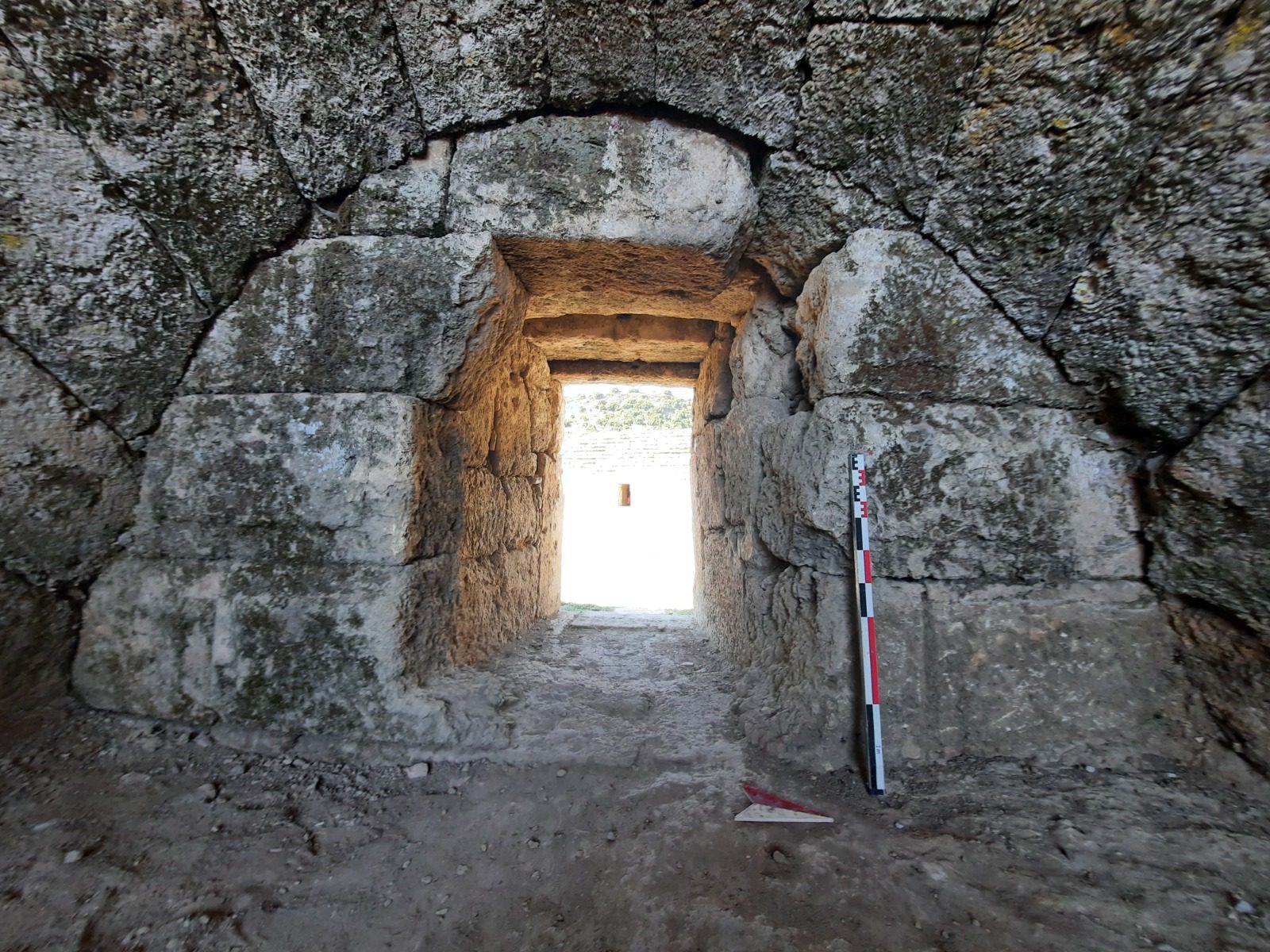
Archaeologists working at Perge Ancient City have uncovered a striking architectural system—five interconnected “death gates”—revealing that the city’s monumental stadium was later transformed into a Roman execution arena.
The discovery fundamentally reshapes how the structure is understood. What was once built for athletic competition appears to have been deliberately reengineered in Late Antiquity to stage controlled violence, where punishment and spectacle became inseparable.
A Stadium No Longer Meant for Sport
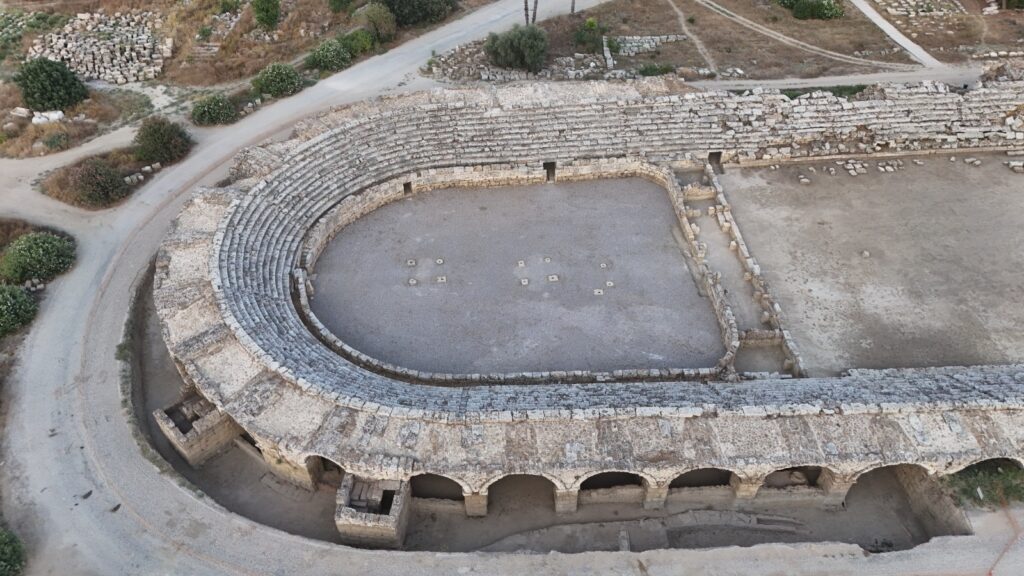
The findings come from excavations led by Prof. Dr. Sedef Çokay Kepçe of Istanbul University as part of the “Legacy for the Future” project. Field evidence indicates that the stadium did not simply fall out of use. Instead, it underwent a functional transformation, adapting to new social and political demands in the Late Roman period.
Archaeologists have identified a series of modifications that point to a fundamentally different use of the space. Elevated platforms, enclosed animal holding areas, and controlled entry passages suggest that the stadium was reorganized to host gladiatorial displays, staged hunts, and public executions.
This was not a temporary adaptation. It was a structural redesign.
The Meaning Behind the “Death Gates”
At the center of the discovery is a five-part gate system opening directly into the arena. These entrances, described as “death gates,” were likely used to release animals in a controlled sequence, allowing organizers to choreograph the flow of events.
The implications are significant. Rather than chaotic violence, the arena appears to have functioned as a carefully staged environment—one where timing, visibility, and audience impact were precisely managed.
In practical terms, this suggests that Perge’s stadium operated much like a purpose-built amphitheater, even if it was not originally constructed as one.
Evidence of Roman Execution Practices
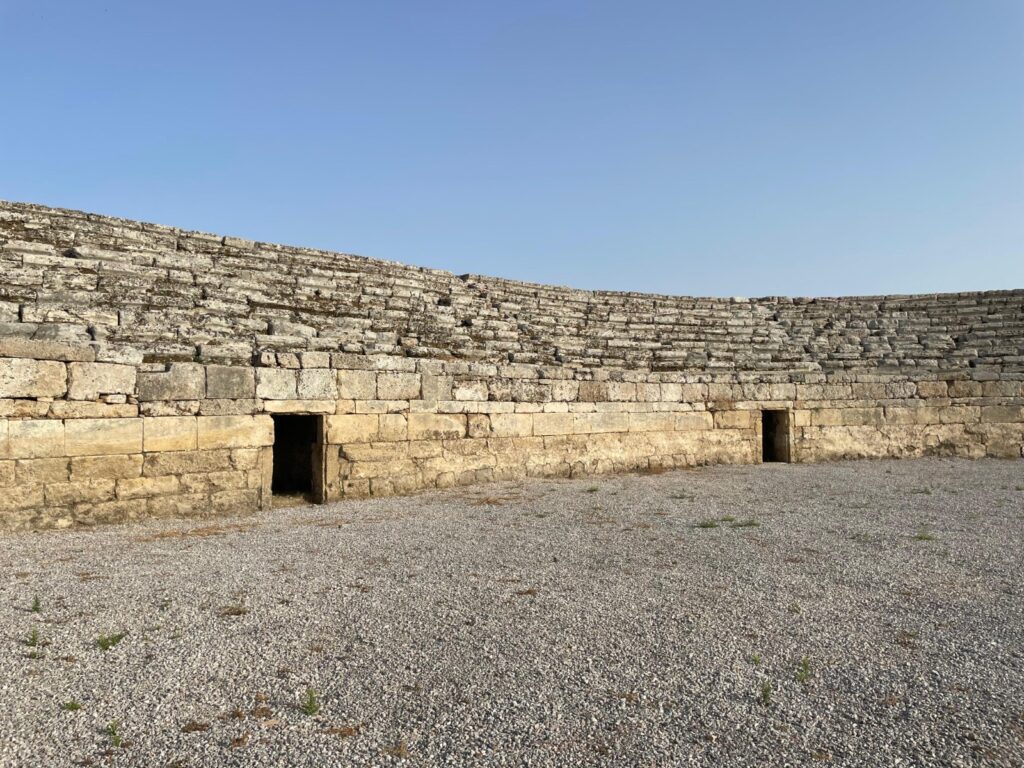
The architectural layout has also raised the possibility that the arena hosted damnatio ad bestias, a form of execution in which condemned individuals were exposed to wild animals before a public audience.
While no single piece of evidence proves this conclusively, multiple indicators point in the same direction. Animal remains recovered from the site, combined with spatial arrangements consistent with known Roman arenas, support the interpretation that such performances may have taken place here.
Researchers have further suggested that the arena may have accommodated staged combat associated with pons-based performances, a type of gladiatorial display involving elevated structures. If confirmed, this would indicate a diverse program of spectacles extending beyond executions alone.
A Rare Case in Roman Anatolia
Arena culture was widespread across the Roman world—but its architectural imprint varies significantly by region. In many parts of Anatolia, purpose-built amphitheaters are rare, and existing structures were often adapted for new uses.
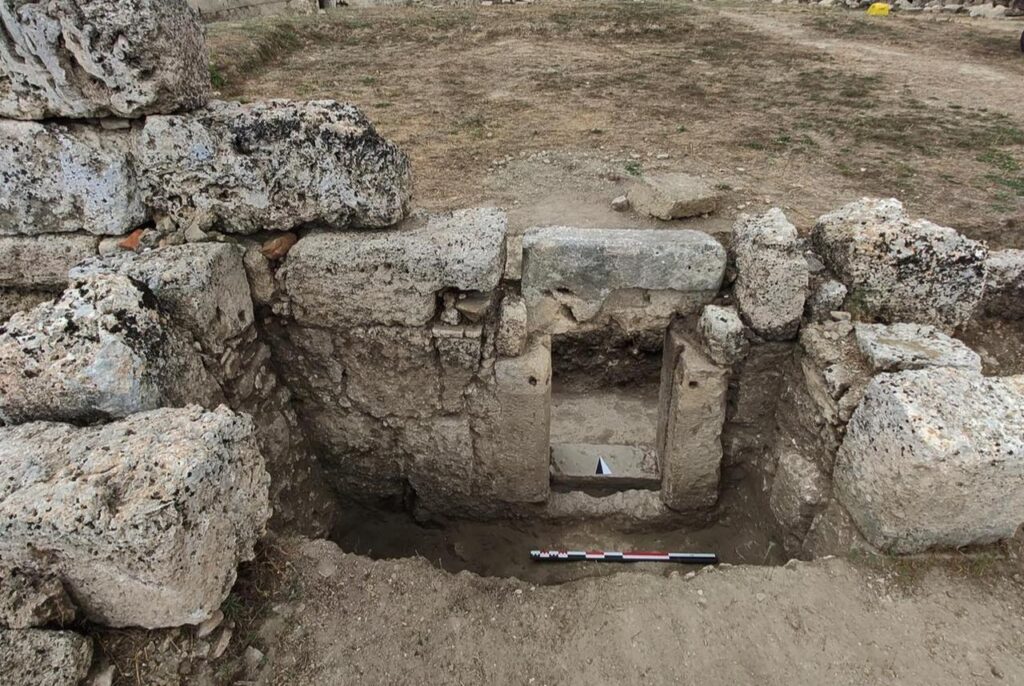
Perge now stands out as one of the clearest examples of this transformation.
Rather than constructing a new arena, the city appears to have repurposed an existing monumental space, reshaping it to meet the expectations of a society where public spectacle increasingly played a central role. This makes the site particularly valuable for understanding how Roman cultural practices were locally adapted in the eastern provinces.
From Violence to Renewal
Yet Perge’s story is not defined by violence alone. In a striking contrast, recent restoration work has revived one of the city’s most iconic monuments.
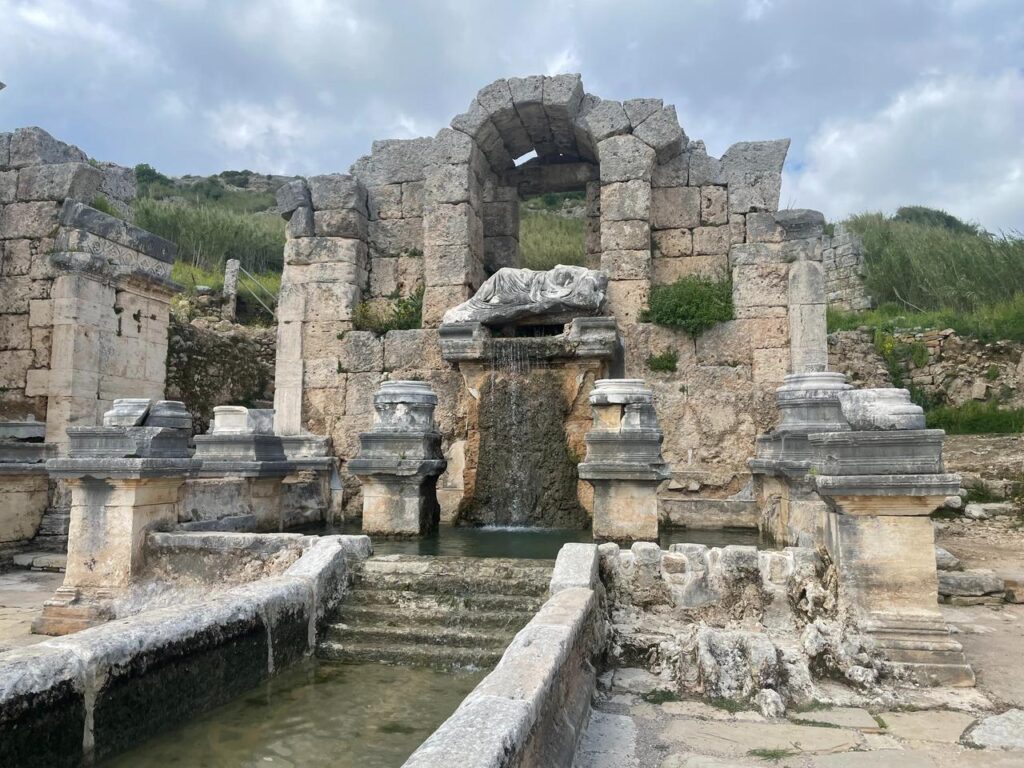
The Kestros Fountain, dating to the reign of Hadrian, is now flowing again after approximately 1,800 years. The restoration highlights the sophistication of Roman hydraulic engineering while underscoring the ongoing effort to preserve the site’s cultural heritage.
The juxtaposition is difficult to ignore. In one part of the city, archaeology reveals systems designed to stage death. In another, it restores the infrastructure that once sustained daily life.
A City of Contrasts
Located in modern Antalya’s Aksu district, Perge was one of the principal cities of ancient Pamphylia, with a history stretching back to the Bronze Age. Its colonnaded streets, monumental gates, and public buildings have long made it a key site in the study of Roman urbanism.
The discovery of the “death gates” adds a new layer to that narrative—one that complicates the image of the city as purely monumental or prosperous.
Perge was also a place where power was performed, where architecture was adapted to shifting needs, and where public spaces could be transformed into arenas of spectacle and control.
And in that transformation, the line between civic life and staged violence became increasingly difficult to draw.