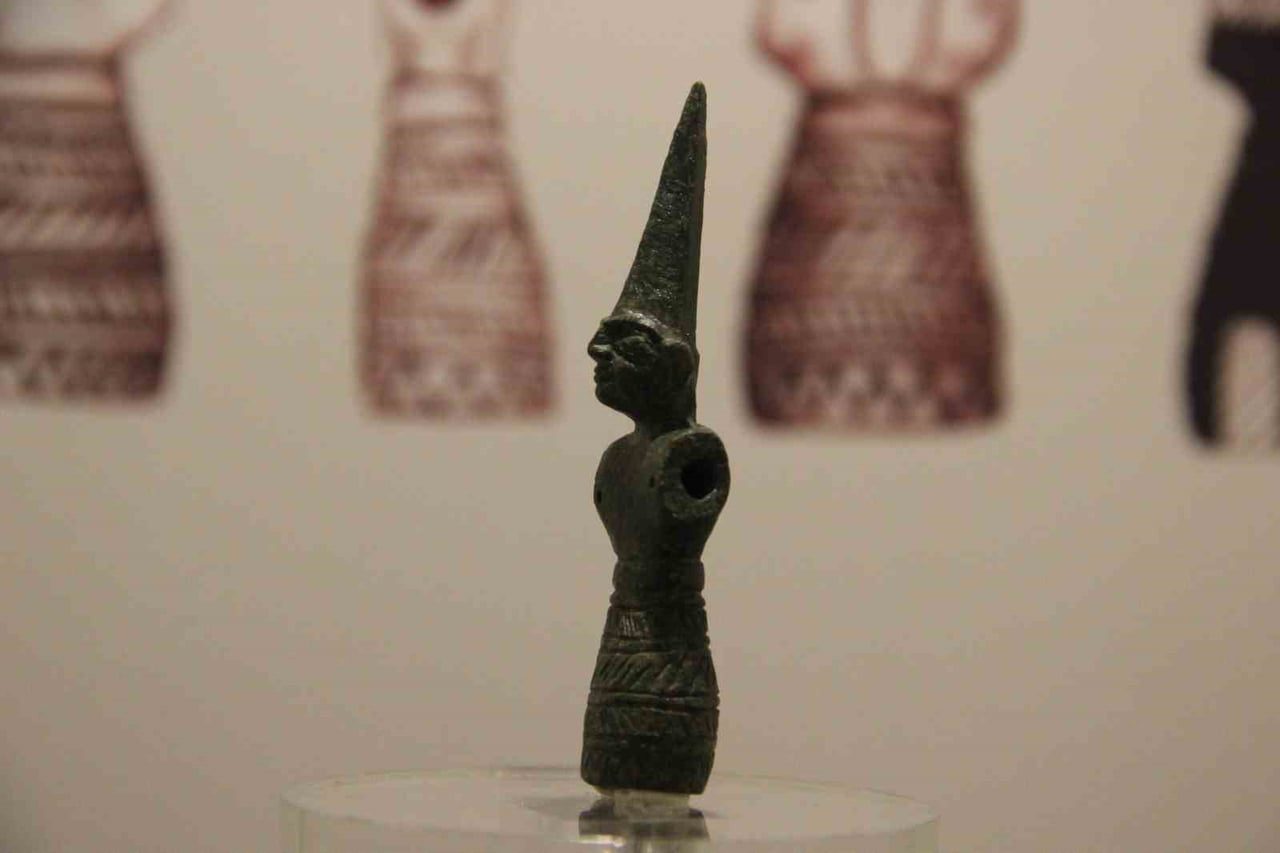
A chance discovery in central Turkey has brought an extraordinary piece of Bronze Age craftsmanship into public view. A 3,500-year-old Hittite storm god figurine, measuring just 7.65 centimeters, is now on display for the first time—revealing a level of technical sophistication rarely seen at such a small scale.
Discovered by a local resident in the Çorum region, the artifact immediately stood out not only for its rarity, but for what experts describe as an unexpectedly complex method of construction.
Found in the Shadow of the Hittite Capital
The figurine was recovered in the Alaca district, within the wider cultural landscape of Hattusa—the ancient capital of the Hittite Empire. Although early reports referenced different nearby villages, all accounts confirm that the find comes from this historically dense region.
Equally significant is how the object entered the archaeological record. The finder reported it to museum authorities, allowing it to be preserved, studied, and officially documented. Following conservation work, the figurine was added to the Boğazköy Museum collection and unveiled during Türkiye’s Tourism Week.
Tiny Object, Advanced Engineering
At first glance, the figurine’s size suggests simplicity. Closer examination tells a different story.
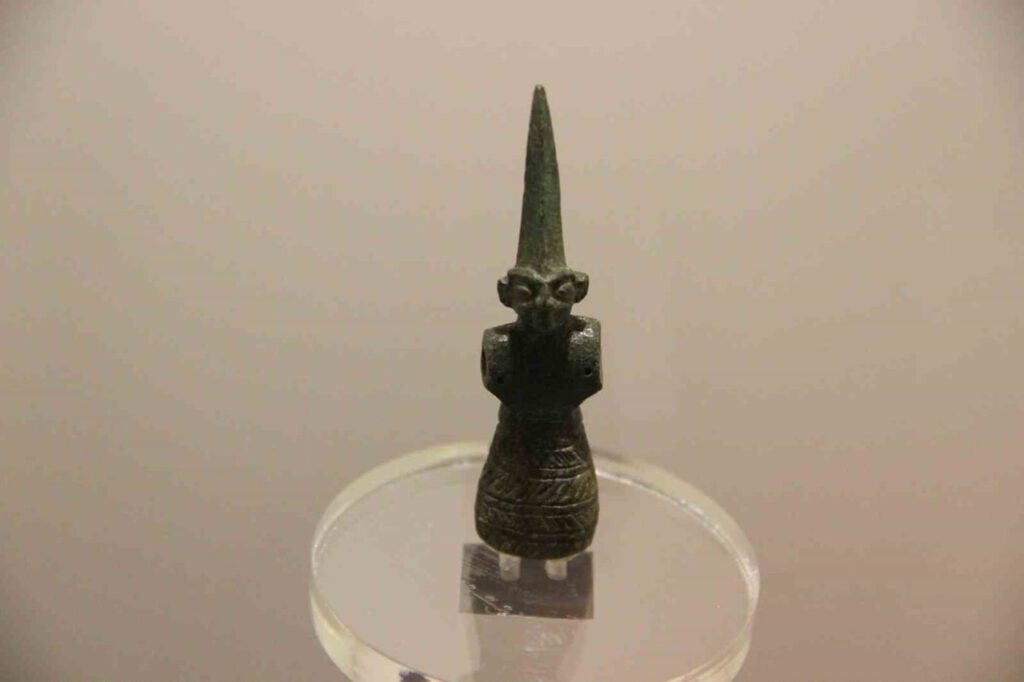
The piece is made of arsenical copper, a material commonly used in Bronze Age Anatolia. However, its construction reveals a far more advanced approach. Rather than being cast as a single unit, the figurine was assembled using a riveted limb technique—with arms and legs produced separately and later attached to the body.
Minute details such as pinholes and socket-like joints indicate a deliberate and carefully planned assembly process. This level of technical precision, especially at such a small scale, places the object among the most refined examples of Hittite miniature metalworking.
It is not simply crafted—it is engineered.
The Storm God: Power at the Center of Belief
The figure represents the Hittite storm god, the most powerful deity in the Hittite pantheon. Associated with rain, fertility, and cosmic order, this god was essential to both agricultural life and royal authority.
Across Anatolia, the same deity appeared under different names—Tarhunza, Teshub, and Taru—yet always retained its role as a dominant sky god. Representations in human form, such as this figurine, made divine power visible and tangible.
Such objects were likely used in ritual contexts, serving as intermediaries between people and the divine.
From Academic Circles to Public Display
Before its public debut, the figurine had already attracted scholarly attention. It was presented in international exhibitions and discussed in academic forums, but remained largely inaccessible to wider audiences.
Its current display marks an important shift. Visitors can now encounter firsthand an object that was, until recently, known only within specialist circles.
A Small Find with Lasting Impact
Hittite metal figurines are rare. Examples combining miniature scale, complex assembly, and clear religious identity are rarer still.
What makes this discovery particularly compelling is its origin in chance. Found outside a formal excavation, it highlights how significant pieces of the past can still surface unexpectedly—yet carry profound historical value.
Now exhibited near Hattusa, the figurine stands as a compact but powerful testament to the Hittite world—where technical innovation and spiritual belief were deeply intertwined.