
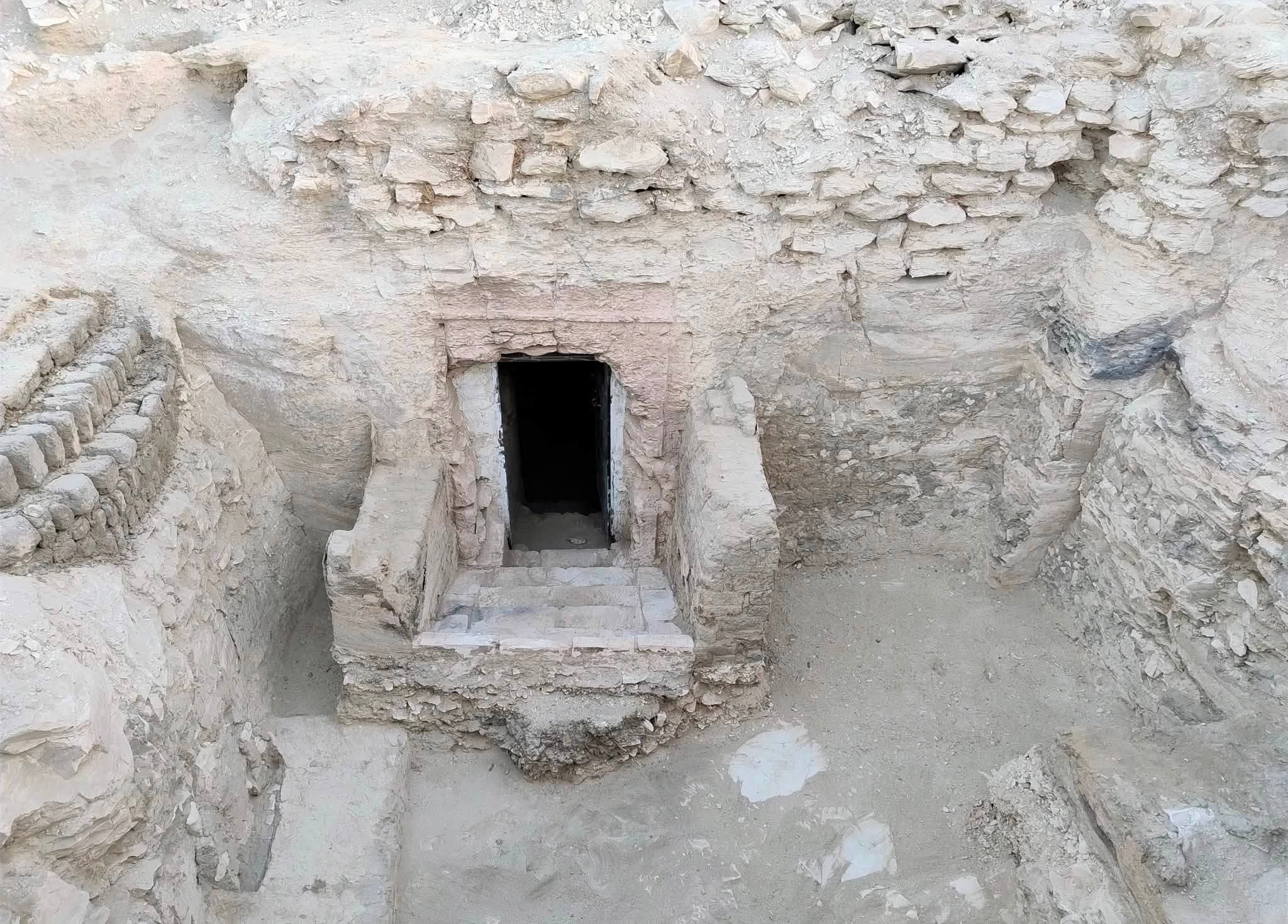
A Dutch archaeological mission has uncovered a painted rock-cut tomb belonging to a man named Paser in the Theban Necropolis on the west bank of Luxor.
The tomb was discovered in Lower Sheikh Abd el-Qurna, immediately east of Theban Tomb 45, where a team from Leiden University has conducted archaeological research since 2018. Its surviving inscriptions and decorative style suggest that it dates to Egypt’s Ramesside Period, although a more precise date has not yet been established.
The mission is directed by Egyptologist Dr. Carina van den Hoven in cooperation with Egypt’s Ministry of Tourism and Antiquities.
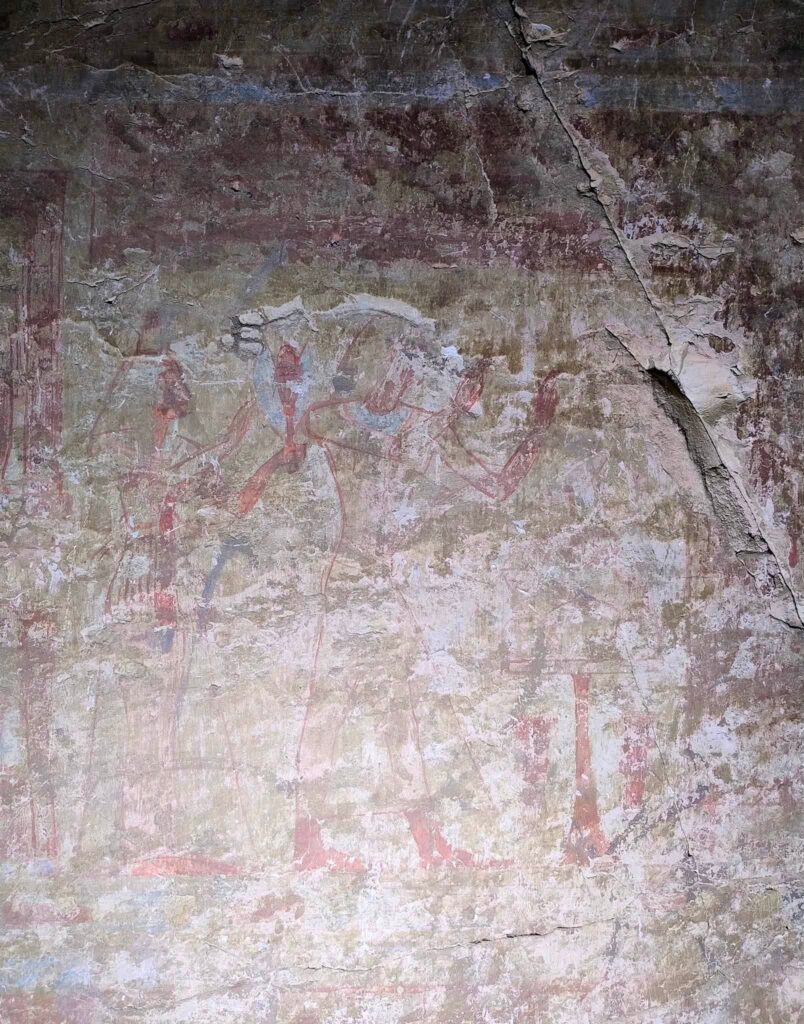
Painted scenes identify the tomb owner
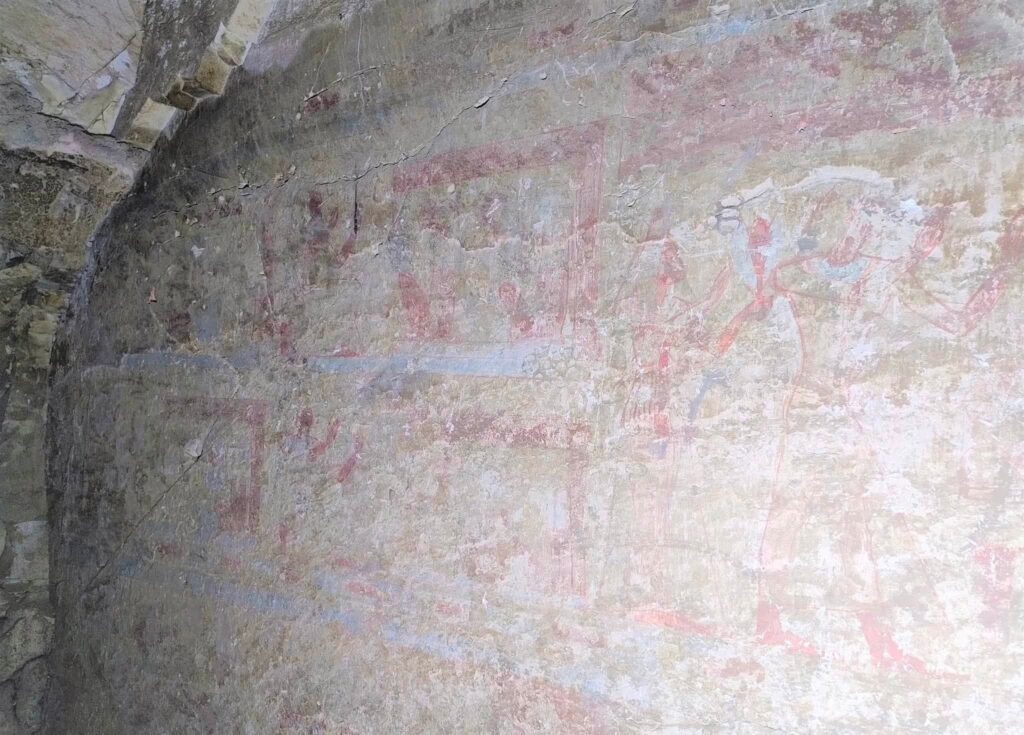
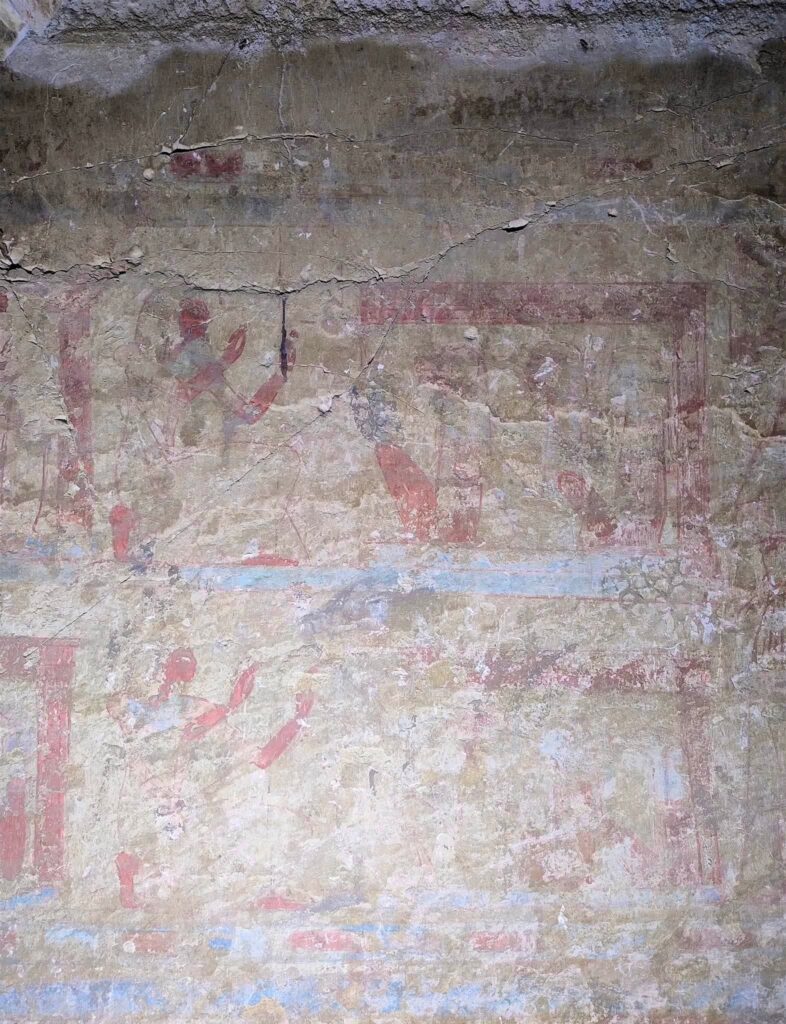
Several inscriptions inside the tomb preserve the name Paser. Parts of its colorful wall decoration remain hidden beneath a thin layer of soil, but archaeologists have already identified scenes showing the tomb owner worshipping deities inside shrines.
Another painted scene depicts Paser with his wife before an offering table.
The Egyptian authorities have not yet announced Paser’s title, profession or social position. Archaeologists have also made no connection between the tomb owner and other prominent ancient Egyptians who shared the same name.
Further examination of the inscriptions and burial chambers may clarify who Paser was and identify other individuals interred within the complex.
A typical New Kingdom private tomb
The tomb follows an architectural plan commonly used for private burials at Thebes during the New Kingdom.
It consists of an open courtyard, a T-shaped chapel carved into the rock and underground burial chambers. The courtyard contains a well-preserved mudbrick structure with a recess intended to hold a funerary stela.
A staircase bordered by sloping ramps leads toward the tomb entrance.
Although the general layout belongs to a long-established New Kingdom tradition, the artistic style of the inscriptions and paintings provisionally places the monument in the Ramesside Period, which covered the 19th and 20th Dynasties.
Excavation and conservation will continue
The archaeological team will continue documenting the tomb and studying its relationship with neighboring monuments in Lower Sheikh Abd el-Qurna.
Researchers also plan to investigate the people buried inside and reconstruct the history of the tomb’s use. Structural support, conservation and restoration work on the surviving painted decoration is expected to begin during future excavation seasons.
The wider Leiden University project combines excavation with the documentation and protection of tombs in this part of the Theban Necropolis. The newly discovered monument may provide further evidence about the individuals who selected Lower Sheikh Abd el-Qurna as their burial place during the New Kingdom and how the cemetery developed over time.