
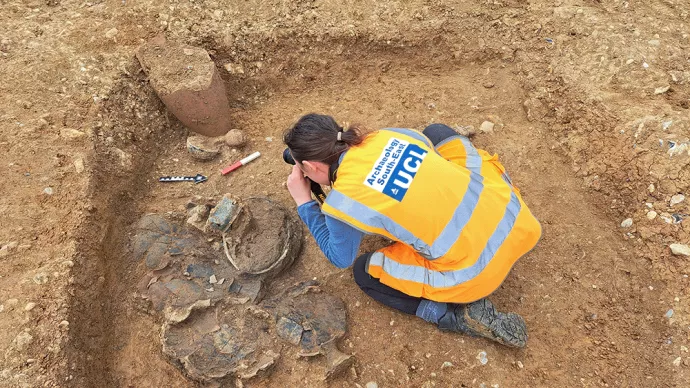
Archaeologists near Chelmsford in Essex have uncovered an Iron Age cemetery containing the cremated remains of more than 100 people, including five individuals buried with imported wine vessels metal objects and one of the earliest glass bowls known in Britain.
Most of the cemetery dates to the first century AD, when communities in southeastern Britain were moving from the Late Iron Age into Roman rule following Emperor Claudius’ invasion in AD 43.
The completed excavation also revealed three previously unknown settlements across the surrounding 11-hectare landscape.
Five cremations stood apart
The cemetery was set inside a square enclosure defined by a ditch. Most of the dead had been placed in relatively simple urn burials, but five cremations were treated differently.
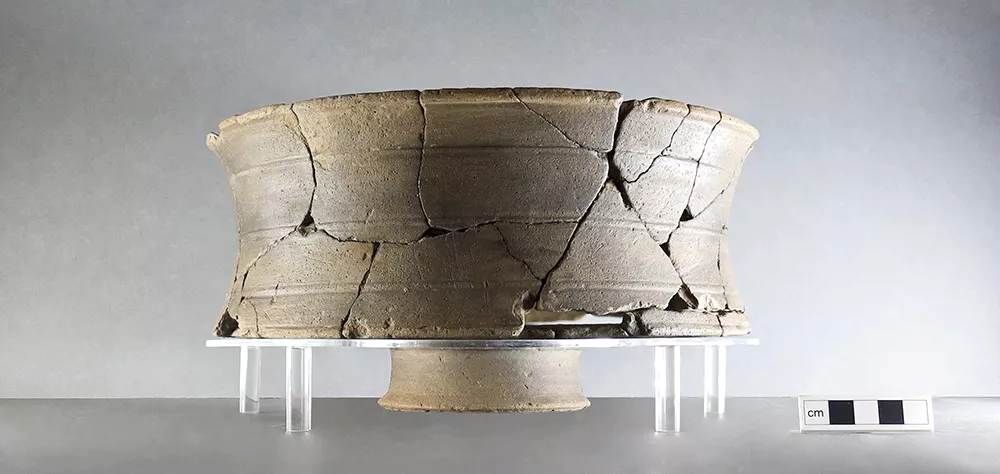
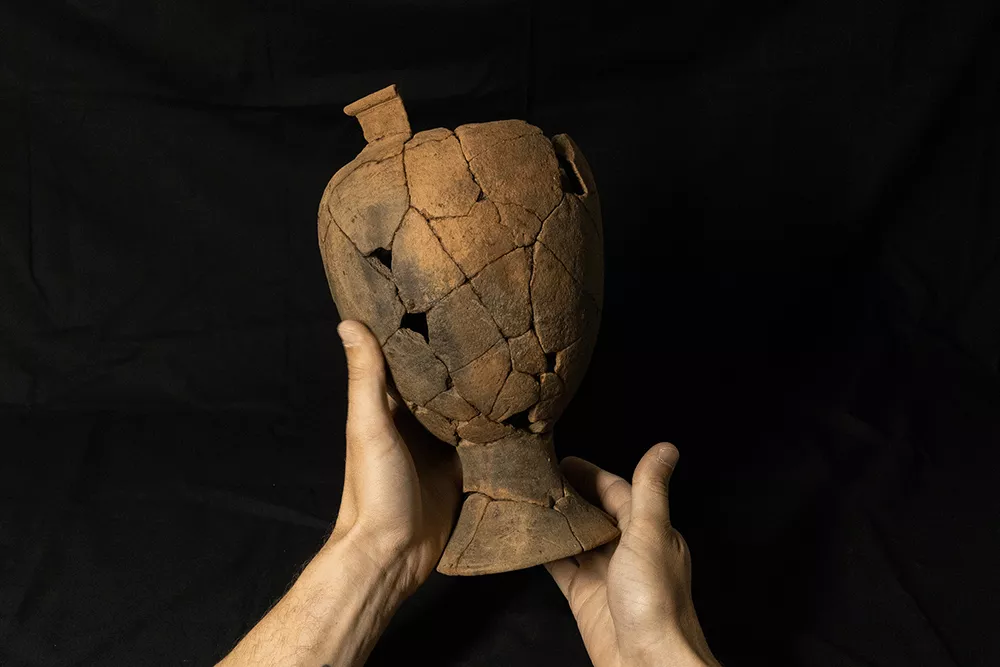
Their burnt bones were deposited in large square pits and surrounded by collections of grave goods. These included copper-alloy vessels, brooches, hobnails, ceramic amphorae and a pillar-moulded glass bowl.
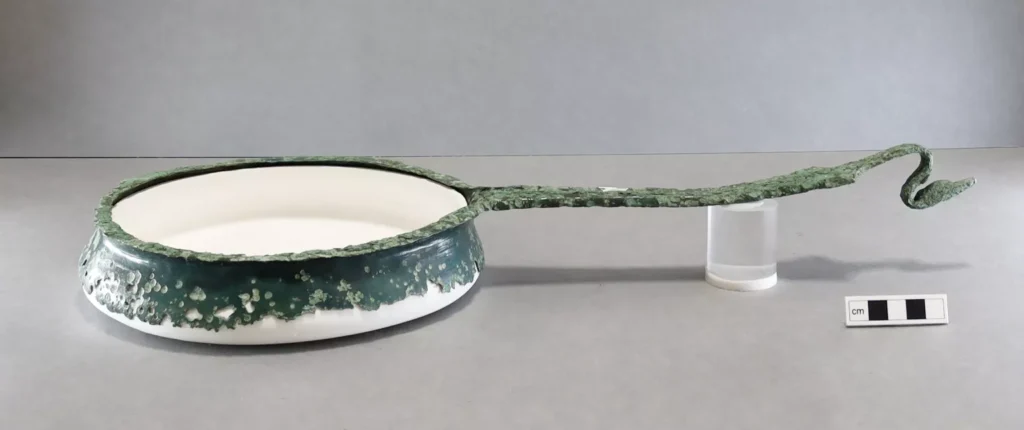
The amphorae may originally have reached Britain filled with wine, a costly imported drink associated with elite feasting. The glass bowl would also have been a rare possession at the time.
Angus Forshaw, who led the excavations for Archaeology South-East, said the objects probably reflected diplomatic contact and economic exchange between Iron Age communities in Britain and the Roman Empire before the conquest.
The identities of the five individuals remain unknown, but the construction of their graves and the quantity of imported and high-value objects clearly separated them from the other people buried at the site.
Imported goods before the Roman conquest
Roman and Mediterranean objects were already circulating in Britain before AD 43 through trade, political alliances and gift exchange.
Their presence in the Chelmsford graves does not establish that the buried individuals were Roman or that they supported Roman occupation. The objects instead show that some local elites had access to goods moving through wider continental networks.
Samara King, project manager at Archaeology South-East, said the cemetery belonged to a period of major political and cultural change. The elaborate burials may have allowed different communities to express status, identity and their relationship with the expanding Roman world.
Researchers have compared the richest graves with so-called Welwyn-type burials, a group of high-status Late Iron Age cremations known mainly from southeastern Britain. Comparable discoveries have been made at Stansted and Stanway in Essex, as well as at several sites in Hertfordshire.
The comparison may help specialists refine the date of the Chelmsford cemetery and understand how its most elaborate graves fitted into regional burial traditions.
Three settlements surrounded the cemetery
Excavations beyond the burial enclosure exposed at least three previously unknown settlements.
Archaeologists found the remains of multiple roundhouses surrounded by ditches, along with field systems, waterholes and smaller agricultural enclosures. The evidence places the cemetery within an inhabited and cultivated landscape rather than in an isolated location.
Further analysis will examine whether the settlements and cemetery were used at the same time, how long burials continued and whether the five high-status cremations belonged to one community or several groups living nearby.
The finds are now being cleaned, conserved and studied by specialists at Archaeology South-East.
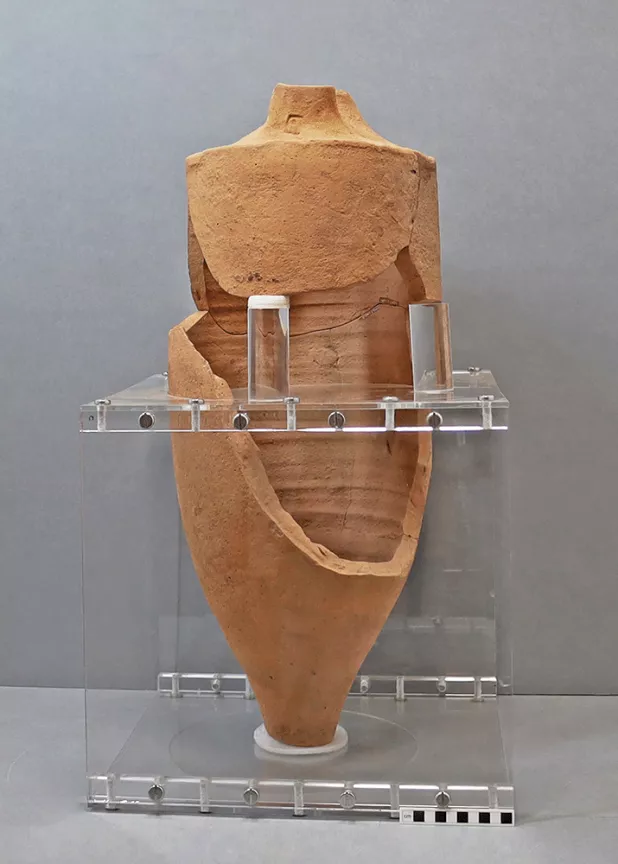
Finds to go on display
Ten objects from the excavation, including glassware, amphorae and other ceramics, will go on display at the Museum of Chelmsford from Saturday, July 18, 2026.
The exhibition, Timeless Treasures: Unlocking the Great Baddow Coin Hoard, will examine Iron Age Chelmsford alongside 935 Iron Age gold coins discovered at Great Baddow in 2020.
Claire Willetts, curator and exhibitions officer at the museum, said the cemetery and the coin hoard showed that the Chelmsford area formed part of a busy and connected Iron Age landscape.
The exhibition will consider whether the two discoveries could be related, although archaeologists have not established any direct connection between the cemetery and the hoard.
Research into the graves and settlements is continuing, with specialists hoping to determine when the cemetery was founded, how long it remained in use and why a small number of individuals received such elaborate funerals.
Cover Image Credit: UCL Social & Historical Sciences