
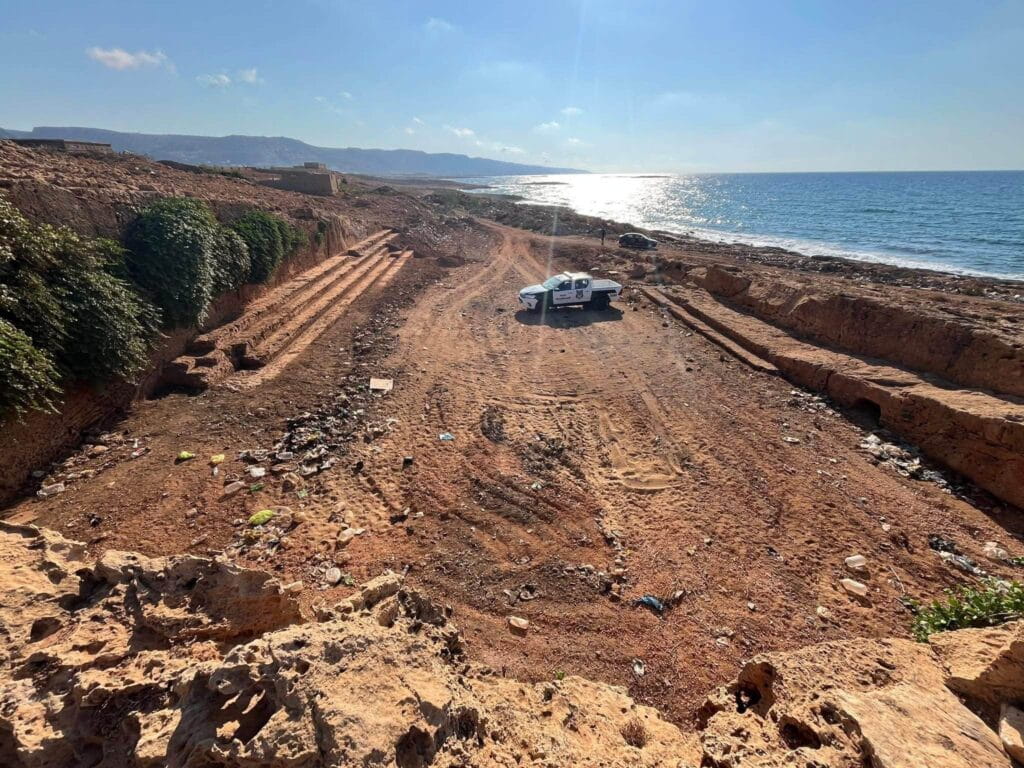
Archaeologists working at the ancient city of Apollonia on Libya’s eastern coast have brought a rare Greek hippodrome back into view, while also identifying a previously unknown theater overlooking the Mediterranean Sea.
The findings were announced in modern Susa by the Mission archéologique française de Libye (French Archaeological Mission in Libya). Researchers also reported the identification of several sacred complexes within the ancient city.
Vincent Michel, director of the French mission, described the hippodrome as a structure of exceptional scientific importance. According to Michel, no comparable racecourse is currently known elsewhere in Cyrenaica or across the wider Mediterranean basin.
A rare survival from the world of ancient sport
Greek hippodromes were large open-air venues used for horse and chariot racing. Unlike theaters and temples, however, they were often defined by long tracks, earthworks and relatively limited stone architecture. Their remains can therefore be difficult to recognize after centuries of erosion, rebuilding and sediment accumulation.
The official announcement describes the Apollonia hippodrome as a rediscovery, while the seaside theater appears to be a newly identified structure. Archaeologists have not yet released its measurements, construction date or detailed architectural plan.
Even with those questions unanswered, the racecourse could significantly alter the known layout of Apollonia. Its presence suggests that the coastal city possessed substantial facilities for organized sport, public gatherings and civic ceremony.
Newly identified theater overlooks the sea
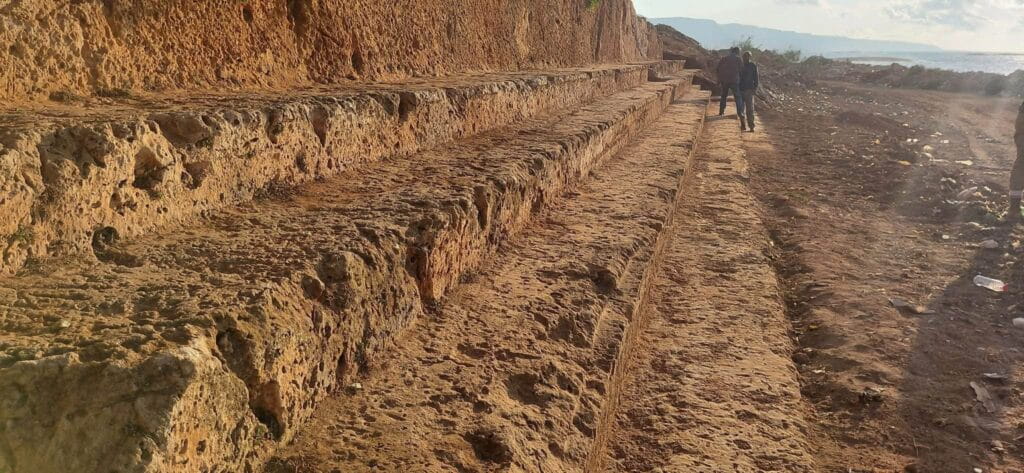
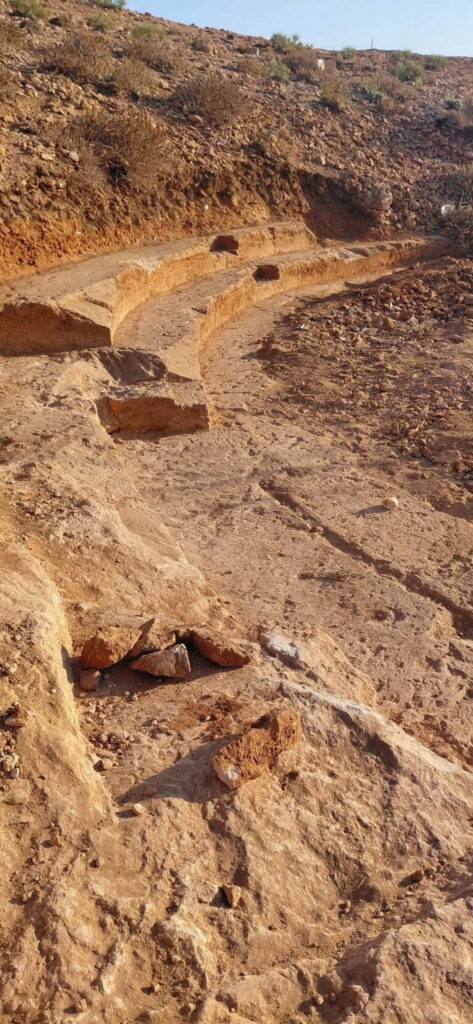
The French mission also announced the discovery of an ancient theater facing the Mediterranean coast.
Few details have been published about the structure, and researchers have not yet confirmed its precise date or capacity. The building may eventually be classified as either a theater or an odeon, a smaller venue commonly used for musical performances, speeches and restricted public gatherings.
Apollonia is already known for a surviving coastal theater, making the identification of an additional performance venue especially notable. Further excavation should clarify whether the newly identified structure belonged to a different phase of the city’s development.
Several sacred complexes were also mentioned in the announcement, although their architecture and chronology have not yet been disclosed.
Apollonia began as the port of Cyrene
Apollonia developed as the Mediterranean harbor of Cyrene, the powerful Greek settlement founded inland during the seventh century BC by settlers traditionally associated with the Aegean island of Thera, modern Santorini.
The port connected Cyrene and the fertile uplands of eastern Libya with trade routes stretching across the Mediterranean. Ships carried agricultural products, ceramics, wine and other goods between Cyrenaica, Greece, Egypt and the wider ancient world.
Apollonia gradually grew beyond its original role as a harbor settlement. By the late Hellenistic period, it had become an independent city and later formed part of the Cyrenaican Pentapolis, the group of five principal cities that also included Cyrene, Ptolemais, Taucheira and Berenice.
The city continued to prosper under Roman and Byzantine rule. Its surviving remains include fortifications, bath complexes, churches, tombs, residential districts and harbor installations.
A coastal city partly lost beneath the Mediterranean
Apollonia’s location helped turn it into one of Cyrenaica’s most important ports, but it has also made the site vulnerable to erosion, earthquakes and rising sea levels.
Around one-third of the ancient city is now believed to lie underwater. Archaeological investigations of the submerged harbor began during the 1980s, revealing quays, buildings and other elements of Apollonia’s maritime landscape.
Previous excavations have also uncovered evidence of extensive religious activity. In the Kallikrateia district, archaeologists identified numerous rock-cut altars and religious objects dating mainly to the fourth and third centuries BC.
The newly reported sacred complexes may help researchers understand how these ritual areas were connected to the city’s public buildings, neighborhoods and coastal routes.
Scientific details still awaited
The French archaeological mission has conducted research at Apollonia since 1976 and has been directed by Vincent Michel since 2011.
A full scientific report on the hippodrome and theater has not yet been published. Future investigations are expected to establish the structures’ dates, dimensions and relationship to the wider urban plan.
Those results will be essential for determining whether Apollonia’s hippodrome was built primarily for local competition or formed part of a larger network of sporting and ceremonial venues across the Greek Mediterranean.
Cover Image: The Greek hippodrome at ancient Apollonia on Libya’s Mediterranean coast during archaeological investigations. Credit: Mission archéologique française de Libye