
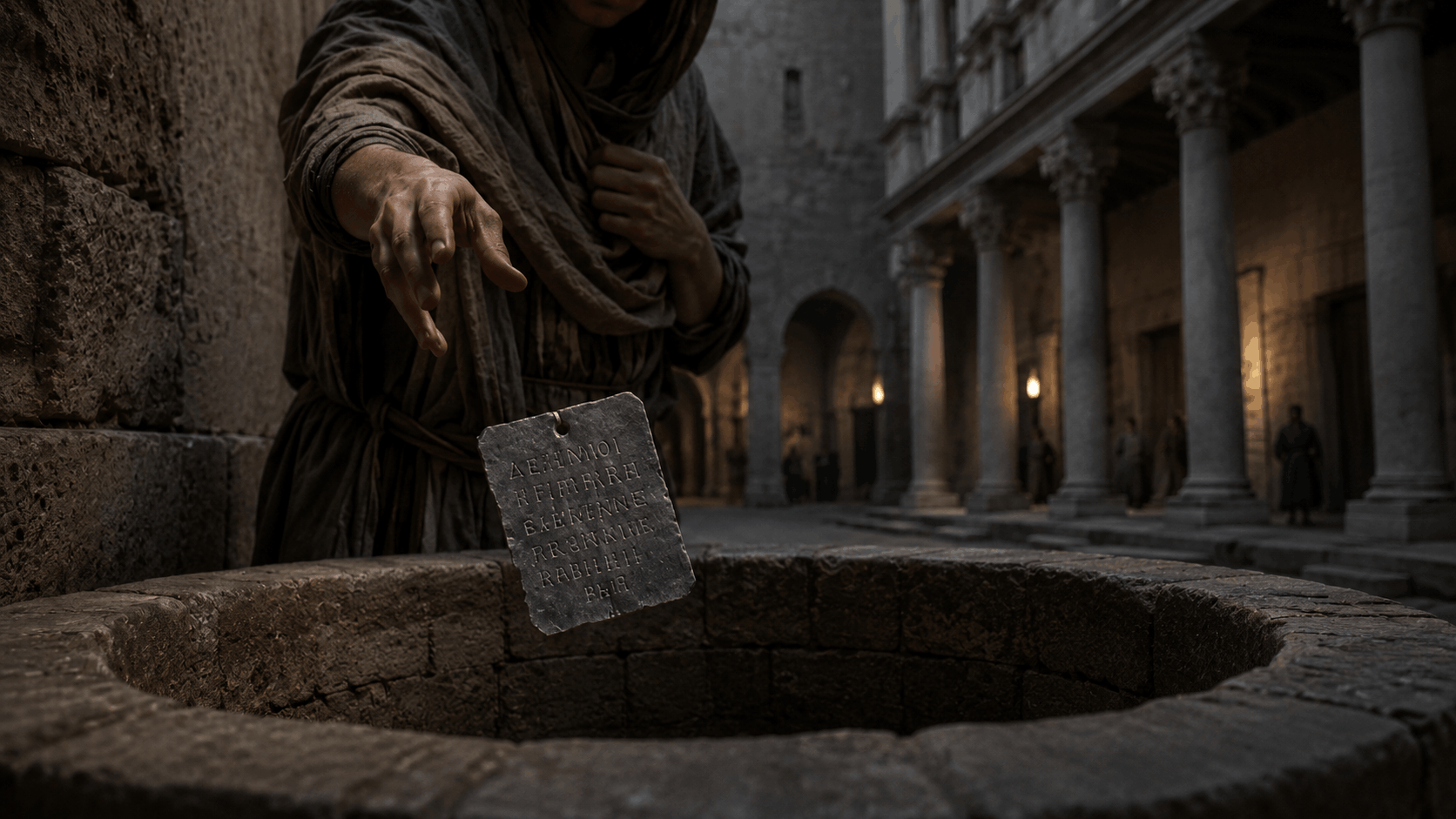
A roughly 1,700-year-old curse tablet from ancient Antioch called upon Iao—the Greek form of the divine name Yahweh—to attack an ordinary greengrocer named Babylas.
Inscribed in Greek on a thin sheet of lead, the spell was not directed against an emperor, military commander or wealthy official. Its target was a man who sold fruit and vegetables in one of the largest cities of the Roman East.
The tablet dates to the third or fourth century CE. It was found in a disused well during Princeton-led excavations at Antioch-on-the-Orontes, present-day Antakya in southern Turkey. The object has been held by the Princeton University Art Museum since 1939.
“Bind Together Babylas the Greengrocer”
The opening lines leave little doubt about the purpose of the inscription:
“O thunder-and-lightning-hurling Iao, strike, bind, bind together Babylas the greengrocer.”
The writer then invokes the biblical story of the Exodus, asking Iao to strike Babylas as he had struck the chariot of Pharaoh. Another surviving passage refers to the killing of Egypt’s firstborn and calls for similar destruction to fall upon Babylas’s animals.
The commands are repeated with unusual force. Babylas is to be bound, brought low and filled with misfortune. The spell also asks for damage to his animals and house, suggesting that its author wanted to harm both the man and his livelihood.
The text was translated and published by Alexander Hollmann of the University of Washington in the journal Zeitschrift für Papyrologie und Epigraphik in 2011. Hollmann noted that occupations appear on other ancient curse tablets, but a spell specifically targeting a greengrocer was highly unusual.
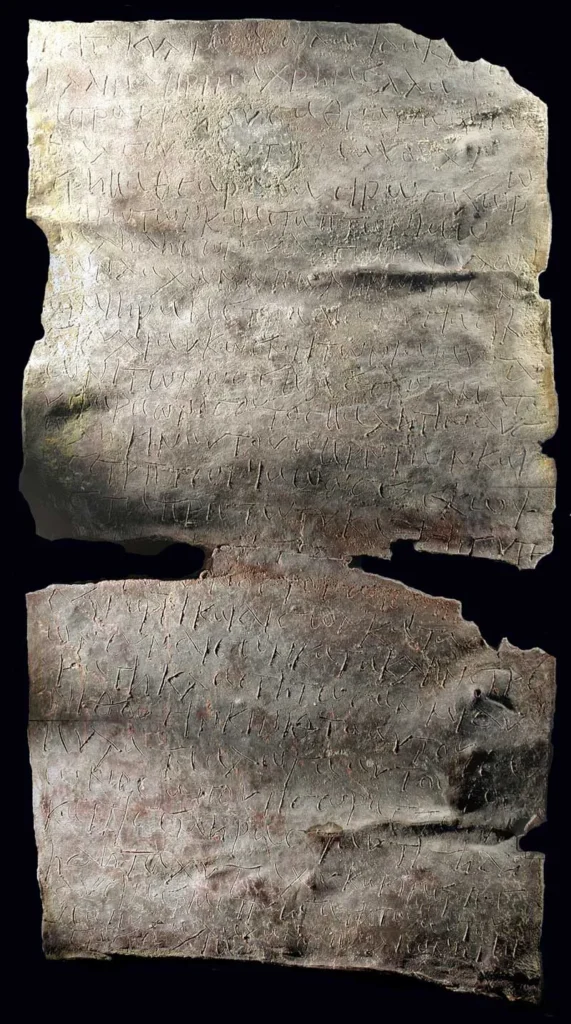
The Spell Identified Its Victim Precisely
Ancient curses often included personal details intended to guide the supernatural force toward the correct person. The Antioch tablet identifies Babylas through his mother, Dionysia, who was also known as Hesykhia.
The inscription provided even more precise information. According to the Princeton University Art Museum, it recorded the city block in which Babylas worked and the location of his vegetable stall along a colonnaded street.
These details acted almost like an address. The person behind the curse did not simply want a man named Babylas attacked. The spell carefully identified a particular greengrocer, his family connection and the place where he conducted his business.
Was the Curse Written by a Business Rival?
The identity of the person who commissioned the spell is unknown, and the surviving inscription does not explain what Babylas had done.
Hollmann suggested that the dispute may have been connected to trade. The person responsible could even have been another greengrocer competing for customers or control of a particular section of the market.
This remains a possibility rather than a confirmed explanation. The tablet contains none of the language usually associated with ancient love spells, while its focus on Babylas’s stall, animals, property and occupation makes a commercial dispute plausible.
If competition lay behind the curse, the tablet offers a rare glimpse of tension among ordinary traders in Late Antique Antioch. Markets were not only places of exchange. They could also be contested spaces in which reputation, location and access to customers directly affected a seller’s survival.
Biblical Language Does Not Reveal the Author’s Religion
The use of Iao and references to Pharaoh and the firstborn of Egypt give the curse an unmistakably biblical vocabulary. They do not, however, prove that the person who commissioned the spell was Jewish or Christian.
Jewish divine names and scriptural episodes circulated widely in Greek and Roman magical traditions. Practitioners could borrow names and stories from different religions because they believed the words carried supernatural authority.
Babylas was also the name of a prominent third-century bishop and martyr of Antioch. This has raised the possibility that the greengrocer was Christian, but the shared name alone is not enough to establish his religious identity. The Princeton museum describes Babylas as a typically Antiochene name that became especially familiar through the local saint.
A Curse Dropped into a Well
The tablet’s placement in a disused well was part of its ritual setting rather than an accidental loss. A recent study of the object notes that the spell refers to the properties of lead and to the location where it was deposited, linking its material, its biblical imagery and its intended destructive power.
The inscription preserves no explanation from Babylas and no evidence of what happened after the tablet entered the well. It records only the anger of an anonymous opponent who wanted a named greengrocer, his property and his business ruined.
For all its appeals to divine power, the Antioch curse began with an entirely human conflict—one serious enough for someone to have it scratched into lead and hidden underground.