
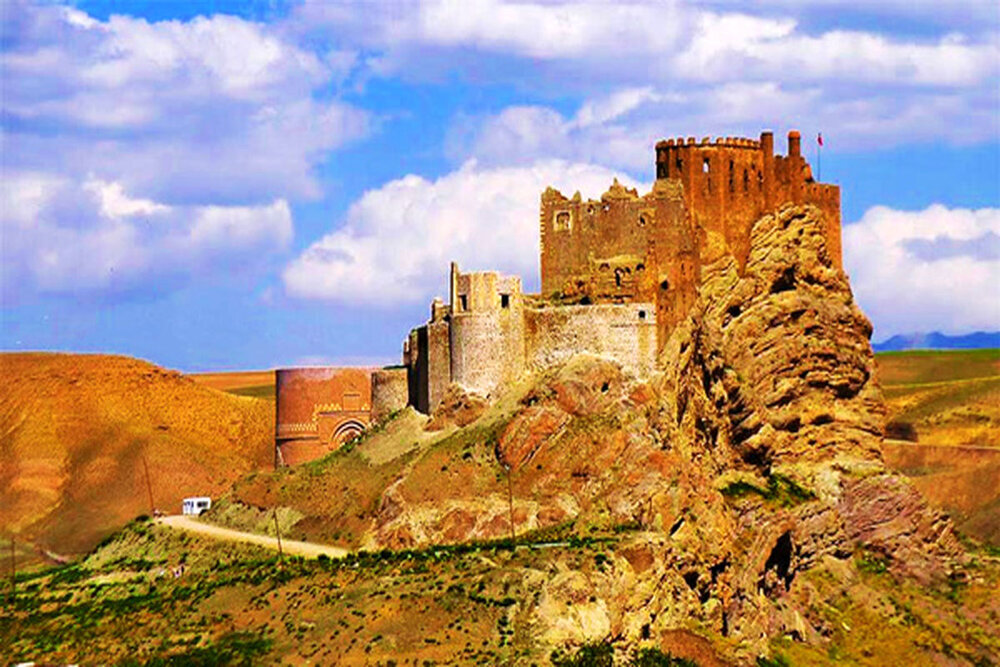
Iran has nominated the Cultural Landscape of Alamut and its related fortifications for UNESCO World Heritage status, seeking international recognition for one of the most important medieval defensive networks in the Alborz Mountains.
The serial nomination includes seven castles and associated fortifications linked to the Nizari Ismaili state between the 11th and 13th centuries. At the center of the network stands Alamut Castle, the political and military headquarters of the Nizari Ismailis.
Iranian cultural heritage specialist Seyyed Mohammad Beheshti said the importance of Alamut extends far beyond the remains of a single mountain fortress.
“The chain of Iran’s architectural history cannot be fully understood without Alamut,” Beheshti told the Iranian heritage agency Miras-e Aria.
A defensive network across the Alborz Mountains
The rugged central Alborz region has served as a natural refuge and defensive zone throughout Iranian history. Its steep valleys, narrow mountain routes and elevated positions allowed local rulers and military forces to control access through the landscape.

According to Beheshti, archaeological evidence suggests that some of the region’s fortifications were already in use during the Parthian period. The network was later expanded and reorganized during the Seljuk era following the establishment of the Nizari Ismaili state.
Alamut Castle became the command center of a wider defensive system extending from the area around Qazvin toward the foothills of the Alborz Mountains near Tehran. Rather than operating independently, the fortresses supported one another as part of a coordinated military network.
This interconnected structure is central to the UNESCO nomination. Instead of presenting Alamut Castle as an isolated monument, the dossier treats the castles, defensive structures and surrounding mountain environment as parts of a single cultural landscape.
A rare example of Seljuk-era architecture
Beheshti said Alamut is particularly important because relatively few buildings dating to the Seljuk period or earlier have survived in Iran.
Although the site is smaller than monumental complexes such as the UNESCO-listed Bam Citadel, its surviving architecture and archaeological remains provide rare evidence of medieval Iranian construction and military planning.
The nomination also highlights the historical importance of the Nizari Ismailis, who established an independent state supported by a network of mountain strongholds. Alamut became the best-known of these centers after Hassan-i Sabbah took control of the castle in 1090.
Later legends frequently associated the Nizaris with the “Assassins,” but the nominated landscape reflects a more complex political and architectural system built to survive in one of Iran’s most difficult regions.
Decades of research behind the nomination
Archaeological investigation, conservation and documentation at Alamut began in the late 1990s and continued under the Alamut Cultural Heritage Base.
Beheshti credited archaeologist Hamideh Choubak and heritage specialist Mohammad Hassan Talebian among those whose long-term work helped make the nomination possible.
If inscribed, the Cultural Landscape of Alamut would become one of the few Iranian World Heritage properties recognized not only for its monuments but also for the historical relationship between architecture, geography and the surrounding environment.