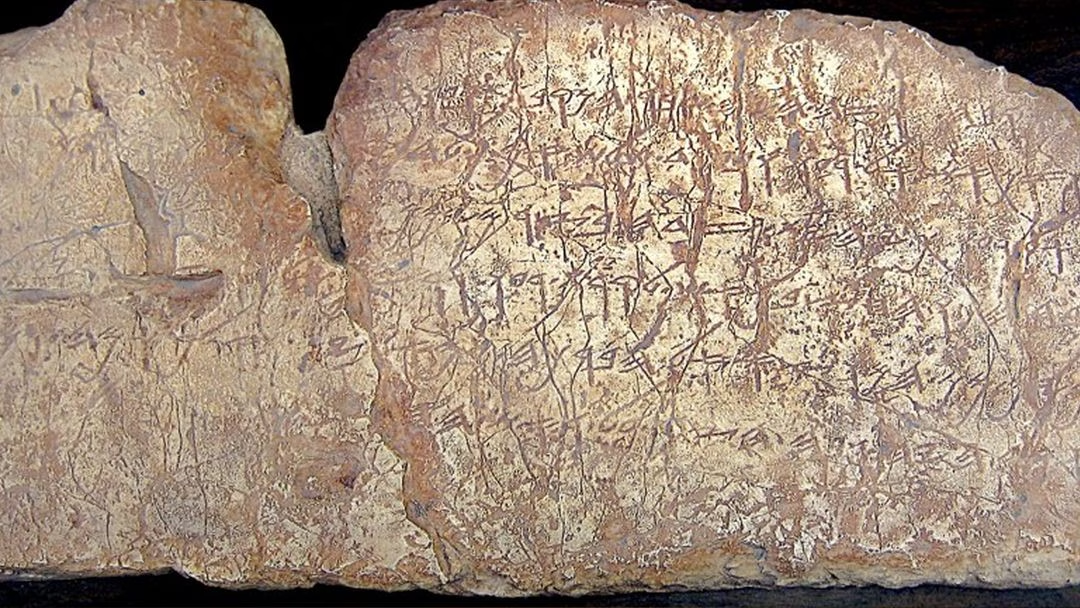
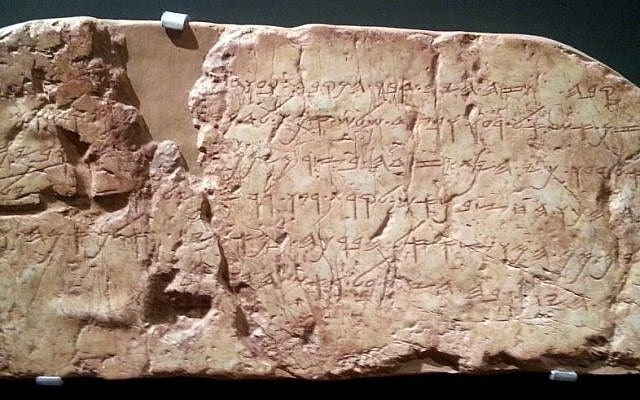
The Siloam Inscription, housed today in the Istanbul Archaeology Museums, is not only a milestone of archaeology but also a key piece in the history of religion. Created nearly 2,700 years ago during the reign of King Hezekiah of Judah, it is regarded as one of the oldest known examples of Hebrew writing. Discovered in Jerusalem in 1880—then part of the Ottoman Empire—the inscription was transferred to the Imperial Museum (Müze-i Hümayun) and has remained in Turkey ever since.
A tunnel carved into stone memory
The inscription records the construction of a water tunnel built to secure Jerusalem’s supply during the Assyrian threat. Two teams of workers dug from opposite ends until they finally met in the middle, guided by the sound of each other’s voices.
The six-line text recounts the event as follows:
Line 1: …the excavation; how the work was carried out; more…
Line 2: The pickaxes were directed toward each other. When only three cubits remained, voices were heard.
Line 3: These were the calls of the workers on both sides, for the tunnel had broken through from north and south. And on that day…
Line 4: The tunnel was completed. The stonecutters met pickaxe against pickaxe.
Line 5: The water flowed from the spring to the reservoir, 1,200 cubits away.
Line 6: The rock above the workers’ heads was 100 cubits high.
These lines reflect not only a remarkable engineering achievement but also parallel the biblical account of King Hezekiah’s preparations against the Assyrian siege.
Repatriation requests denied
Israeli authorities have repeatedly sought the return of the inscription. In 1998, Prime Minister Benjamin Netanyahu requested it from his Turkish counterpart Mesut Yılmaz—denied. In 2007, Jerusalem Mayor Uri Lupolianski approached Ambassador Namık Tan—again rejected. Most recently, in 2022, President Isaac Herzog raised the issue during his Ankara visit, without success.
Under Turkish cultural heritage law (Law No. 2863), the inscription is classified as state property, and transferring it abroad is strictly prohibited.
A focal point of heritage debates
The Siloam Inscription is more than an ancient document—it embodies a global dilemma:
Should artifacts remain in their land of origin, or in the institutions that have preserved them for centuries?