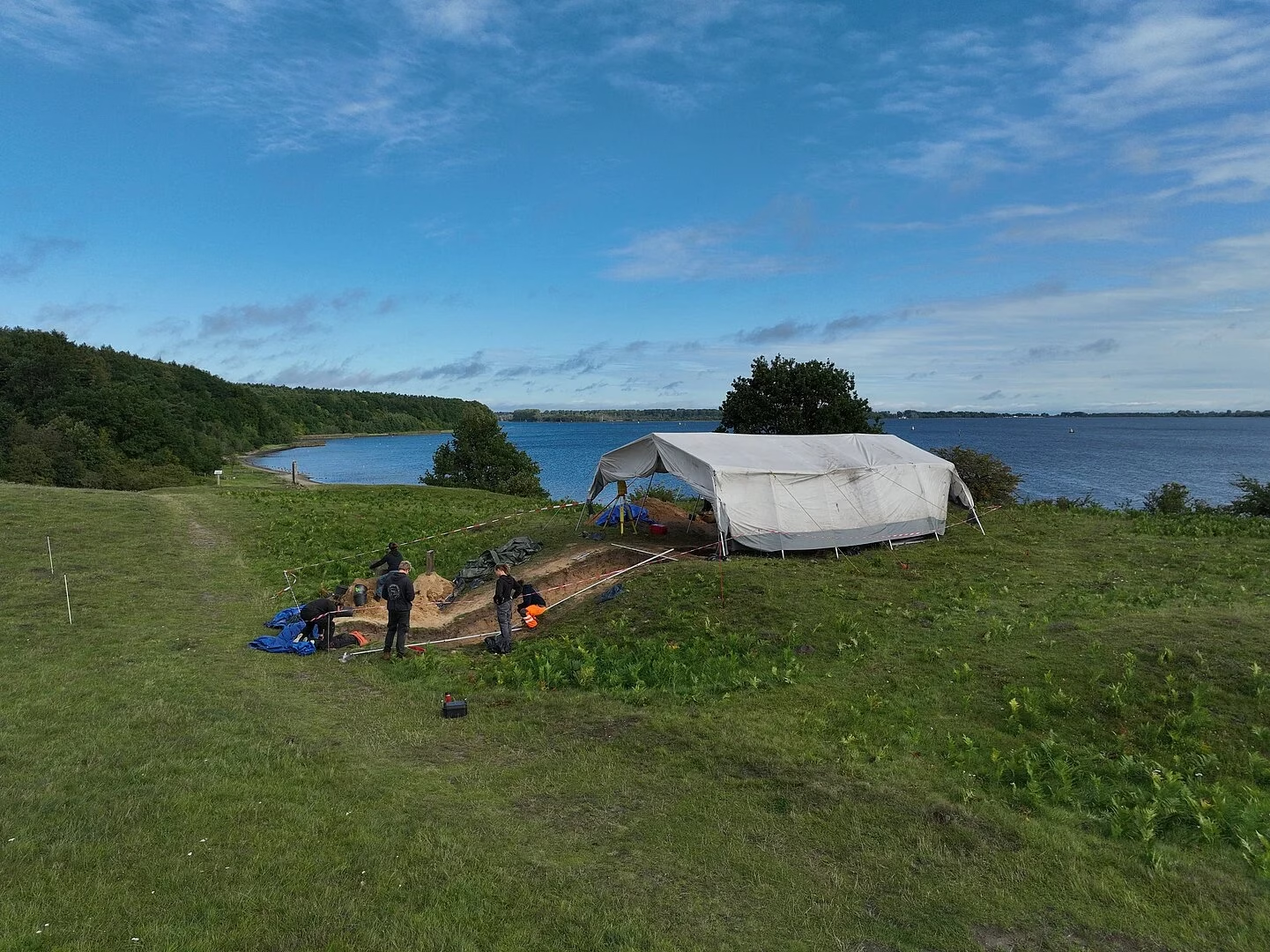
Archaeologists have uncovered a fortified settlement on the River Trave that dates back nearly 2,000 years. The discovery at Stülper Huk, a headland near Lübeck, reveals a stronghold from the Late Iron Age and Roman Imperial Period (ca. 1–400 CE), expanding the region’s history far beyond its medieval Hanseatic fame.
A Hidden Stronghold on the Trave
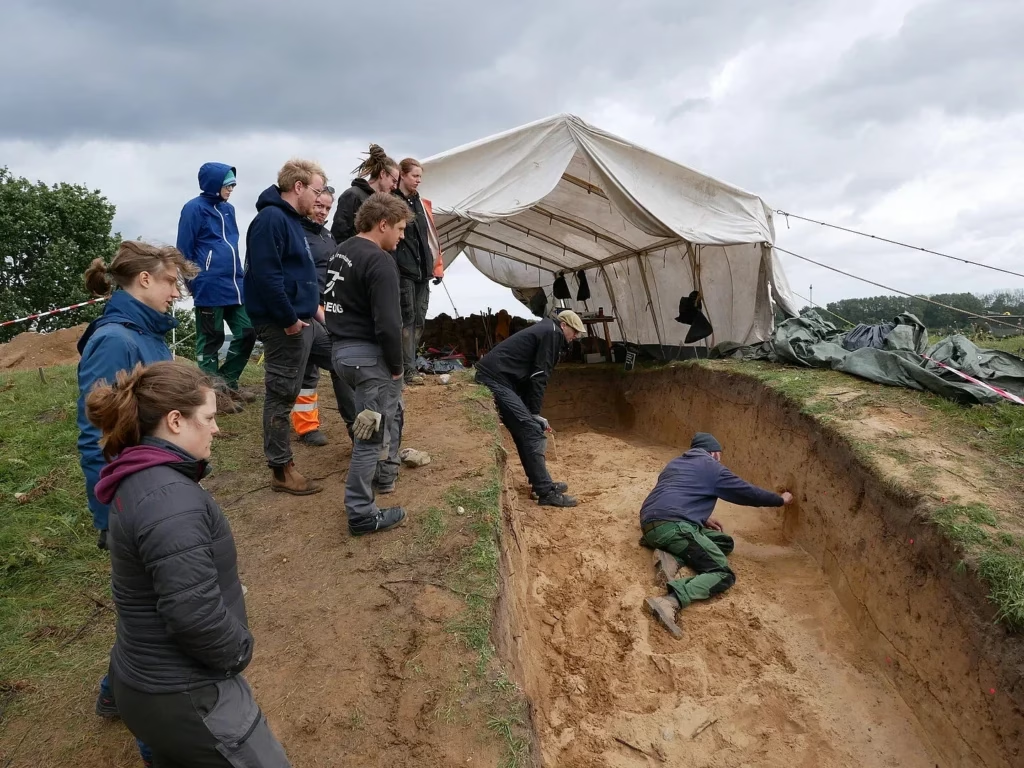
For two weeks, archaeologists from Christian-Albrechts University of Kiel (CAU) and the City of Lübeck carried out excavations at Stülper Huk with student participation. Their findings confirmed earlier surveys that hinted at defensive ramparts, post alignments, and traces of long-term settlement.
According to excavation director Dr. Felix Rösch, “the discoveries cast an entirely new light on the settlement history of the Lübeck region.”
The Hirtenberg hill, overlooking the Trave, still preserves visible ramparts and ditches. New evidence shows that in the Roman Imperial Period the site was not just fortified but also linked to regional networks of trade and communication.
Controlling Trade Beyond the Roman Frontier
Although Lübeck lay outside the official Roman Empire, imported Roman ceramics, coins, and glassware found across northern Germany prove the depth of cultural and economic influence. The Trave River served as a vital artery between the Baltic Sea and inland markets, and the Stülper Huk stronghold likely functioned as a hub controlling this route—possibly even as an early toll station predating Travemünde.
“Once again, we see that the Trave has been a crucial trade and communication route for millennia,” said Dr. Ingrid Sudhoff, head of Lübeck’s Department of Archaeology.
Excavation Reveals Ramparts and Wooden Piles
Intensive surveys in 2025, including underwater archaeology, revealed a field of wooden piles submerged in the river, along with boreholes that exposed construction details of the ramparts. Ceramic fragments overwhelmingly date to the first to fourth centuries CE, anchoring the site firmly in the Roman Imperial Period.
Unlike earlier theories, the new evidence suggests the settlement did not evolve into a medieval castle. Only limited medieval remains were found, strengthening the interpretation of Stülper Huk as a primarily Roman-era stronghold.
Layers of History Along the Trave
The Trave continues to yield finds from many eras: a medieval metal hoard was previously discovered nearby, and in 2023 archaeologists recovered a sunken 17th-century Hanseatic ship. Together, these discoveries underline the river’s enduring role as a corridor of commerce and maritime power.
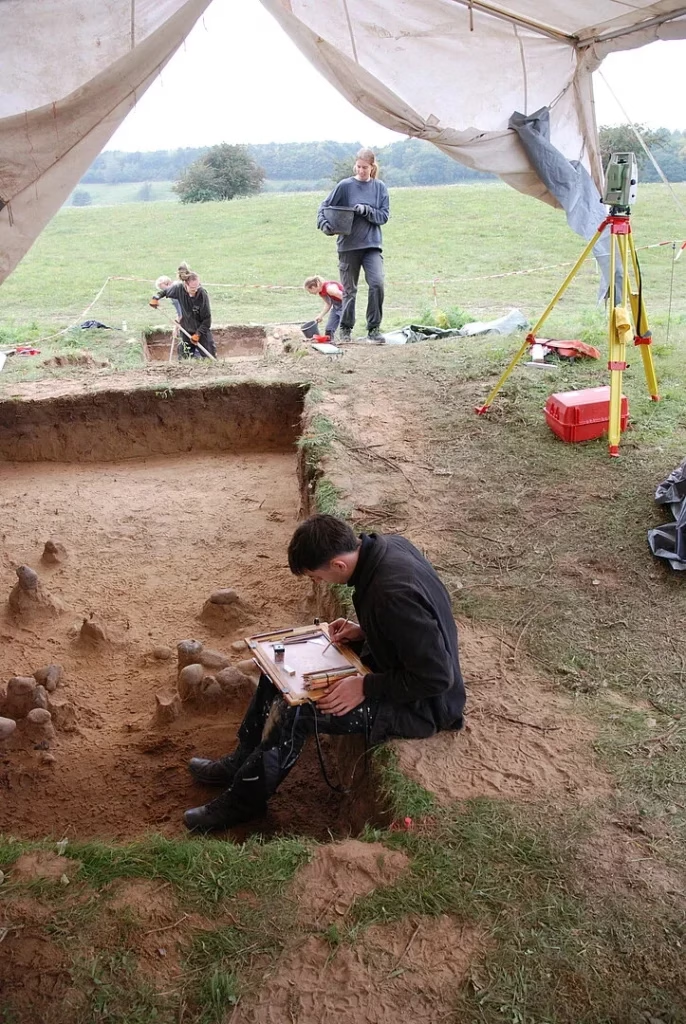
The project is part of a collaboration between the City of Lübeck’s Department of Archaeology and Monument Conservation, CAU’s Institute for Pre- and Protohistory, and the Cluster of Excellence ROOTS. For students, the fieldwork also provided valuable training in excavation techniques.
A New Chapter for Lübeck’s Past
Researchers are now analyzing finds to refine the chronology, construction methods, and role of the fortifications. Dendrochronological dating of the wooden piles may soon provide exact years of construction.
For Lübeck, best known for its medieval Hanseatic heritage, the recognition of a Roman-era fortified settlement adds a new chapter stretching back over a millennium earlier. As co-director Dr. Till Kühl summarized:
“The multi-layered evidence at Stülper Huk gives us a perspective on the past that we simply did not have before.”
Christian-Albrechts-Universität zu Kiel (CAU)
Cover Image Credit: For two weeks, archaeologists from Kiel University and the City of Lübeck investigated settlement traces along the River Trave. Niklas Dopp