
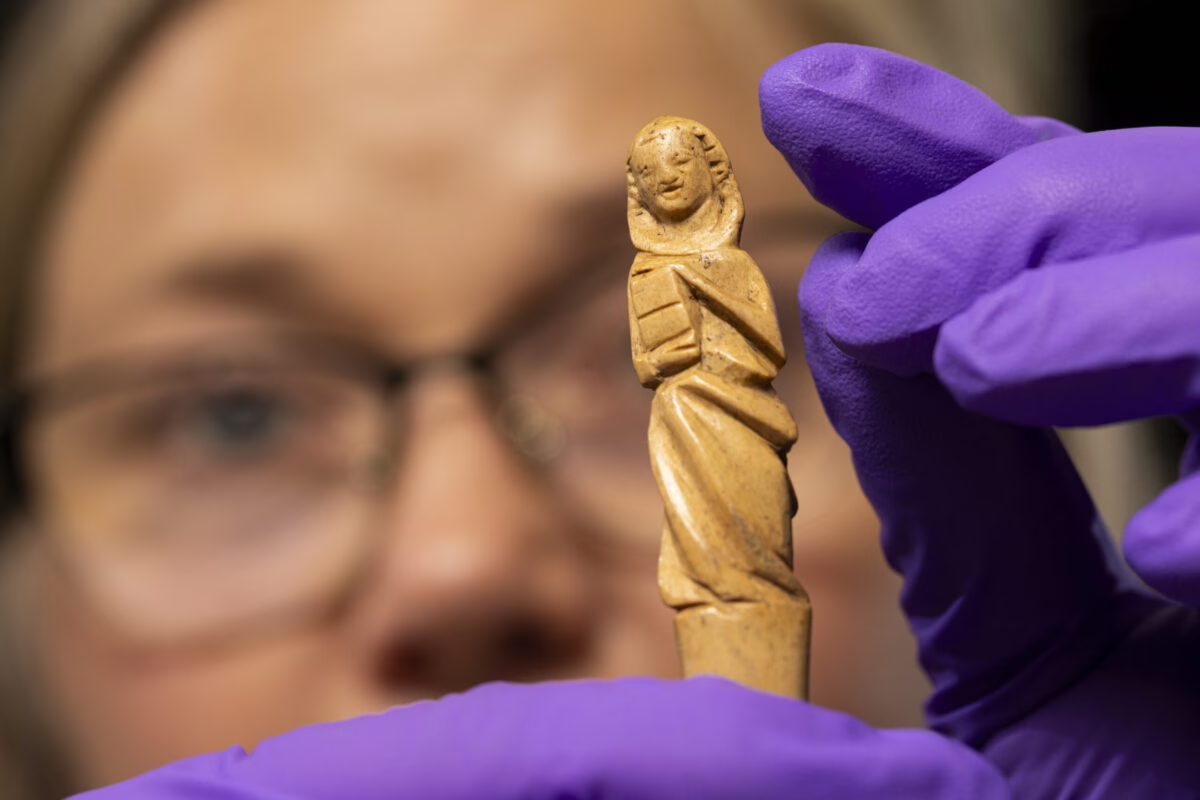
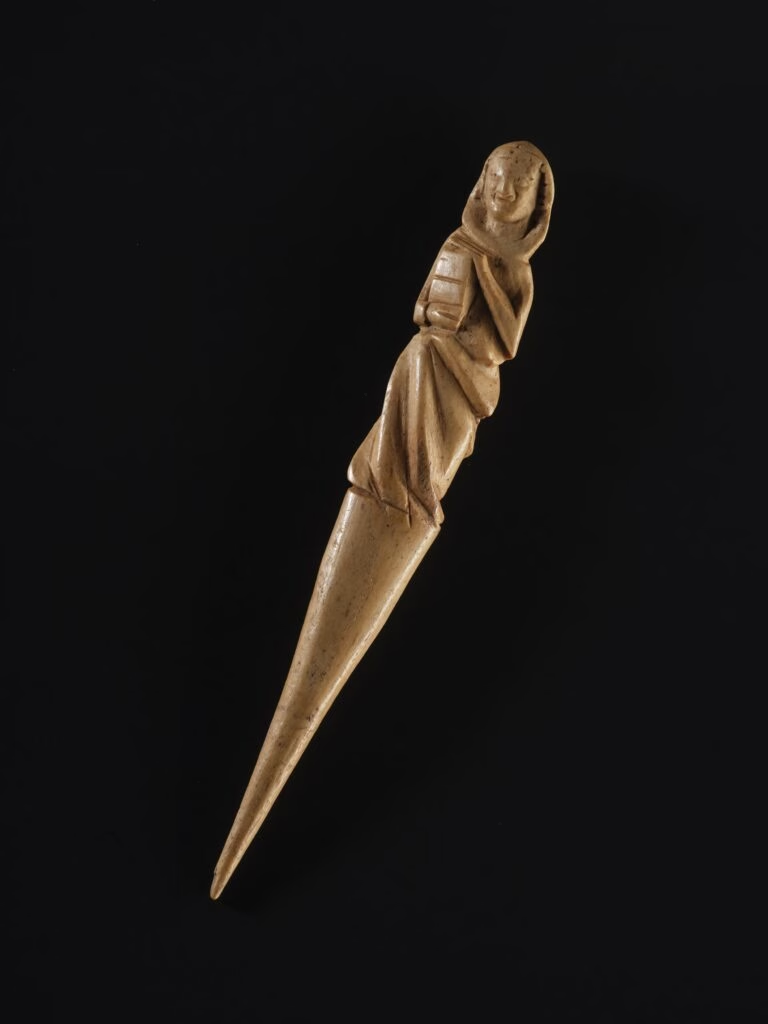
Archaeologists working at the iconic Eilean Donan Castle in the Scottish Highlands have uncovered a rare 13th-century grooming instrument, providing new insight into medieval fashions and daily life. The artifact, known as a gravoir, is the first of its kind ever discovered in Scotland and has now been added to the collections of National Museums Scotland.
A Landmark Discovery in the Highlands
The find emerged during excavations carried out by FAS Heritage at the famous fortress, which stands at the meeting point of Loch Duich, Loch Long, and Loch Alsh. Although Eilean Donan has long been celebrated for its dramatic silhouette and appearances in films such as Highlander and The World Is Not Enough, little had been known about its medieval inhabitants.
The newly discovered gravoir changes that picture. Carved from red deer antler—a local alternative to the imported ivory more commonly used—it bears an incised figure wearing a hood and holding a book, echoing elite continental fashions of the period. Only two other gravoirs are known across the entire UK, making this Scottish example a truly exceptional addition.
Beyond the Battlements: Everyday Life Inside the Castle
Excavations revealed much more than military relics. Alongside weapons and tools, archaeologists recovered brooches, dress pins, crucibles for melting precious metals, and residues that show jewelry-making once took place on site. These finds suggest that Eilean Donan functioned as a center of skilled craftsmanship as well as a political stronghold.
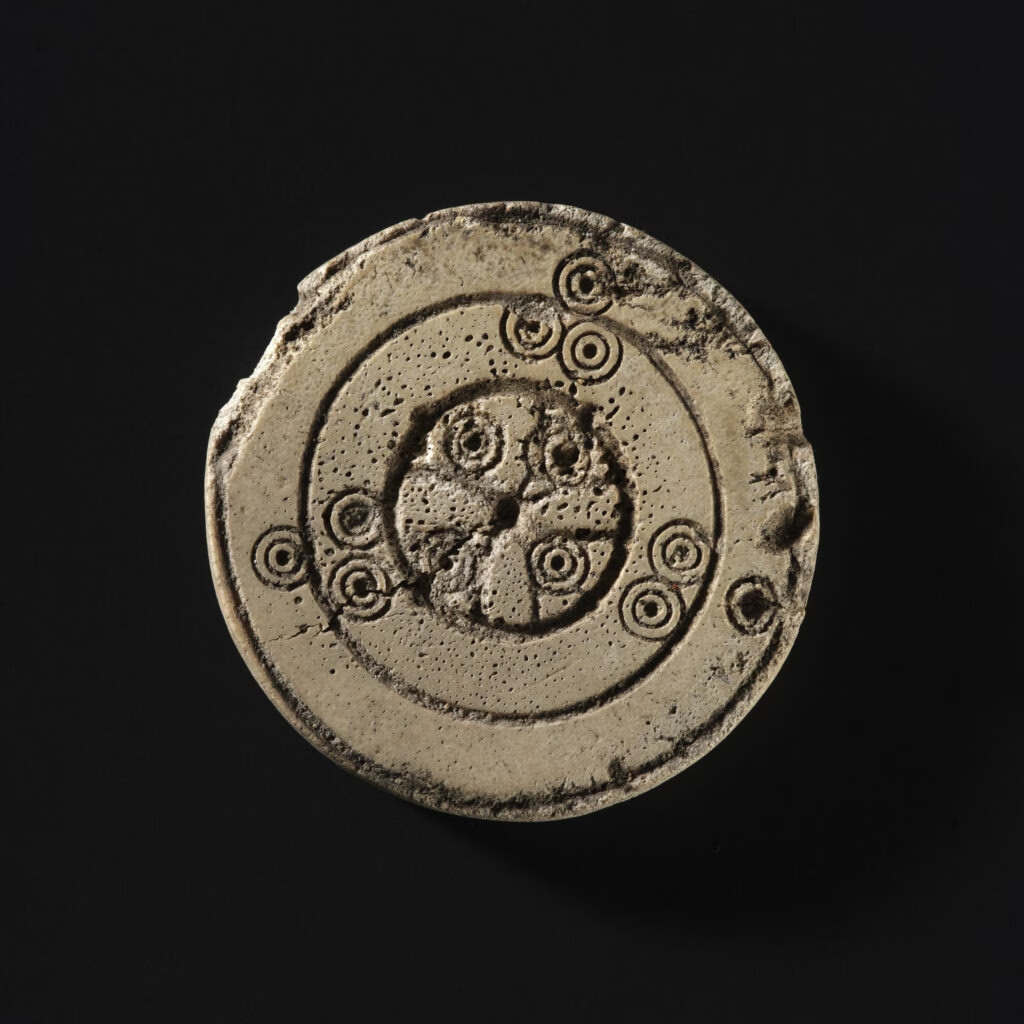
Objects of leisure and play also surfaced. Small bone gaming pieces, “buzz bones” used as spinning toys, and a rare iron jaw harp show that life within the castle walls balanced entertainment with duty. Together, the artifacts reveal a community that included smiths, musicians, children, and nobles—far more diverse than the castle’s later romanticized image suggests.
A Stronghold of Gaelic Power
During the 13th and 14th centuries, Eilean Donan served as a strategic seat of Highland Gaelic lordship, guarding the approach to the Isle of Skye. Its prominence declined in later centuries, and after a Jacobite occupation in 1719 the castle was destroyed by naval bombardment. It remained in ruins until the early 20th century, when restoration gave it the iconic form visitors know today.
Expert Reflections
Dr. Alice Blackwell, Senior Curator of Medieval Archaeology and History at National Museums Scotland, highlighted the importance of the assemblage:
“This gravoir allows us to glimpse how Eilean Donan’s elite followed European fashions, but the full collection shows how every layer of society lived here—from lords and craftsmen to children at play.”
Miranda van Lynden, Head Trustee of the Conchra Charitable Trust, added:
“Eilean Donan is one of Scotland’s most recognisable castles. Thanks to these discoveries, we can now tell stories that connect its image with the lived experiences of people in the medieval Highlands.”
A New Chapter in Castle Archaeology
For scholars, the 80 boxes of material now housed in Edinburgh offer long-term research potential into medieval Scottish society, from metallurgy to music. For the public, the discoveries enrich the story of a monument already beloved worldwide, grounding its romantic reputation in authentic human history.
The gravoir—at once practical, decorative, and symbolic—serves as a reminder that even in remote Highland strongholds, the cultural currents of medieval Europe reached deep into daily life.