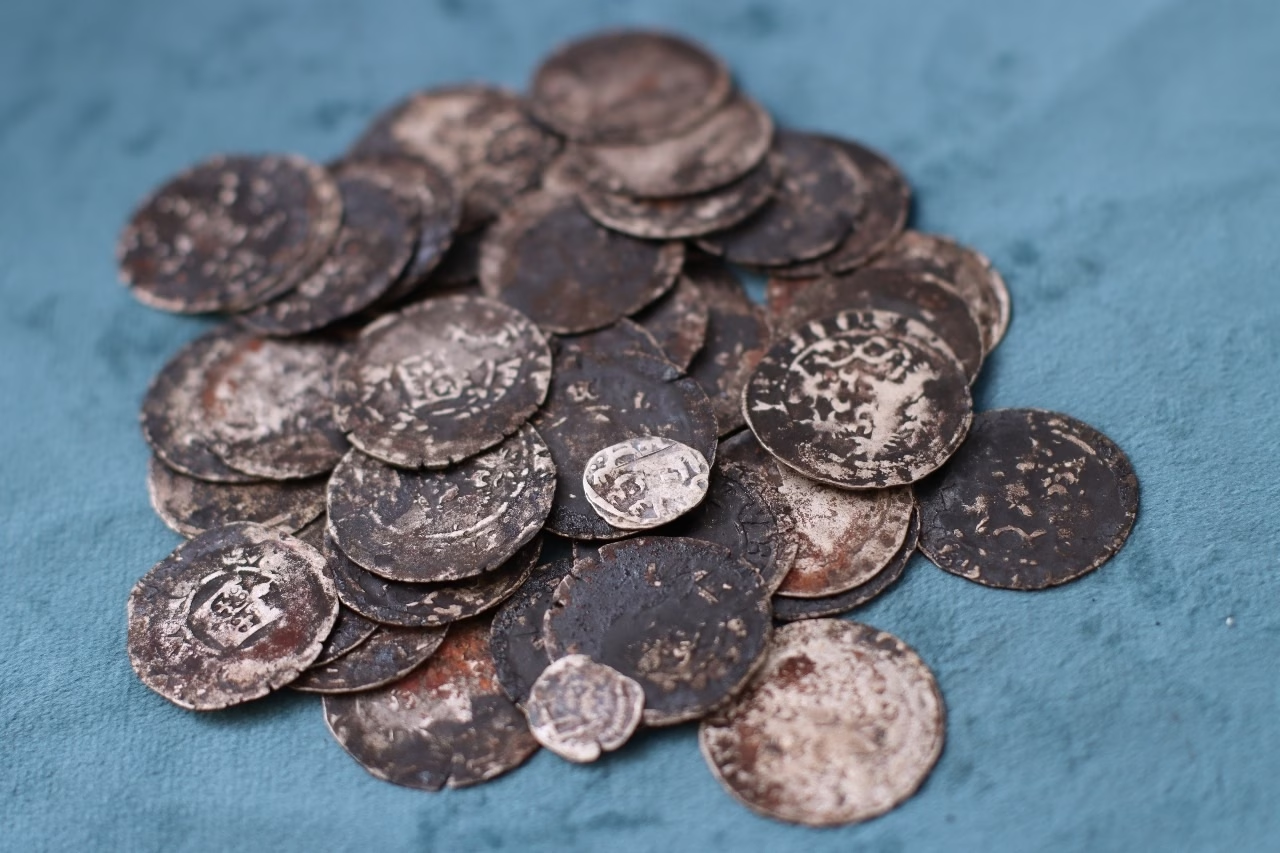
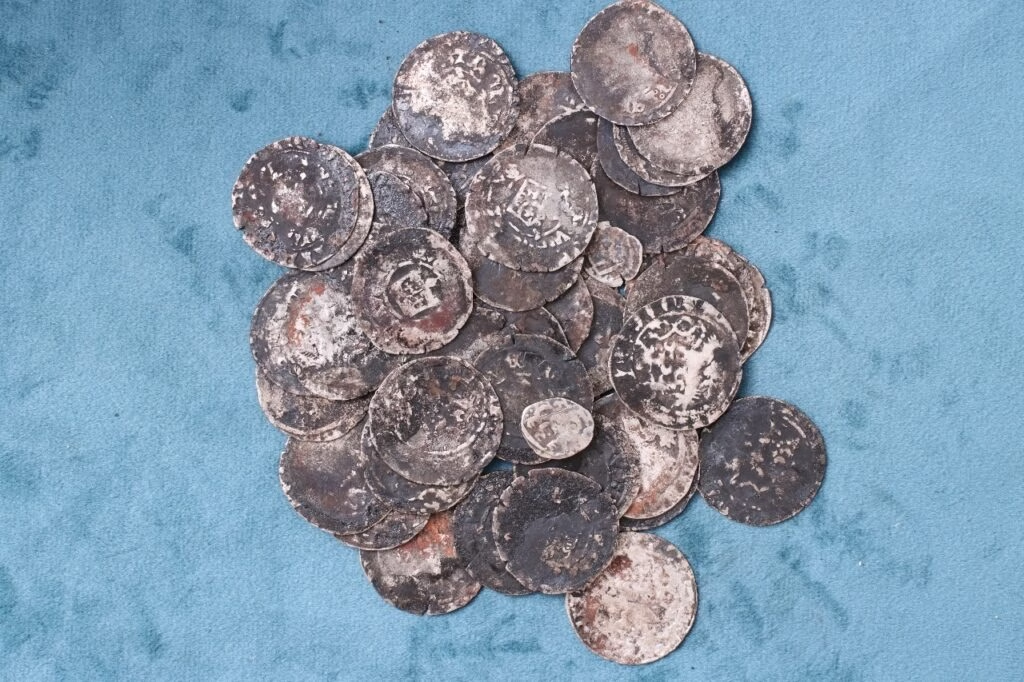
A hidden hoard of 15th-century coins has been discovered in Smolensk, Russia, during routine construction work. The cache of 48 silver coins includes the widely circulated Prague groschen—nicknamed the “Dollar of the Middle Ages”—a Lithuanian denarius struck under Vytautas the Great, and a rare Crimean dang from the Golden Horde. Together, these coins reveal how Smolensk once stood at the center of trade and politics in medieval Eastern Europe.
A Treasure from the 1420s
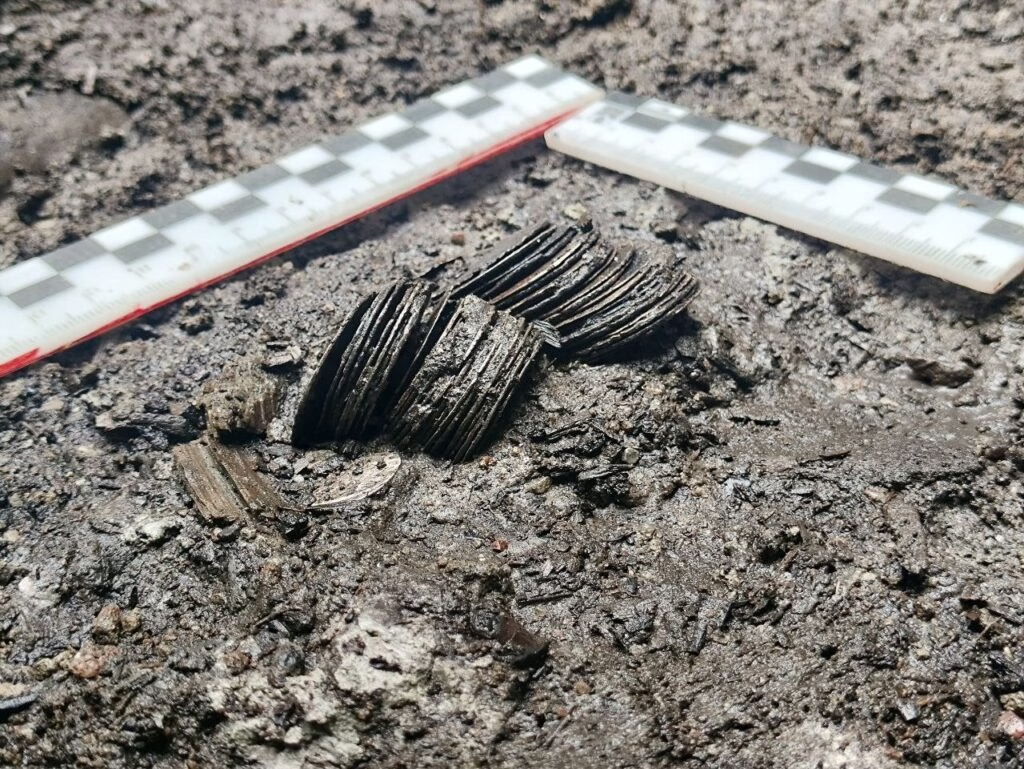
The coins were found inside a shaft on Sobolev Street while workers were laying a new water pipeline. Archaeologists believe the hoard was buried in the 1420s, a time when Smolensk was caught between rival powers: the Grand Duchy of Lithuania, the Grand Duchy of Moscow, and the Golden Horde.
The decision to bury coins during unrest was common in the Middle Ages. Owners often hoped to return for their valuables once peace was restored—though in this case, the treasure remained untouched for centuries.
The Prague Groschen: Currency of an Era
The majority of the hoard consists of Prague groschen, first minted in 1300 after King Wenceslas II reformed the Bohemian currency system. Produced from the rich silver mines of Kutná Hora, each coin weighed about 3.5 grams and was renowned for its purity. Its reliability made it one of Europe’s most trusted currencies, accepted across a vast network of markets from Central Europe to the Black Sea. Historians often call it the “Dollar of the Middle Ages” for its influence.
Lithuanian Denarius and Vytautas’s Symbol
Another highlight of the hoard is a Lithuanian denarius dating from the reign of Vytautas the Great (1392–1430). The coin features the dynastic emblem known as the Columns of Gediminas along with a Christian cross, symbols that underlined Vytautas’s authority at a time when Lithuania had become one of Europe’s largest states. Its presence in Smolensk confirms the city’s integration into the Lithuanian political and monetary system.
A Rare Crimean Dang
Perhaps the most unexpected piece is a Crimean dang issued around 1420 under Khan Beg-Sufi of the Golden Horde. These small silver coins were widely used in trade along the Black Sea, especially in ports like Kaffa (modern Feodosiya). Its discovery in Smolensk illustrates the city’s links to steppe markets and maritime trade routes.
Why This Find Matters
Although smaller than the massive 12-kilogram hoard uncovered in Smolensk in 1988, this new discovery is exceptional because of its diversity. It unites three major monetary traditions—Bohemia, Lithuania, and Crimea—into a single story, reflecting the city’s role as a crossroads of cultures and economies in the 15th century.
Archaeologists say further excavations may bring even more insight. Finds like this demonstrate how interconnected medieval Eastern Europe truly was, with coins acting as both economic tools and silent witnesses of history.
Institute of Archaeology of the Russian Academy of Sciences
Cover Image Credit: Members of the Institute of Archaeology of the Russian Academy of Sciences (IA RAS) expedition reported this unique find on VKontakte. Credit: IA RAS / VKontakte