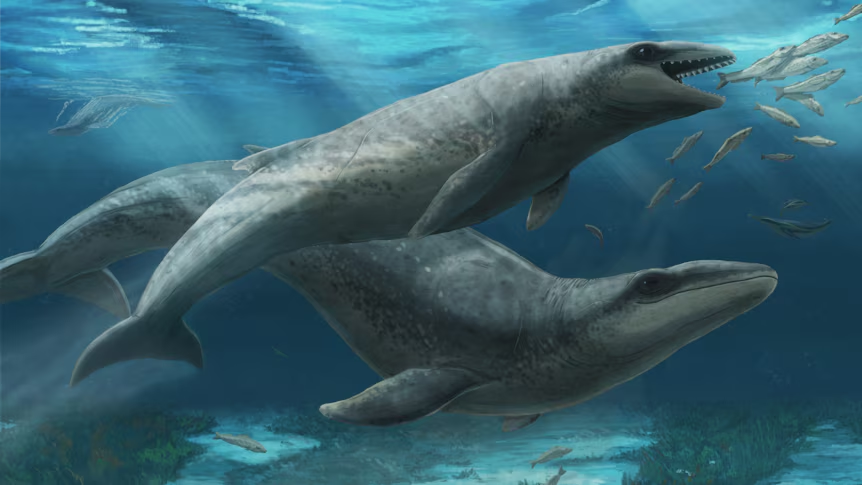
A new species of toothed whale that roamed the seas off Australia 26 million years ago has been brought to light. Named Janjucetus dullardi, this extinct marine mammal stands out for its predatory features, setting it apart from modern, toothless whales.
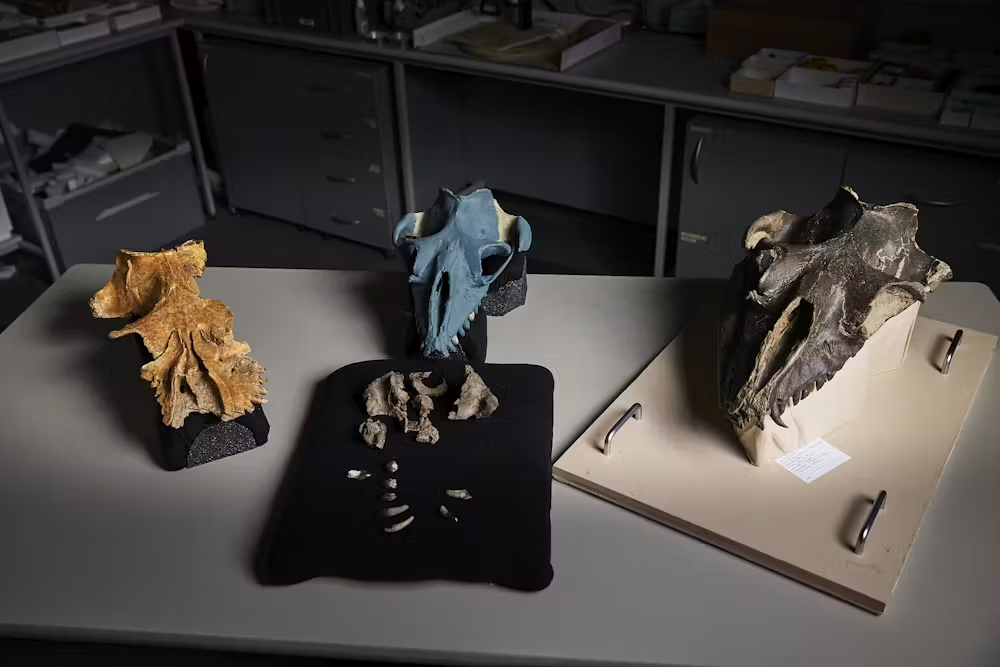
The fossil was discovered in 2019 by a passerby walking along Victoria’s coastline. Realizing its scientific significance, the finder donated the remains to Museums Victoria. Subsequent analysis revealed that the specimen, measuring about 2 meters in length, was a juvenile whale.
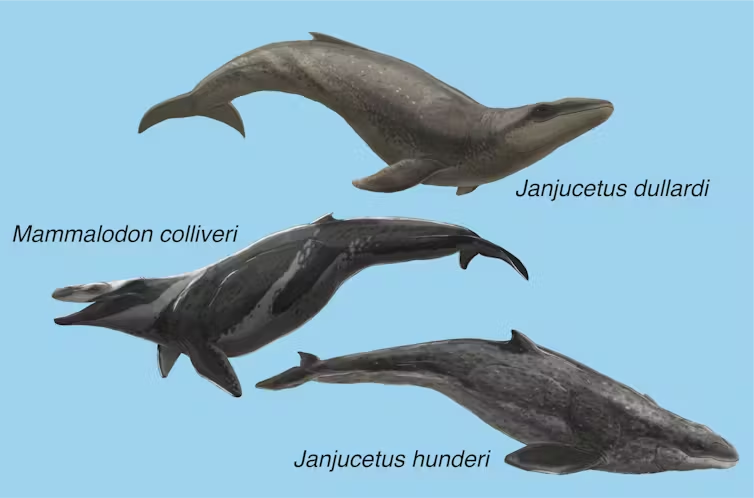
Paleontologists note that the skull fragments, ear bones, and teeth are exceptionally well-preserved, making it one of the best examples ever found from its extinct whale family. The anatomy shows that while Janjucetus was an ancestor of today’s filter-feeding whales, it retained sharp teeth and hunted much like a small shark.
Ruairidh Duncan from Museums Victoria and Monash University described the animal: “It had large eyes and a mouth full of sharp teeth. It might look cute at first glance, but it was definitely not harmless.”
Researchers say the find is a crucial piece in understanding the evolutionary diversity of early toothed whales. The study was published in the Zoological Journal of the Linnean Society.