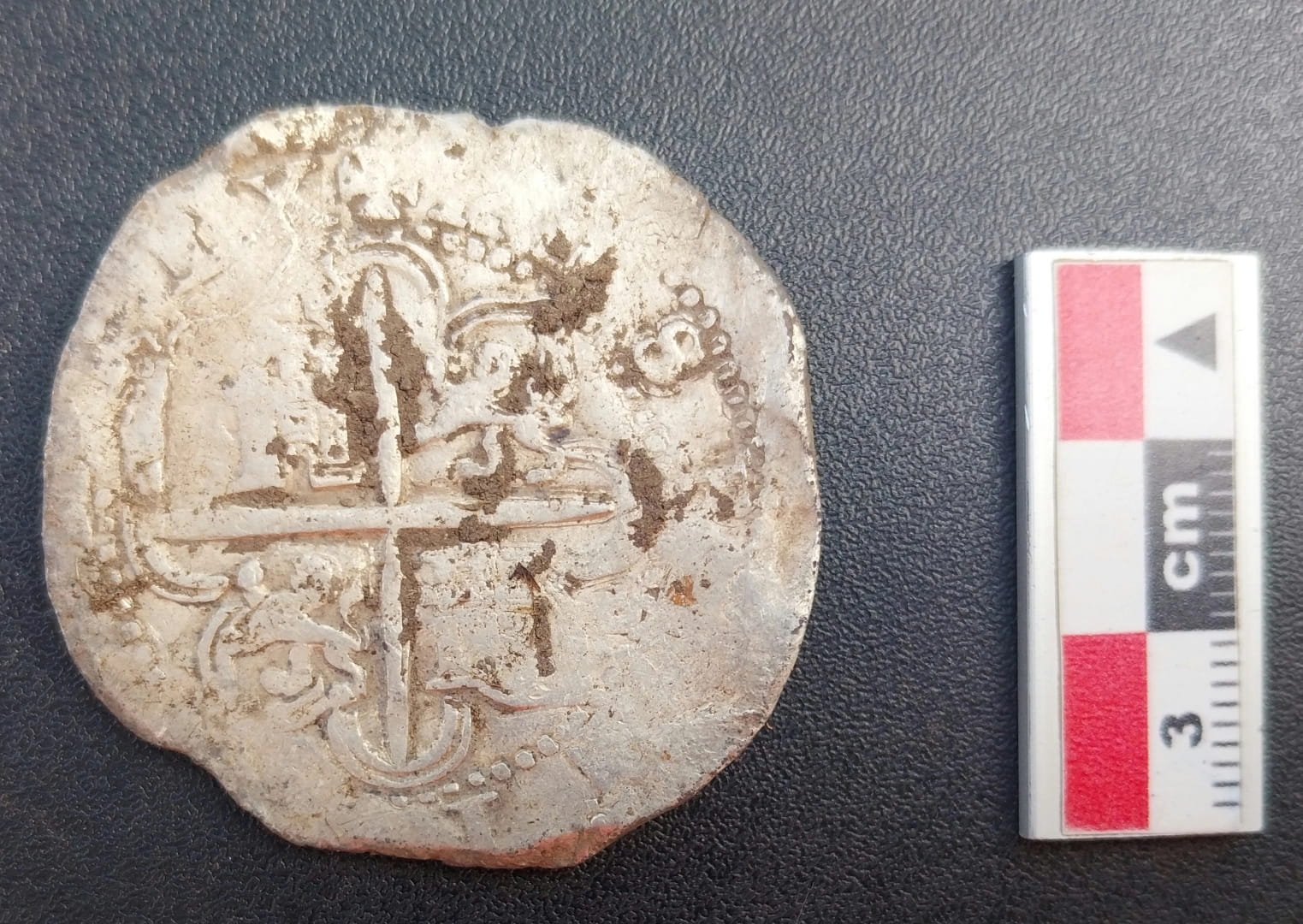
A silver coin buried more than four centuries ago has revealed the precise location of a failed Spanish colony at the Strait of Magellan, transforming a 16th-century written account into a verifiable archaeological reality.
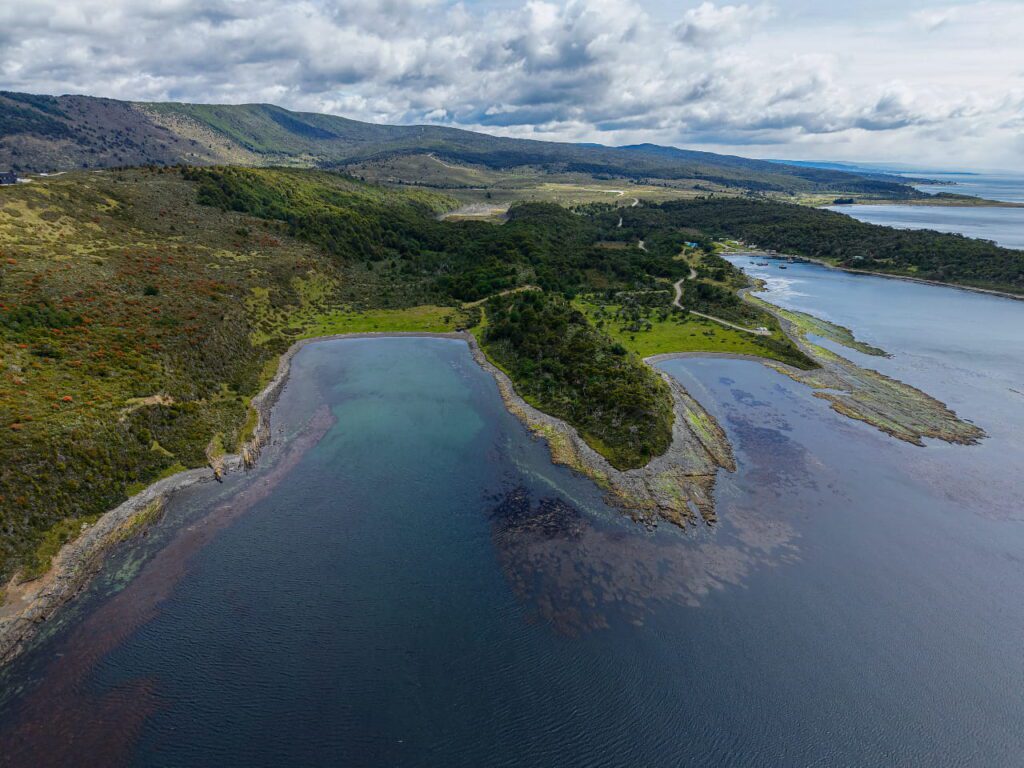
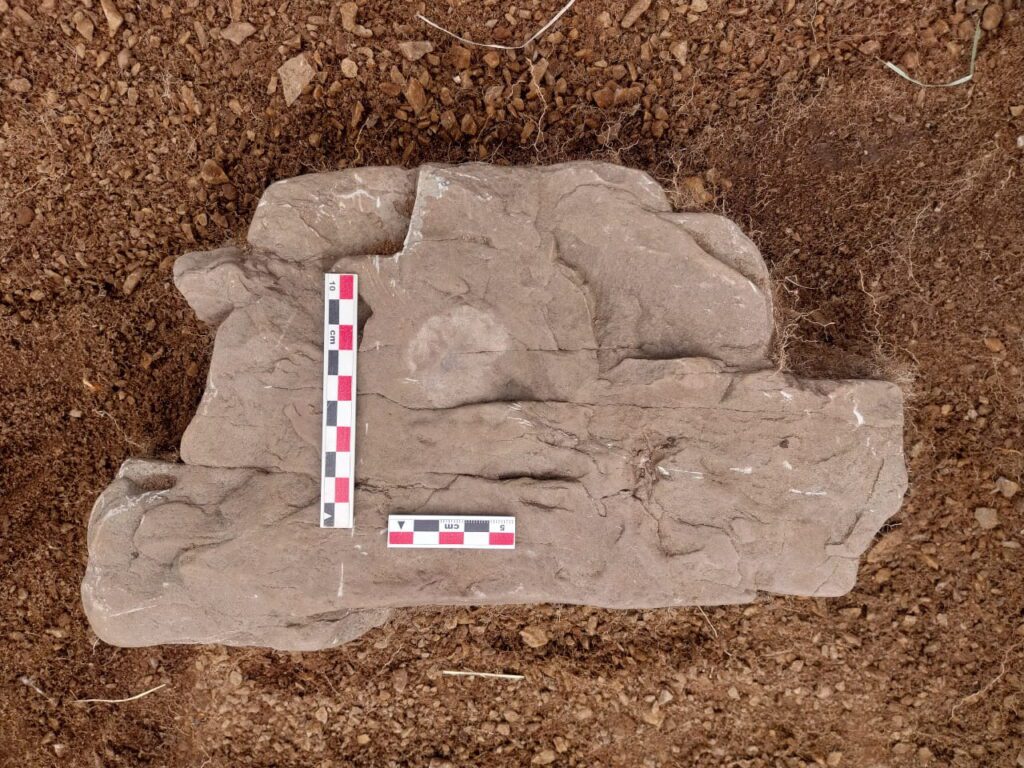
The coin, a Spanish “real de a ocho,” was uncovered during excavations at Ciudad del Rey Don Felipe near modern Punta Arenas in southern Chile. Rather than being scattered or lost, it had been intentionally placed on a flat stone within the foundations of what archaeologists now identify as the colony’s first church—an unusually specific detail that immediately drew attention.
A Ceremony Confirmed by Archaeology
The placement closely matches a description recorded in 1584 by Spanish navigator and colonial governor Pedro Sarmiento de Gamboa, who led the expedition to establish settlements along the strait. In his account, he describes a formal foundation ceremony in which the first stone of the church altar was laid together with a silver coin bearing the royal insignia, sealed as a symbolic act of possession and religious dedication.
For centuries, that description remained part of the historical narrative, accepted but unverified. The newly discovered coin now provides rare physical confirmation of that moment, aligning written testimony with material evidence in a way that is seldom possible in colonial archaeology.
Reconstructing a Vanished Settlement
Beyond its symbolic importance, the find has practical implications for understanding the site itself. By fixing the exact position of the church, archaeologists now have a reliable reference point from which to begin reconstructing the layout of Ciudad del Rey Don Felipe.
Until now, the settlement’s structure was known primarily through maps and descriptions produced by Sarmiento de Gamboa, which, while detailed, lacked firm archaeological anchors. The coin effectively bridges that gap, confirming that at least part of the mapped plan corresponds directly to the physical landscape and providing a framework for locating other key features such as fortifications, dwellings, and defensive lines.
Spain’s Strategic Ambition in the Strait of Magellan
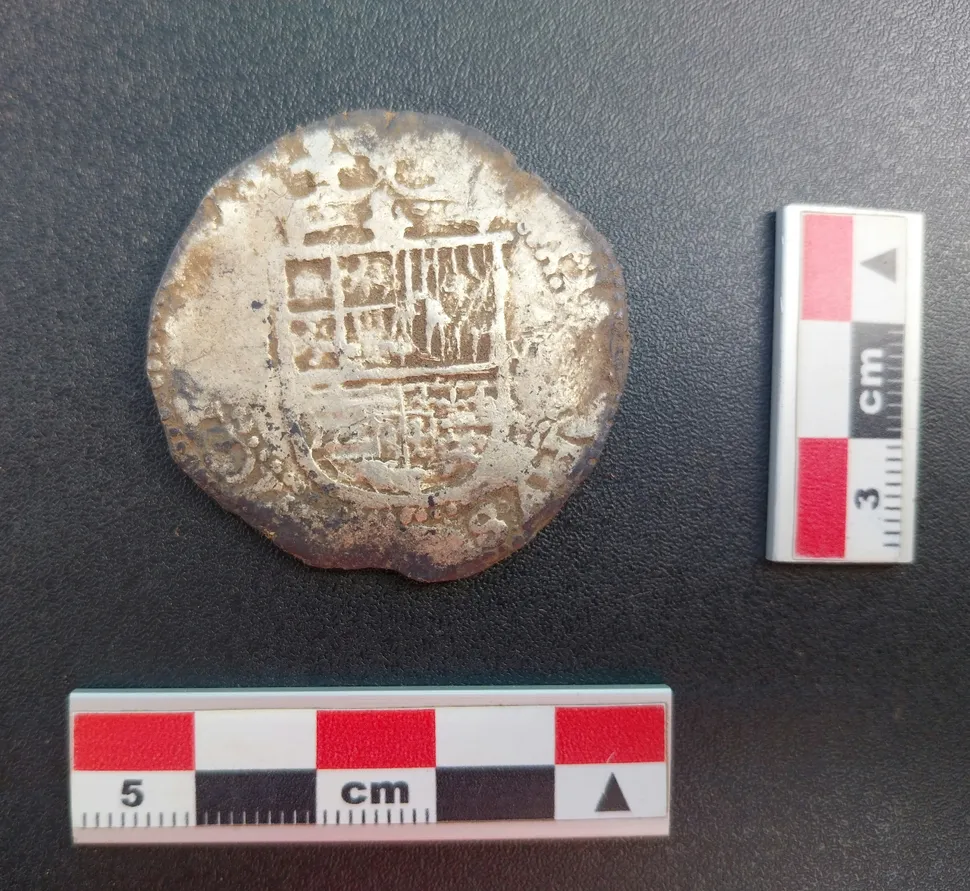
The colony was established as part of a broader geopolitical strategy by the Spanish Crown. In the late 16th century, the Strait of Magellan represented the only known navigable passage between the Atlantic and Pacific Oceans, making it a critical point of control in global maritime routes.
Spain’s urgency was heightened by the activities of English privateers, particularly Francis Drake, whose raids along the Pacific coast exposed the vulnerability of Spanish territories. In response, King Philip II ordered the creation of fortified settlements along the strait, intended to monitor and intercept hostile ships while securing Spanish dominance in the region.
Sarmiento de Gamboa founded two colonies in 1584—one on each side of the strait—with Ciudad del Rey Don Felipe serving as the southern defensive outpost. Its location offered access to natural resources and a strategically advantageous position, but these advantages proved insufficient against the realities of the environment.
A Colony That Could Not Survive
Despite careful planning, the settlement quickly encountered severe challenges. Extreme cold, limited food supplies, disease, and isolation placed constant pressure on the colonists, whose survival depended heavily on resupply missions from Spain.
Those supply lines, however, proved unreliable. Storms frequently disrupted voyages, forcing ships to abandon cargo or turn back, and over time, crews became unwilling to return to the hazardous waters of the strait. As external support diminished, the colony was left increasingly vulnerable.
When English navigator Thomas Cavendish arrived in 1587, he found the settlement in a state of near collapse. Of the approximately 300 settlers who had originally arrived, only 18 remained alive. The rest had succumbed to starvation, illness, and exposure, many left unburied due to the harsh conditions.
Although the colony had been strategically located and fortified, these advantages offered little protection without a stable supply network. Cavendish removed some of the remaining artillery and departed, leaving behind a settlement that had effectively ceased to function.
The last known survivor was eventually rescued in 1590 by another passing English vessel, marking the final chapter of Spain’s failed attempt to establish control over the strait through permanent settlement.
A Small Object with Unusual Precision
Today, the surface remains of Ciudad del Rey Don Felipe are minimal, shaped by centuries of wind, cold, and natural erosion. Yet the discovery of this coin has reintroduced a level of precision to the site that was previously missing.
It confirms not only that the ceremonial act described in 1584 took place as recorded, but also that the spatial logic of the settlement—at least in part—has survived beneath the ground. In archaeological terms, such convergence between text, map, and physical evidence is rare.
A single object, placed deliberately beneath a foundation stone, has endured long enough to reconnect a lost colony with its documented past, offering a clearer understanding of both its origins and its failure.
Cover Image: A 16th-century Spanish silver coin, known as a “real de a ocho” or the famed “piece of eight” among pirates, features a Jerusalem cross on one side. (Credit: Richard Bezzaza)